GLP-1 Friendly Meals
GLP-1 friendly meals are built around protein and fibre in smaller portions, with gentle cooking and foods that are easy to eat slowly. This guide explains the plate pattern most meal guides recommend, which foods people commonly find hardest to tolerate, and ends with a full chicken and vegetable bowl recipe.
This page is general information only and is not medical advice. It describes meal ideas commonly shared in GLP-1 guides and makes no promises about weight or health outcomes. For personal nutrition advice while taking GLP-1 medication, talk to your doctor or a registered dietitian.
What does GLP-1 friendly mean?
GLP-1 medications reduce appetite, so people taking them typically eat much smaller portions than before. That changes what a good meal looks like: with less room on the plate, each bite has to count, so meals are built around protein first, then fibre-rich vegetables, then a modest portion of grains. Cooking is kept gentle — baked, poached, steamed, sheet-pan roasted or air-fried — and meals are eaten slowly, in smaller servings spread across the day.
The GLP-1 plate pattern
- Protein first. Most GLP-1 meal guides suggest 20 to 30 grams of protein per main meal. A chicken breast, a salmon fillet, two eggs with cottage cheese or a cup of Greek yogurt each covers that range.
- Fibre alongside. Around 5 to 10 grams of fibre per meal is the usual guide target — broccoli, peppers, beans, lentils, quinoa and avocado all contribute.
- Smaller portions, eaten slowly. A plate that used to hold a large dinner now holds a modest one. Eating the protein first, then the vegetables, then the grains is the order most guides recommend.
- Gentle cooking. Baked, poached, steamed, sheet-pan and air-fried foods are the usual methods; deep-frying and heavy cream sauces are generally avoided.
Foods that are often hard to tolerate
Tolerance varies from person to person, but people on GLP-1 medication commonly report that deep-fried foods, very fatty or creamy dishes, very spicy food, sugary drinks and large portions are the hardest to handle. Rich sauces, pastry-heavy meals and carbonated drinks also come up often. None of this is a rule — it is a starting point. Notice which foods feel best for you, and build your regular meals around those.
GLP-1 friendly meal ideas
- Breakfast: Greek yogurt with berries and a spoonful of chia seeds, or a cottage cheese scramble with two eggs.
- Lunch: A small salmon and quinoa bowl (see our salmon and quinoa bowl) or lentil soup with a slice of whole-grain bread.
- Snack: A small handful of almonds, or apple slices with a tablespoon of peanut butter.
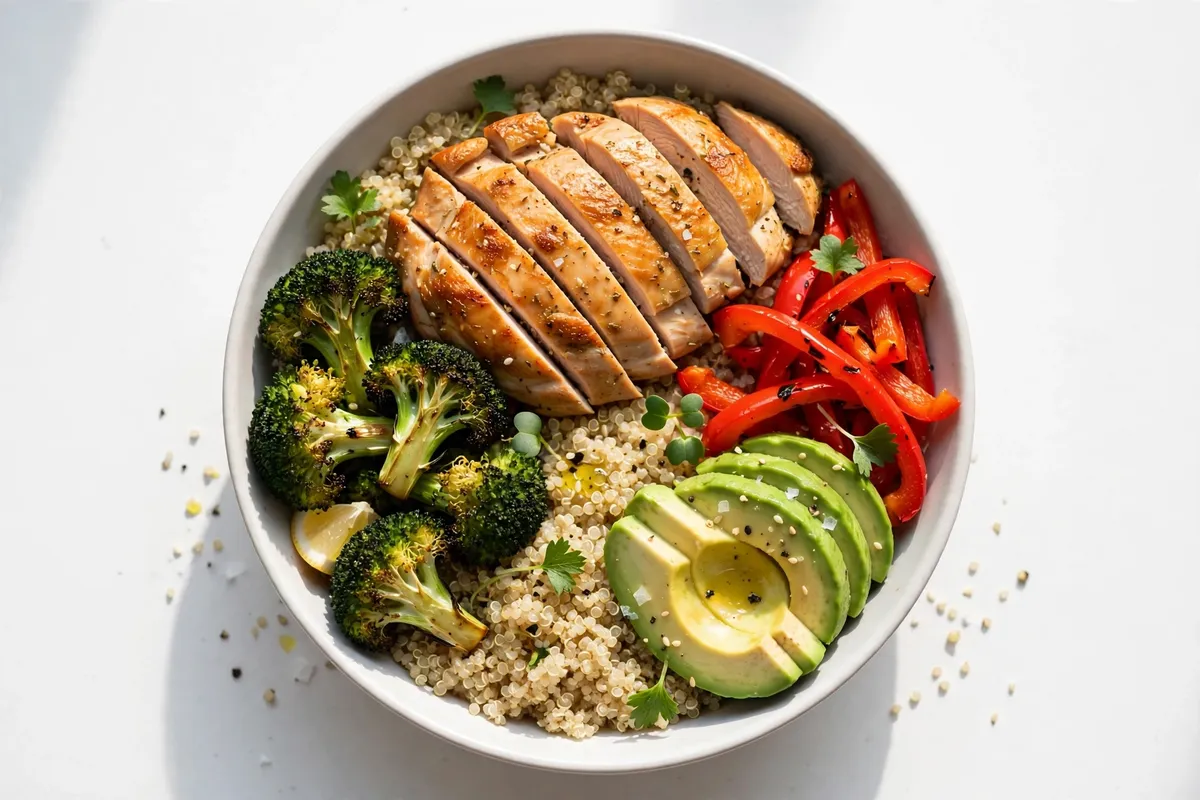
- Dinner: The chicken and vegetable bowl below — sheet-pan chicken, roasted broccoli and peppers, quinoa and avocado.
Featured recipe: Chicken and Vegetable Bowl
This bowl follows the plate pattern exactly: a full chicken breast per serving (about 38 grams of protein), roasted broccoli and red pepper for fibre, a modest scoop of quinoa and half an avocado. It cooks on one sheet pan in 30 minutes and serves 2.
Ingredients for Chicken and Vegetable Bowl
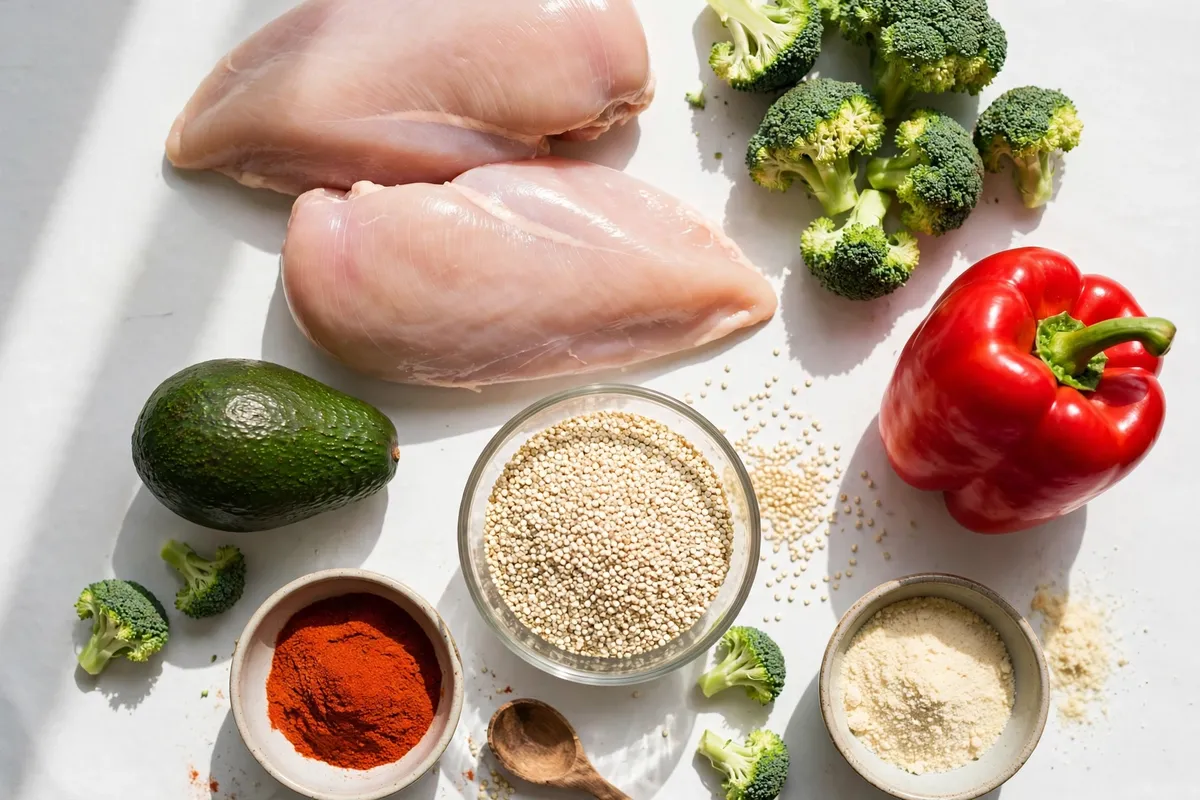
- 2 boneless, skinless chicken breasts (about 1 lb / 450 g)
- 2 cups broccoli florets
- 1 red bell pepper, sliced
- 1 cup cooked quinoa (from 1/3 cup / 60 g dry quinoa)
- 1/2 avocado, sliced
- 1 tablespoon olive oil
- 1 teaspoon paprika
- 1/2 teaspoon garlic powder
- Salt and freshly ground black pepper
How to make Chicken and Vegetable Bowl
Season the chicken
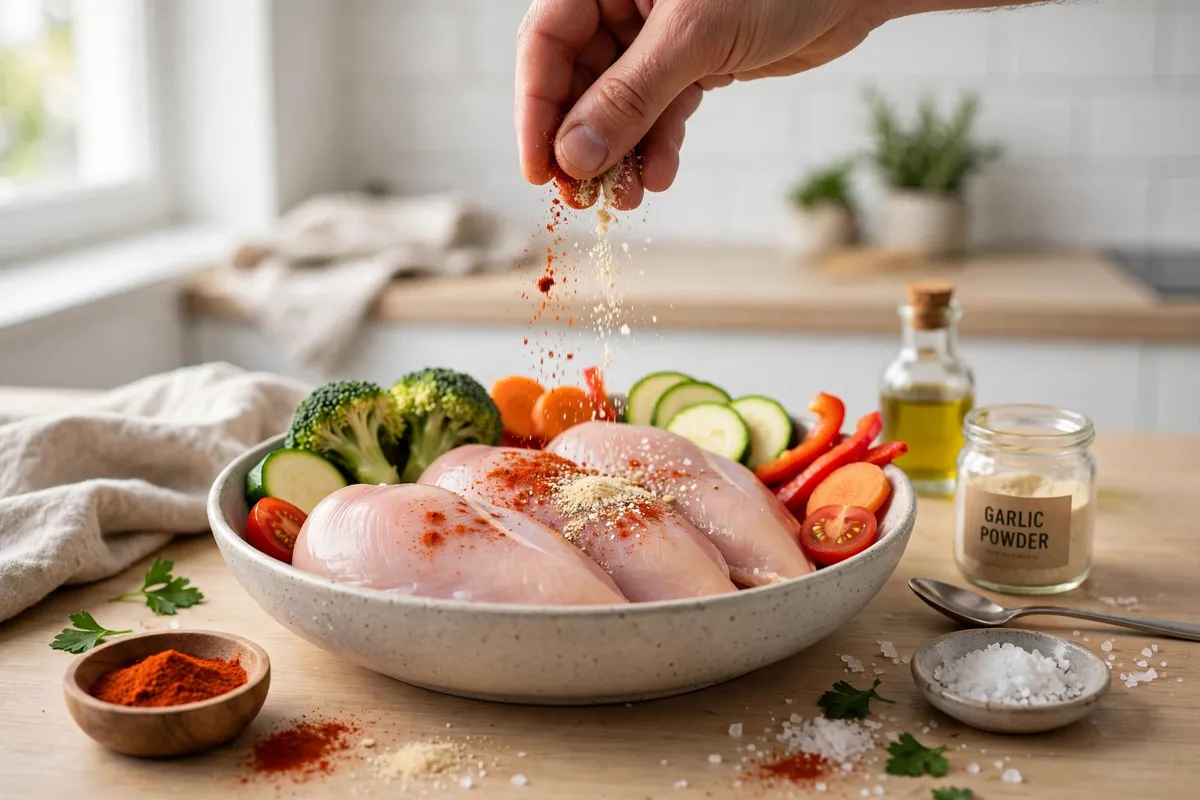
Preheat the oven to 400°F (200°C). In a bowl, toss the chicken breasts with the olive oil, paprika, garlic powder, 1/2 teaspoon of salt and a few grinds of pepper until evenly coated.
Arrange the sheet pan
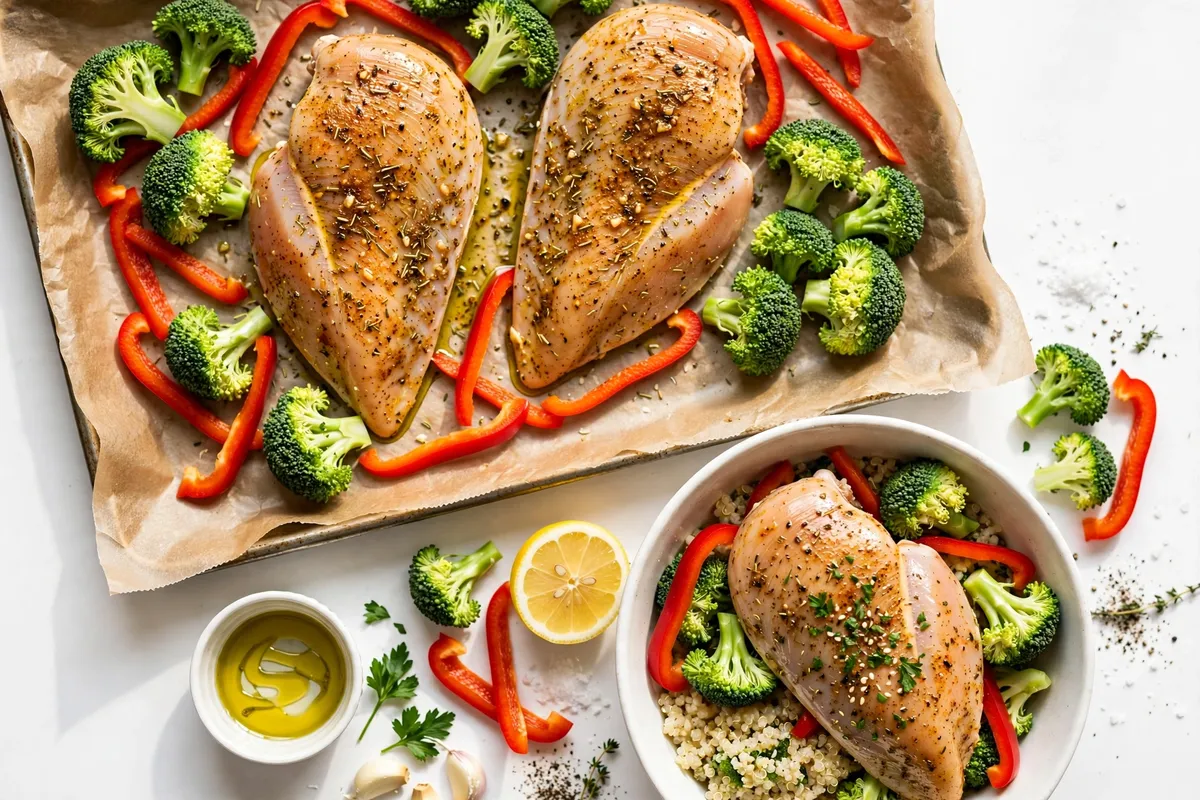
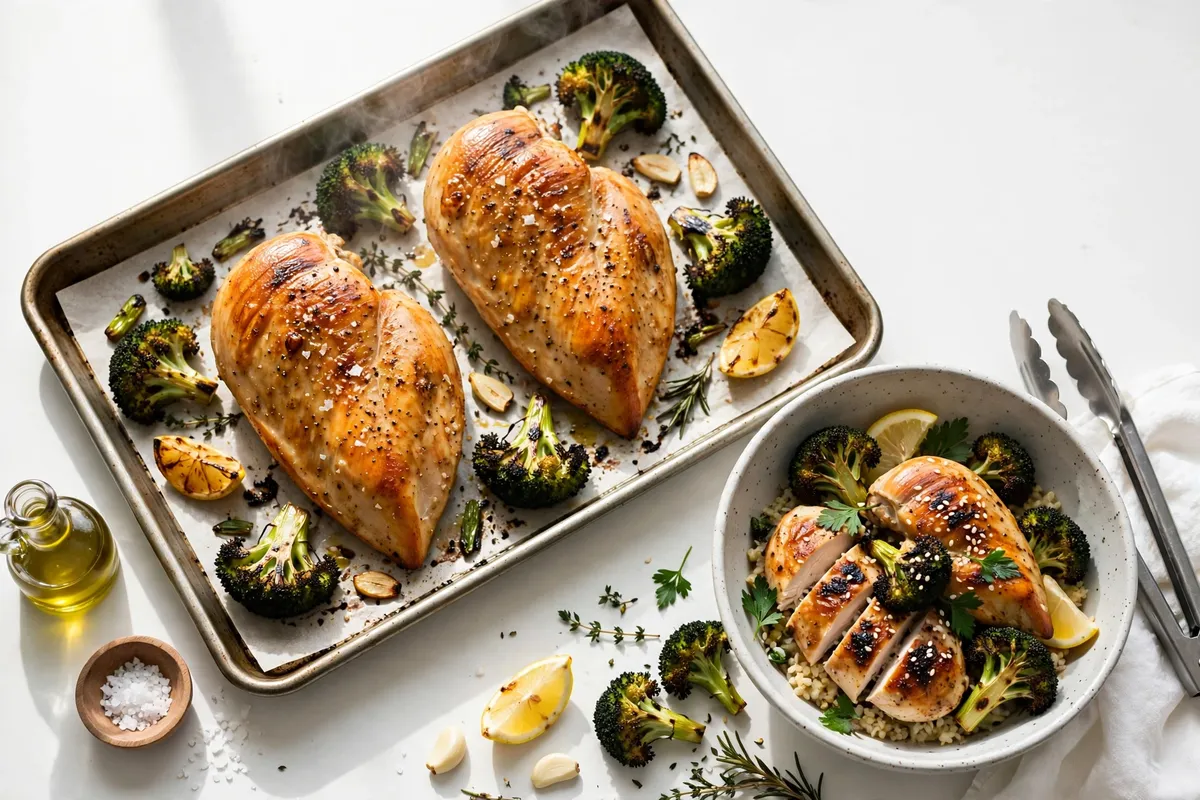
Place the chicken in the center of a parchment-lined baking sheet. Arrange the broccoli florets and red pepper slices around it in a single layer, leaving space between the pieces so they roast rather than steam.
Roast the chicken and vegetables
Roast for 20 to 25 minutes, until the chicken is cooked through to 165°F (74°C) and the vegetables are tender with browned edges. While the pan roasts, cook the quinoa if you do not have any ready.
Prep the quinoa and avocado
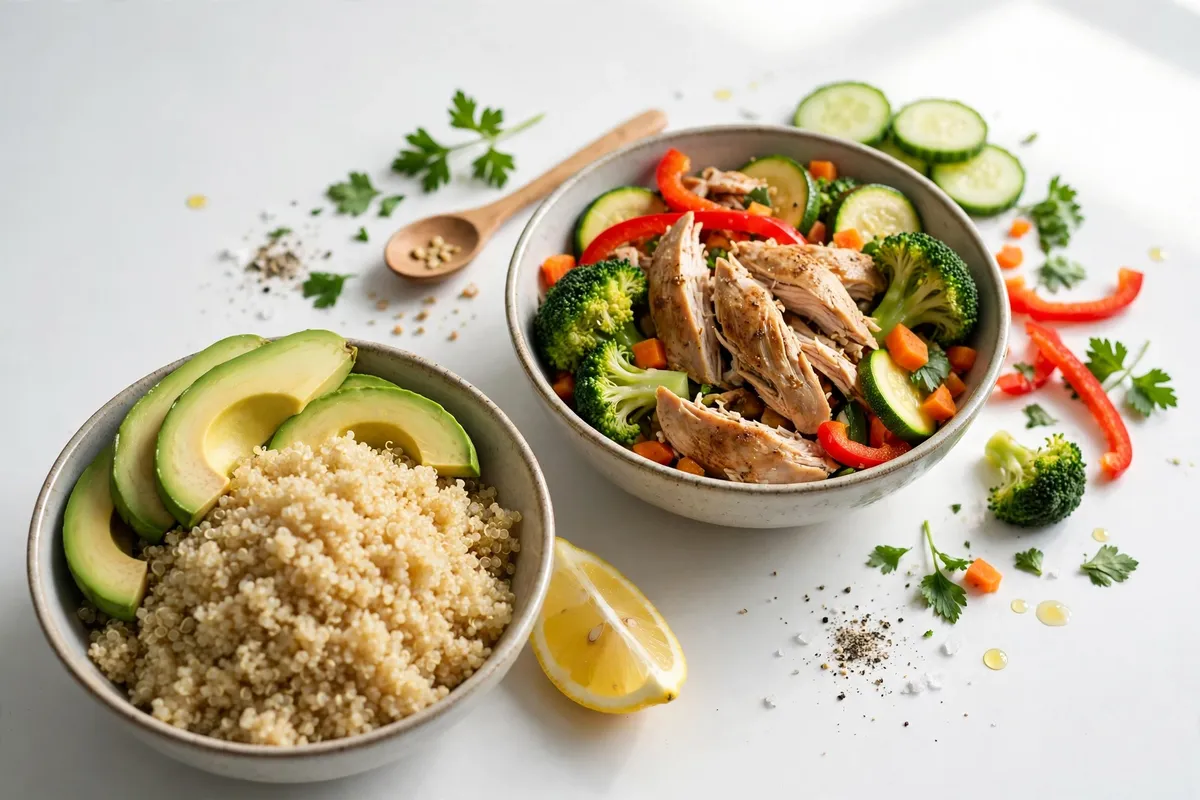
Fluff the cooked quinoa with a fork. Slice the avocado just before serving so it stays bright. Rest the chicken for 5 minutes, then slice it across the grain.
Assemble the bowls
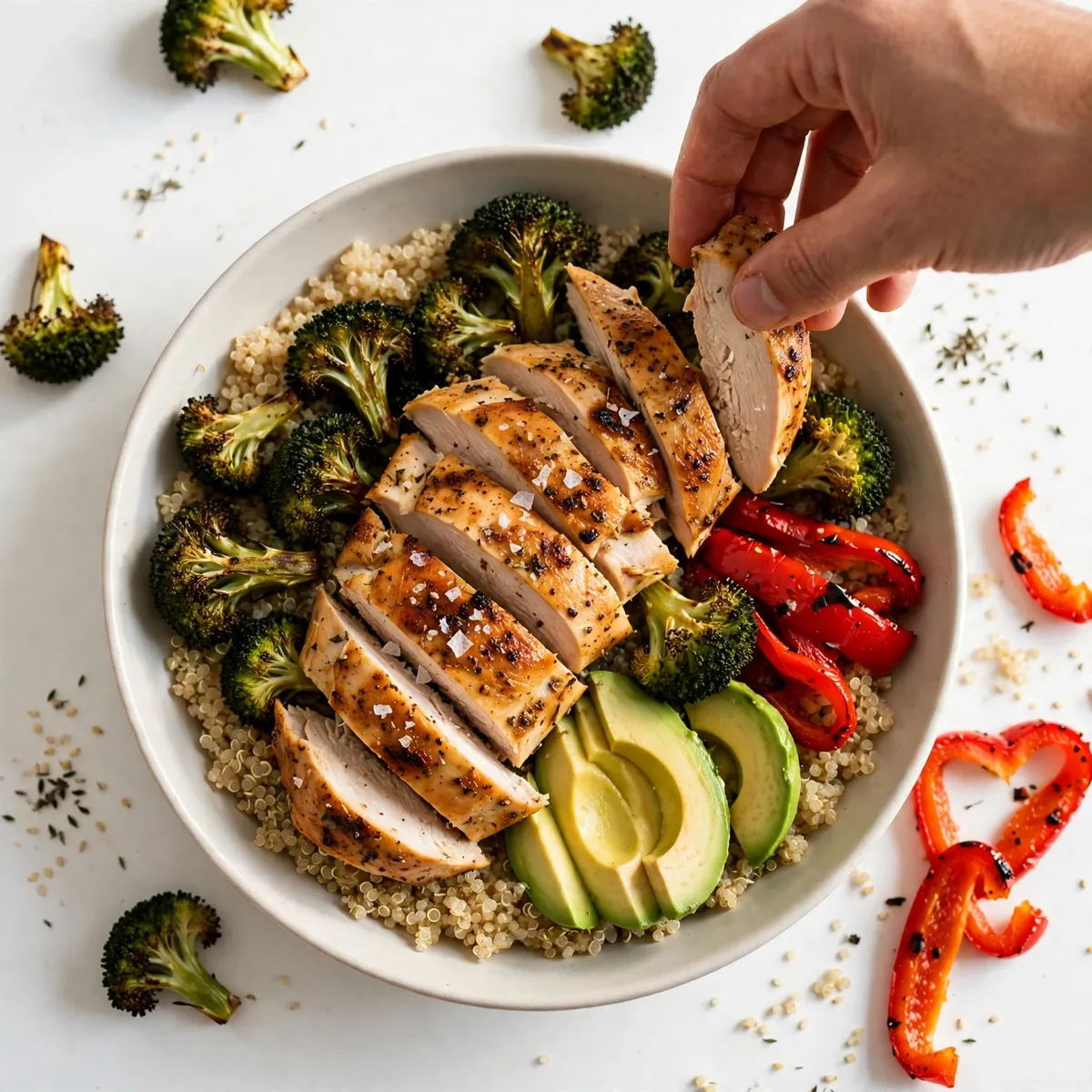
Divide the quinoa between 2 bowls. Add the roasted broccoli and peppers, the sliced chicken and the avocado. Each bowl has about 38 grams of protein — eat the chicken first, then the rest, at whatever pace suits you.
Tips for the best chicken and vegetable bowl
- Keep the seasoning mild. Paprika and garlic powder give flavour without heat. Very spicy food is one of the most commonly reported hard-to-tolerate foods, so skip the chilli flakes here.
- Cut the broccoli small. Smaller florets roast faster and more evenly, and they are easier to eat in small bites alongside the chicken.
- Use leftover quinoa. This recipe needs only 1 cup of cooked quinoa — the perfect use for the tail end of a batch. See our quinoa meals guide for the cooking method.
- Rest the chicken. Five minutes of resting keeps the slices juicy. Dry chicken is harder to eat in small portions, so the rest matters more here than usual.
How to store chicken and vegetable bowl
Store the chicken, quinoa and roasted vegetables in separate airtight containers in the fridge for up to 3 days. Reheat the chicken and quinoa gently in the microwave with a splash of water, and add the avocado fresh each time. The roasted vegetables can be eaten cold over the quinoa if you prefer — they hold up well as a salad.
GLP-1 Friendly Meals FAQs
What should you eat on a GLP-1?
GLP-1 meal guides generally recommend building meals around lean protein, fibre-rich vegetables and whole grains, in smaller portions than before, with gentle cooking methods like baking, poaching or air-frying. Protein first, then vegetables, then grains is the usual plate order.
How much protein do you need per meal on a GLP-1?
Most GLP-1 meal guides suggest 20 to 30 grams of protein per main meal, with 5 to 10 grams of fibre. A chicken breast, a salmon fillet or a cup of Greek yogurt each covers that range on its own. Individual targets vary, so check with your clinician or dietitian.
What foods are hard to tolerate on a GLP-1?
People on GLP-1 medication commonly report that deep-fried foods, very fatty or creamy dishes, very spicy food, sugary drinks and large portions are the hardest to tolerate. Tolerance varies from person to person, so it helps to notice which foods feel best for you and build around those.
What is a good GLP-1 dinner?
A good GLP-1 dinner is a smaller portion built around protein: baked chicken or fish with roasted vegetables and a modest serving of quinoa or rice. The chicken and vegetable bowl on this page is one example — about 38 grams of protein per serving, with broccoli, peppers and avocado.
Your week of dinners, planned.
Build a free 7-day meal plan and download it as a beautiful image.