Anti-Inflammatory Diet
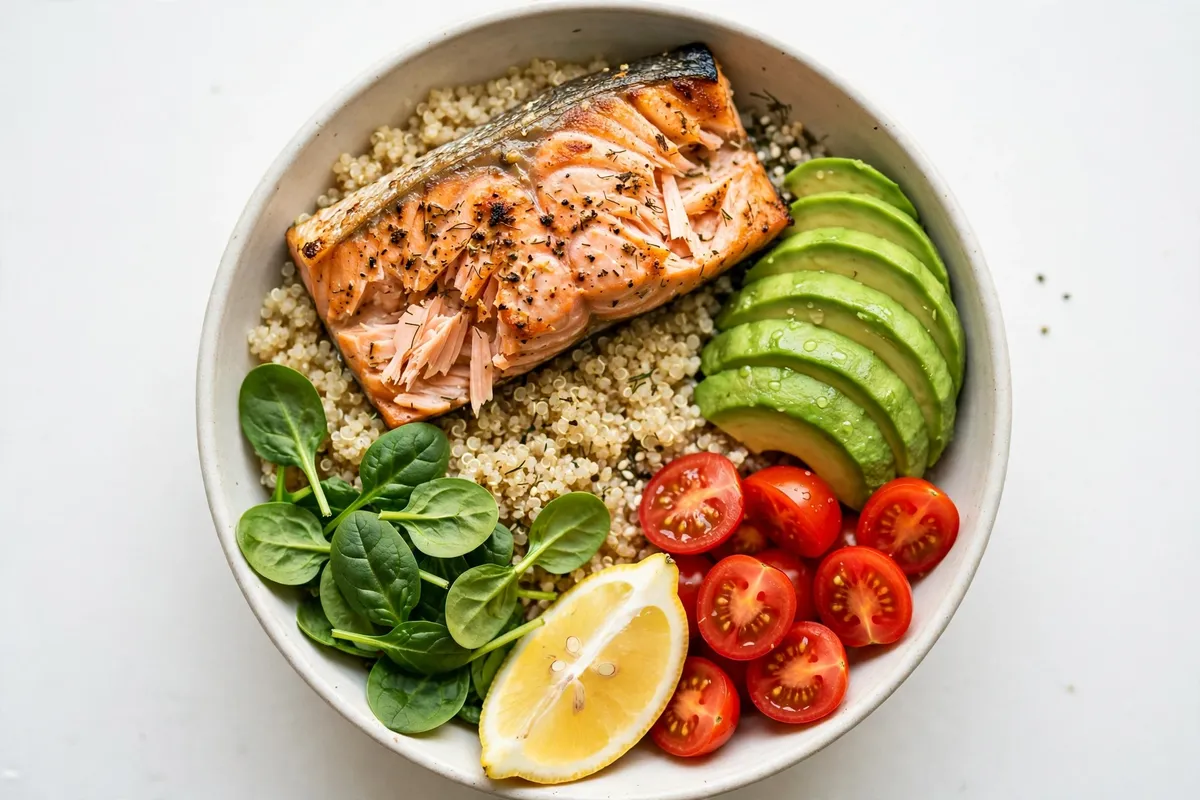
The anti-inflammatory diet is an eating pattern built around whole foods — fatty fish, leafy greens, berries, olive oil, nuts and whole grains — and fewer heavily processed foods. This guide explains the foods list, what a day of eating can look like, and ends with a full salmon and quinoa bowl recipe.
This page is general information only and is not medical advice. It describes a popular eating pattern and does not promise any health outcome. If you have a medical condition or are changing your diet for health reasons, talk to a doctor or a registered dietitian first.
What is the anti-inflammatory diet?
The anti-inflammatory diet is not a single published plan with fixed rules. It is a pattern of eating, closely related to the Mediterranean diet, that emphasizes whole, minimally processed foods — vegetables, fruit, whole grains, beans, nuts, olive oil and fish — and limits heavily processed foods, added sugars and refined grains. There is no calorie counting and no banned food group; the pattern is about the overall shape of what you eat across a week.
Foods to build meals around
- Fatty fish: salmon, sardines, mackerel and trout, two or three times a week.
- Vegetables: leafy greens (spinach, kale), broccoli, peppers, tomatoes and sweet potatoes at most meals.
- Fruit: berries, cherries, apples and citrus, eaten whole rather than as juice.
- Fats: extra-virgin olive oil as the main cooking fat, plus nuts and seeds such as walnuts, almonds and ground flaxseed.
- Grains and beans: quinoa, oats, brown rice, lentils and chickpeas instead of refined grains.
- Herbs and spices: turmeric, ginger, garlic and fresh herbs, used generously for flavour.
What to limit
Anti-inflammatory eating patterns generally keep a small share of the plate for heavily processed foods: sugary drinks, packaged snacks, processed meats, fried foods and refined grains such as white bread and pastries. Alcohol is kept occasional. As with the Mediterranean pattern, the point is frequency and portion rather than strict rules — a food you eat once a week matters far less than what you eat every day.
A sample day on the anti-inflammatory diet
- Breakfast: Oatmeal with blueberries, ground flaxseed and a spoonful of walnuts.
- Lunch: Lentil soup with a spinach salad, olive oil and lemon dressing.
- Snack: An apple with a small handful of almonds.
- Dinner: The salmon and quinoa bowl below — baked salmon, quinoa, spinach, tomatoes and avocado.
Featured recipe: Salmon and Quinoa Bowl
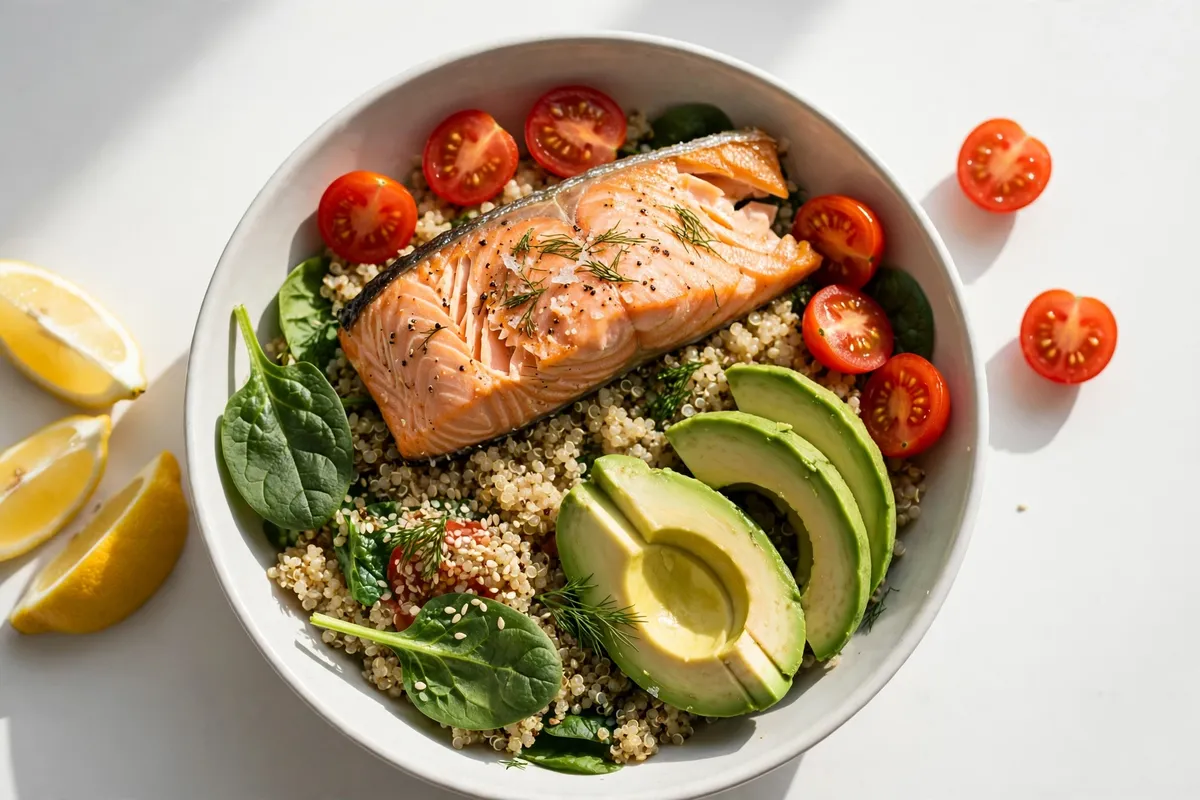
This bowl puts the pattern on one plate: baked salmon with lemon, fluffy quinoa, spinach, cherry tomatoes and avocado, finished with olive oil and fresh dill. It takes 35 minutes, serves 2, and the salmon and quinoa both cook with almost no attention.
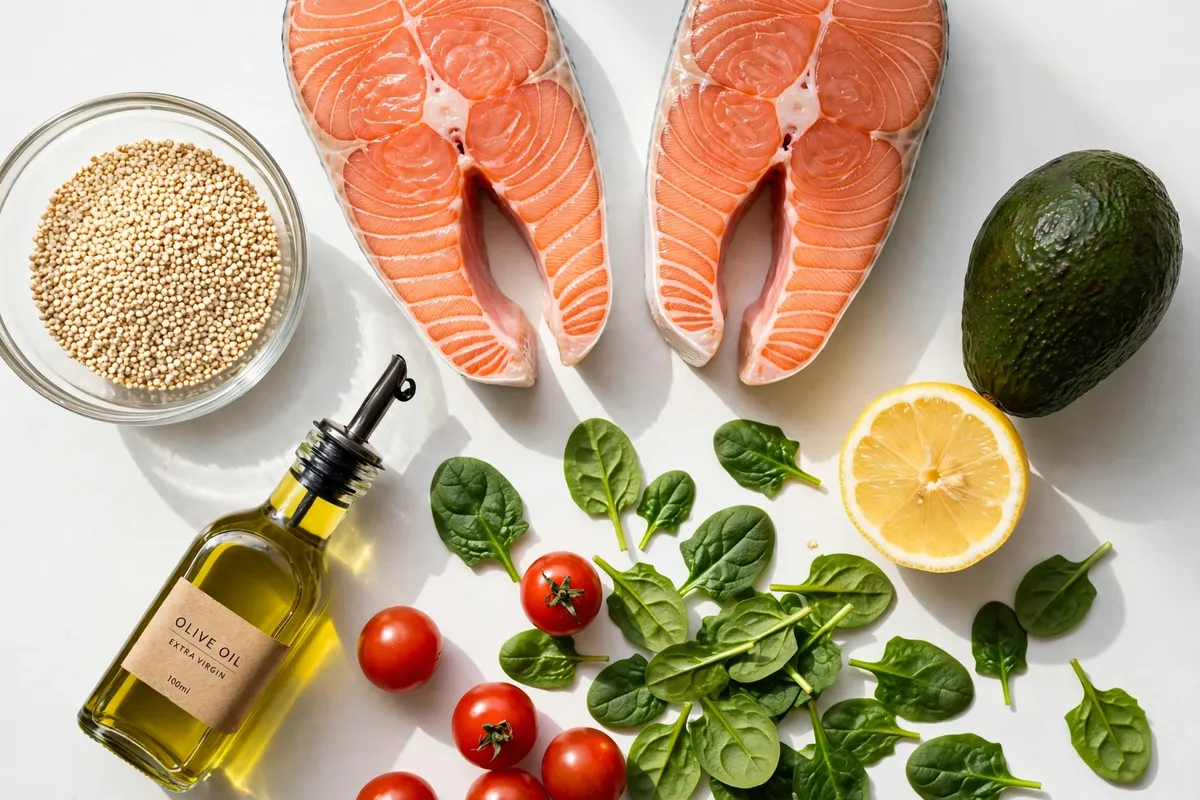
Ingredients for Salmon and Quinoa Bowl
- 2 salmon fillets or steaks (6 oz / 170 g each)
- 1 cup (170 g) quinoa, rinsed
- 2 cups (480 ml) water
- 1 avocado, sliced
- 2 cups baby spinach
- 1 cup cherry tomatoes, halved
- 2 tablespoons extra-virgin olive oil
- 1 lemon, half juiced and half cut into wedges
- Fresh dill, to serve (optional)
- Salt and freshly ground black pepper
How to make Salmon and Quinoa Bowl
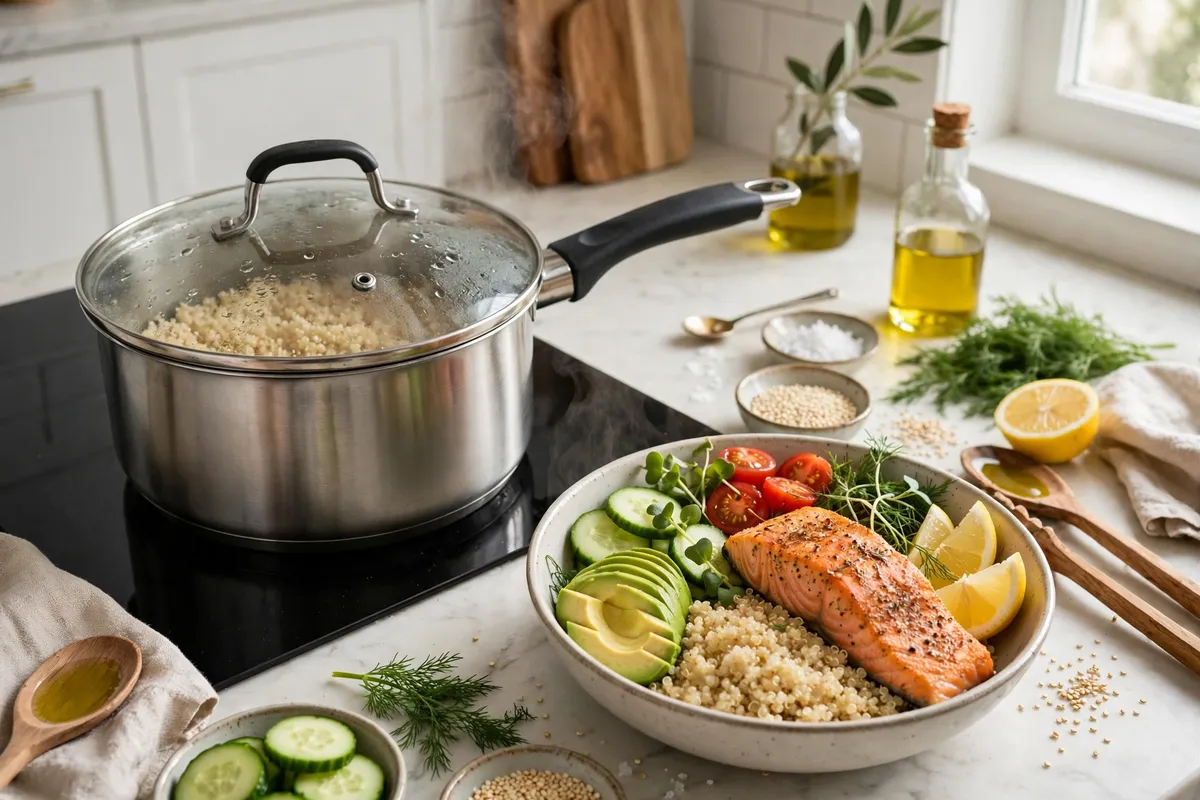
Cook the quinoa
Bring the water to a boil in a medium saucepan with a pinch of salt. Add the rinsed quinoa, cover, reduce to a low simmer and cook for 15 minutes. Remove from the heat, leave covered for 5 minutes, then fluff with a fork.
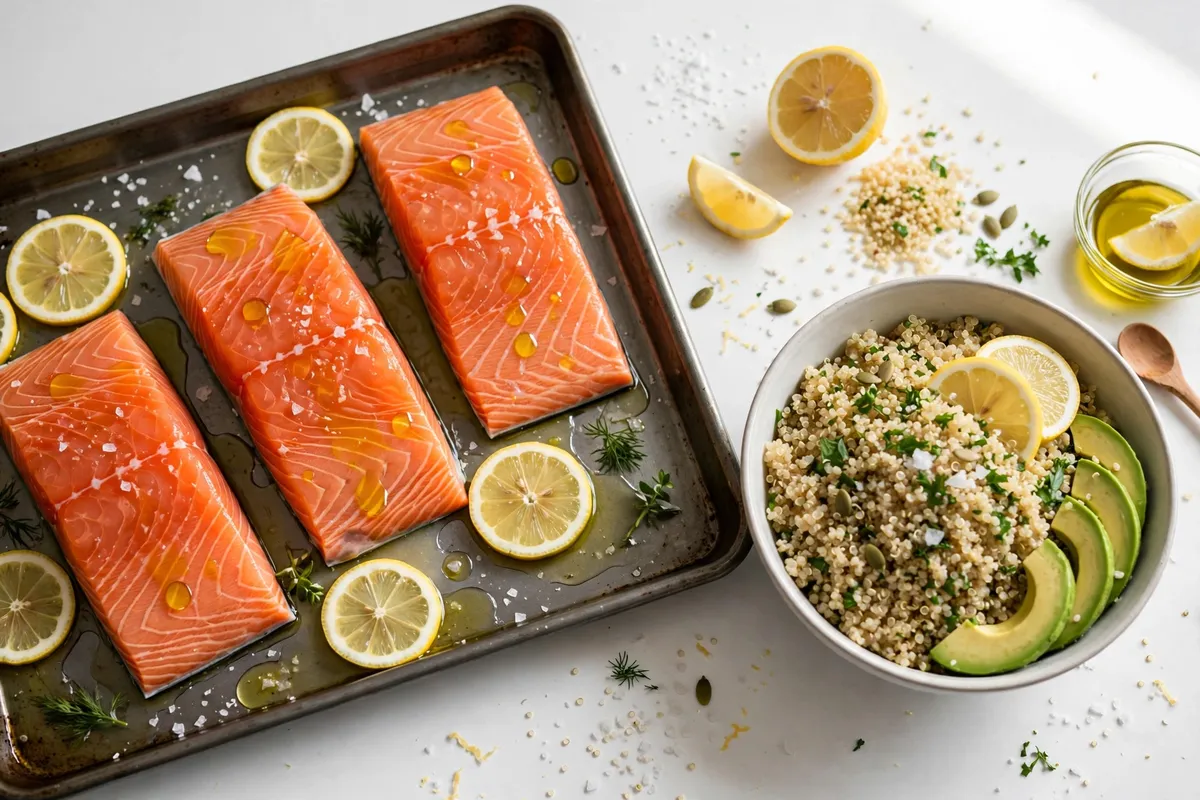
Season the salmon
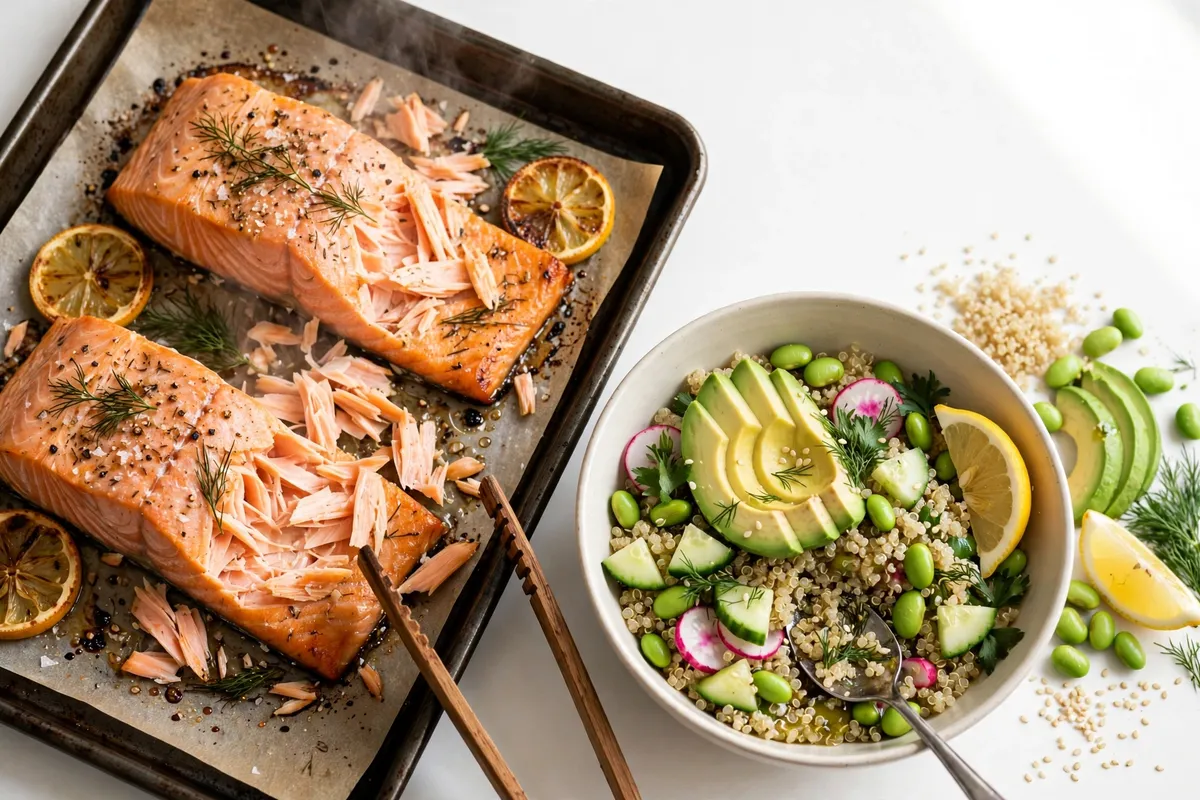
Preheat the oven to 400°F (200°C). Place the salmon on a parchment-lined baking sheet, skin-side down. Brush with 1 tablespoon of the olive oil, squeeze over half the lemon, and season with salt and pepper.
Bake the salmon
Bake for 12 to 15 minutes, until the salmon flakes easily with a fork and is opaque in the center. Thicker fillets may need the full 15 minutes; thinner steaks are often done at 12.
Prep the avocado and vegetables
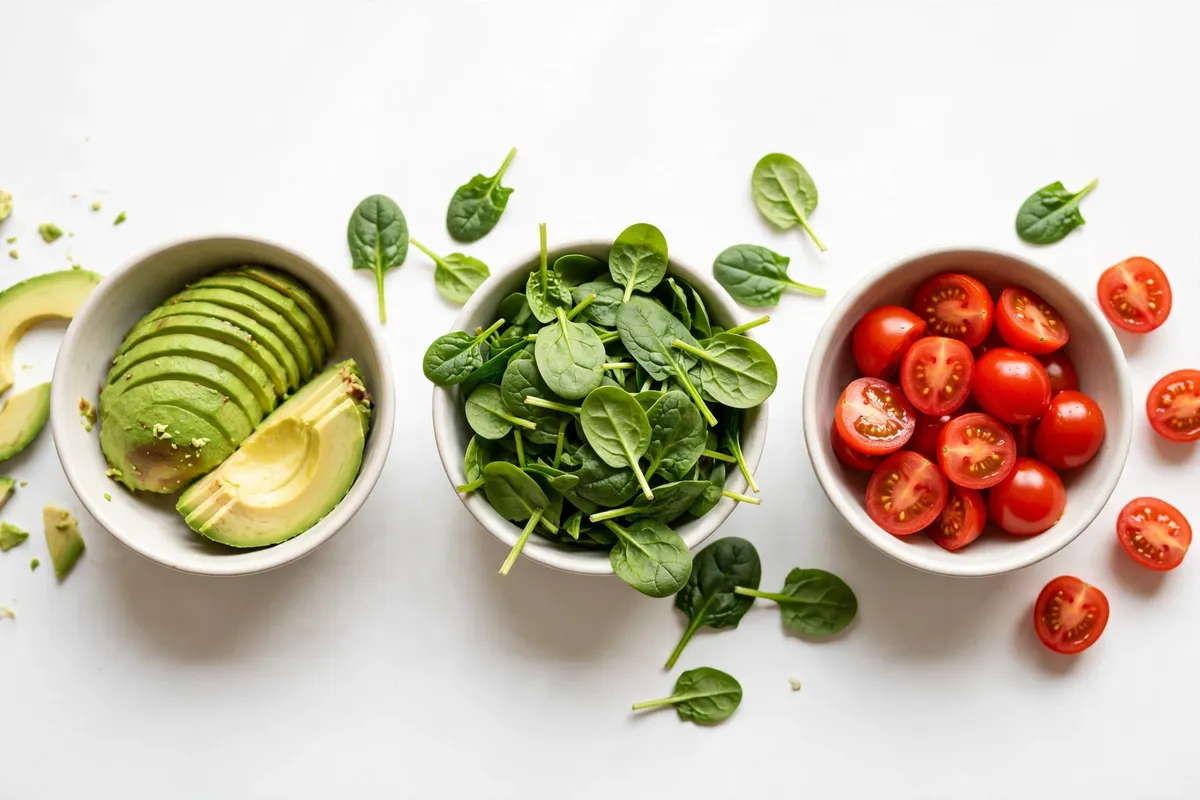
While the salmon bakes, slice the avocado, halve the cherry tomatoes and wash the spinach. Toss the spinach and tomatoes with the remaining tablespoon of olive oil and a pinch of salt.
Assemble the bowls
Divide the quinoa between 2 bowls. Top with the spinach and tomato salad, avocado slices and a salmon fillet each. Scatter over fresh dill if using and serve with lemon wedges.
Tips for the best salmon and quinoa bowl
- Do not overbake the salmon. Pull it out when it flakes easily but is still slightly translucent in the very center — it finishes cooking from residual heat on the tray.
- Use the skin. Baking skin-side down protects the flesh from drying out and makes the fillet easy to lift off the tray; the skin peels away cleanly after baking.
- Season the quinoa. Cook the quinoa in lightly salted water, or swap the water for vegetable broth for a deeper flavour — the grain is half the bowl, so it should taste of something.
- Swap the fish. Trout or arctic char cook the same way at the same temperature; sardines on toast (see our sardines recipes) make a quicker version of the same pattern.
How to store salmon and quinoa bowl
Store the quinoa and salmon separately in airtight containers in the fridge for up to 2 days — cooked salmon dries out quickly, so eat it sooner rather than later. Reheat the salmon gently in a 275°F (135°C) oven for about 10 minutes, or eat it cold over the quinoa as a salad. Add the avocado fresh each time, and keep the spinach and tomatoes undressed until serving.
Anti-Inflammatory Diet FAQs
What foods are anti-inflammatory?
The foods most often listed in anti-inflammatory eating patterns are fatty fish such as salmon and sardines, leafy greens, berries, olive oil, nuts and seeds, whole grains, beans, and herbs and spices like turmeric and ginger. The pattern is built around these foods rather than any single ingredient.
What is a good anti-inflammatory breakfast?
A breakfast that fits the pattern is Greek yogurt with berries and walnuts, or oatmeal with ground flaxseed and sliced fruit. Both are built from foods commonly included in anti-inflammatory eating patterns and take minutes to make.
What should you avoid on an anti-inflammatory diet?
Anti-inflammatory eating patterns generally limit heavily processed foods, sugary drinks, refined grains, processed meats and fried foods. Nothing is banned outright — the pattern is about how often these foods appear and how large the portions are.
How do you start an anti-inflammatory diet?
Start with two or three swaps rather than a full overhaul: cook with olive oil instead of butter, add a serving of leafy greens to one meal a day, and eat fish twice a week. Build the habit over a few weeks, then add more of the pattern's foods.
Your week of dinners, planned.
Build a free 7-day meal plan and download it as a beautiful image.