Mediterranean Diet
The Mediterranean diet is less a diet and more a way of eating: olive oil, vegetables, beans, whole grains and fish, cooked simply and eaten slowly. This guide explains what the pattern looks like, what a day of eating can be, and ends with a full Mediterranean chicken bowl recipe to try tonight.
This page is general information only and is not medical advice. If you have a medical condition or are changing your diet for health reasons, talk to a doctor or a registered dietitian first.
What is the Mediterranean diet?
The Mediterranean diet is based on the traditional eating patterns of Greece, southern Italy, Spain and other countries around the Mediterranean Sea. It is not a strict plan with calorie limits or banned foods. Instead it is a pattern: vegetables and fruit at every meal, whole grains and beans as staples, olive oil as the main fat, fish a few times a week, and meat — especially red meat — kept occasional. Herbs, lemon and garlic do most of the seasoning, and meals are usually eaten slowly and shared.
Because the pattern is flexible, it adapts easily to a normal week. You do not need special ingredients or a new pantry — most of it is already in a well-stocked kitchen.
What to eat on the Mediterranean diet
- Every day: vegetables and fruit, whole grains (bread, pasta, rice, quinoa), beans and lentils, nuts and seeds, and extra-virgin olive oil as the main cooking fat.
- A few times a week: fish and seafood, poultry, eggs, and dairy such as Greek yogurt and feta in moderate amounts.
- For flavour: garlic, lemon, fresh herbs (oregano, parsley, dill, mint) and spices, which replace much of the salt and sauces in other cooking styles.
What to limit
Red meat, butter and heavily processed foods — sugary drinks, packaged snacks, processed meats — appear rarely in the traditional pattern, and refined grains are kept to a small share of the plate. Nothing is forbidden outright; the pattern is about frequency and portion, not rules. If you currently eat red meat most days, cutting back to once a week and swapping in a bean or fish meal is the single biggest shift.
A sample day on the Mediterranean diet
- Breakfast: Greek yogurt with berries, a drizzle of honey and a handful of walnuts.
- Lunch: Lentil and vegetable soup with a slice of whole-grain bread and a small salad dressed with olive oil and lemon.
- Snack: An apple with a small handful of almonds, or hummus with cucumber and carrot sticks.
- Dinner: The Mediterranean chicken bowl below — quinoa, lemon-herb chicken, chickpeas, tomatoes, cucumber, olives and tzatziki.
Featured recipe: Mediterranean Chicken Bowl
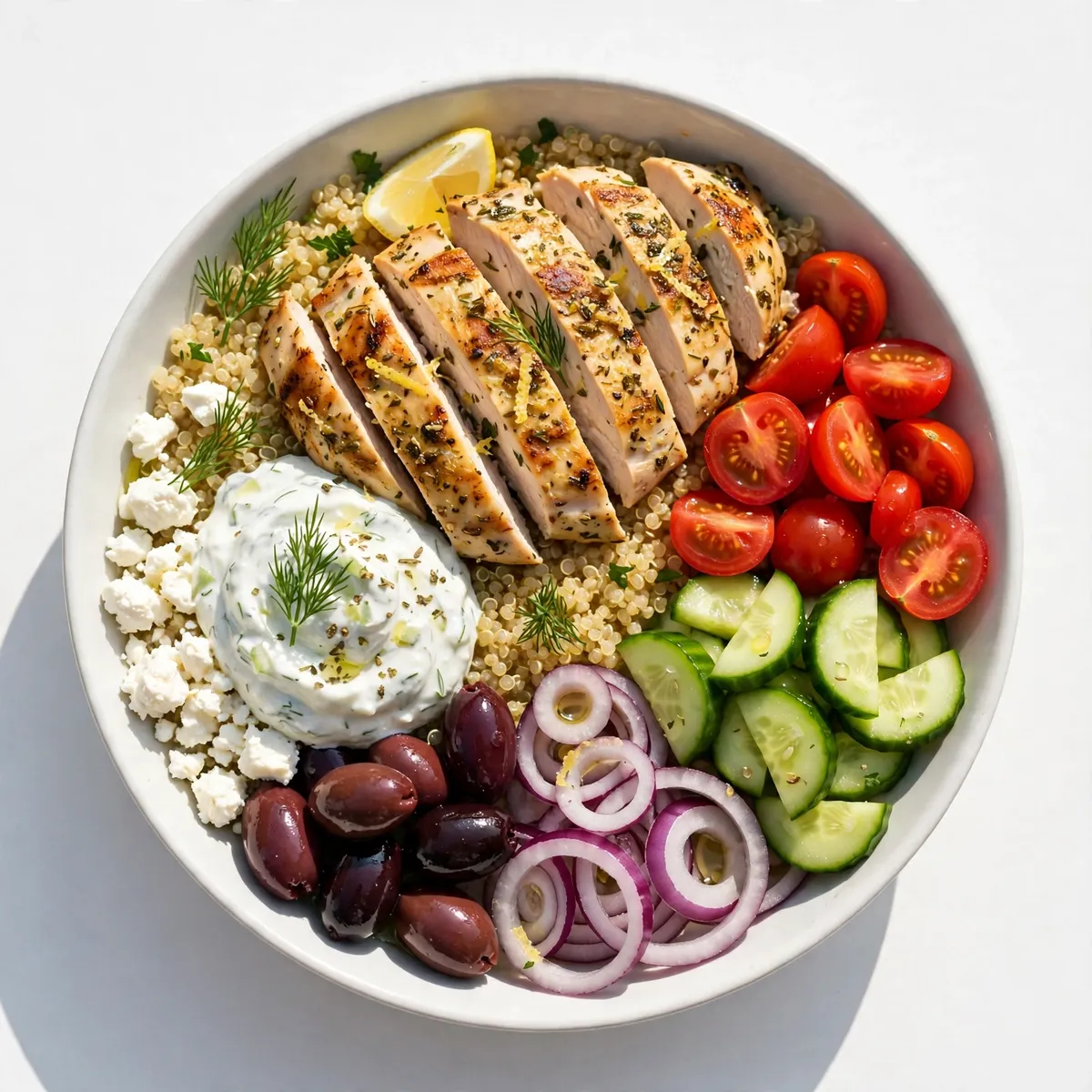
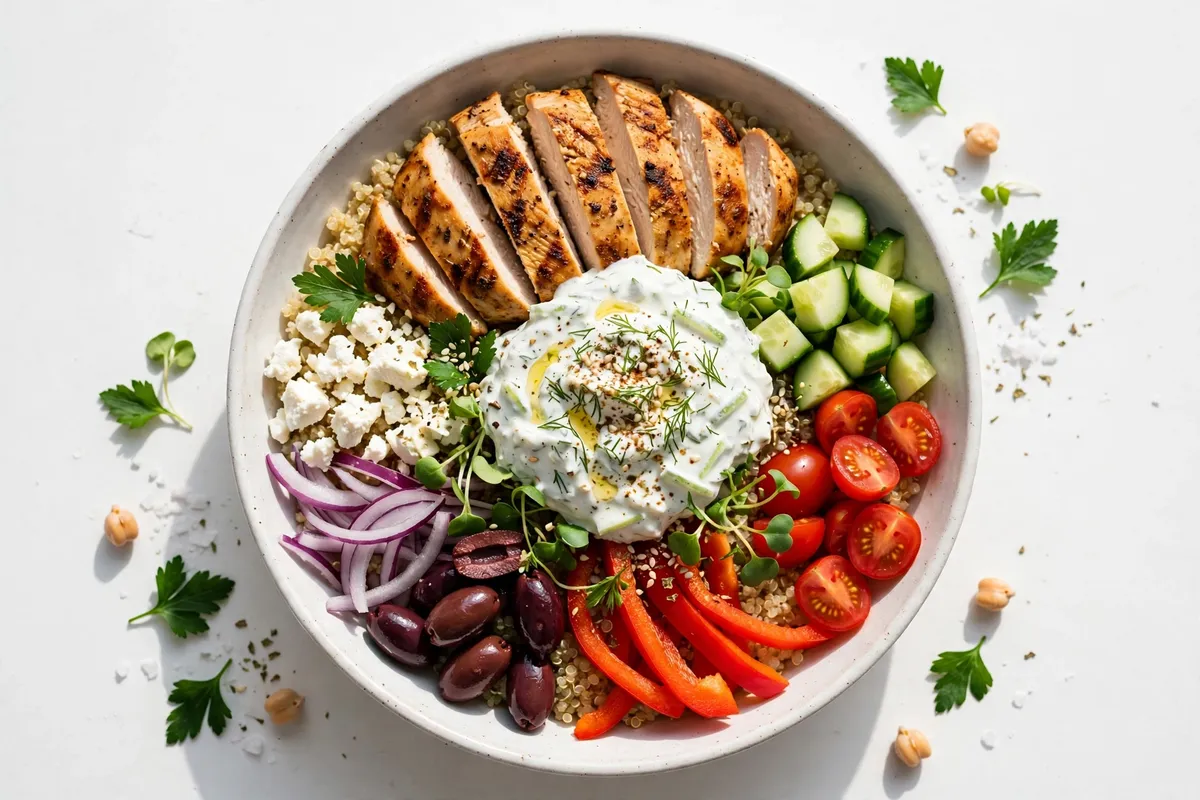
This bowl is the pattern in one dish: quinoa and chickpeas for the base, lemon-and-oregano chicken for protein, and a colourful pile of tomatoes, cucumber, onion, olives and feta, finished with a spoonful of tzatziki. It takes 40 minutes, serves 4, and the components keep separately in the fridge, so it doubles as meal prep.
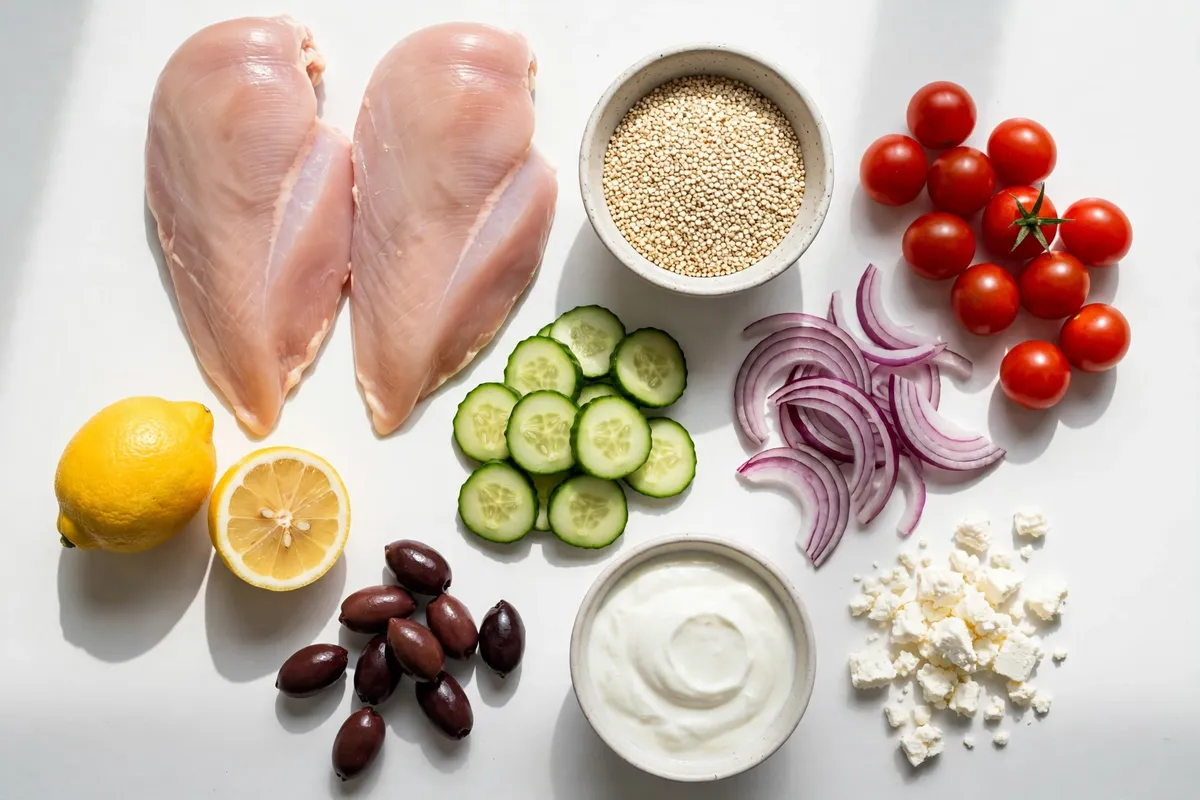
Ingredients for Mediterranean Chicken Bowl
- 1 cup (170 g) quinoa, rinsed
- 2 cups (480 ml) chicken or vegetable broth
- 1 lb (450 g) boneless, skinless chicken breasts
- 2 tablespoons extra-virgin olive oil
- 2 tablespoons lemon juice
- 2 garlic cloves, finely grated
- 1 teaspoon dried oregano
- 1 can (15 oz / 425 g) chickpeas, drained and rinsed
- 1 cup cherry tomatoes, halved
- 1 cup cucumber, diced
- 1/2 cup thinly sliced red onion
- 1/2 cup kalamata olives
- 1/2 cup crumbled feta cheese
- 1/2 cup tzatziki
- 1/2 red bell pepper, sliced (optional)
- Salt and freshly ground black pepper
How to make Mediterranean Chicken Bowl
Marinate the chicken
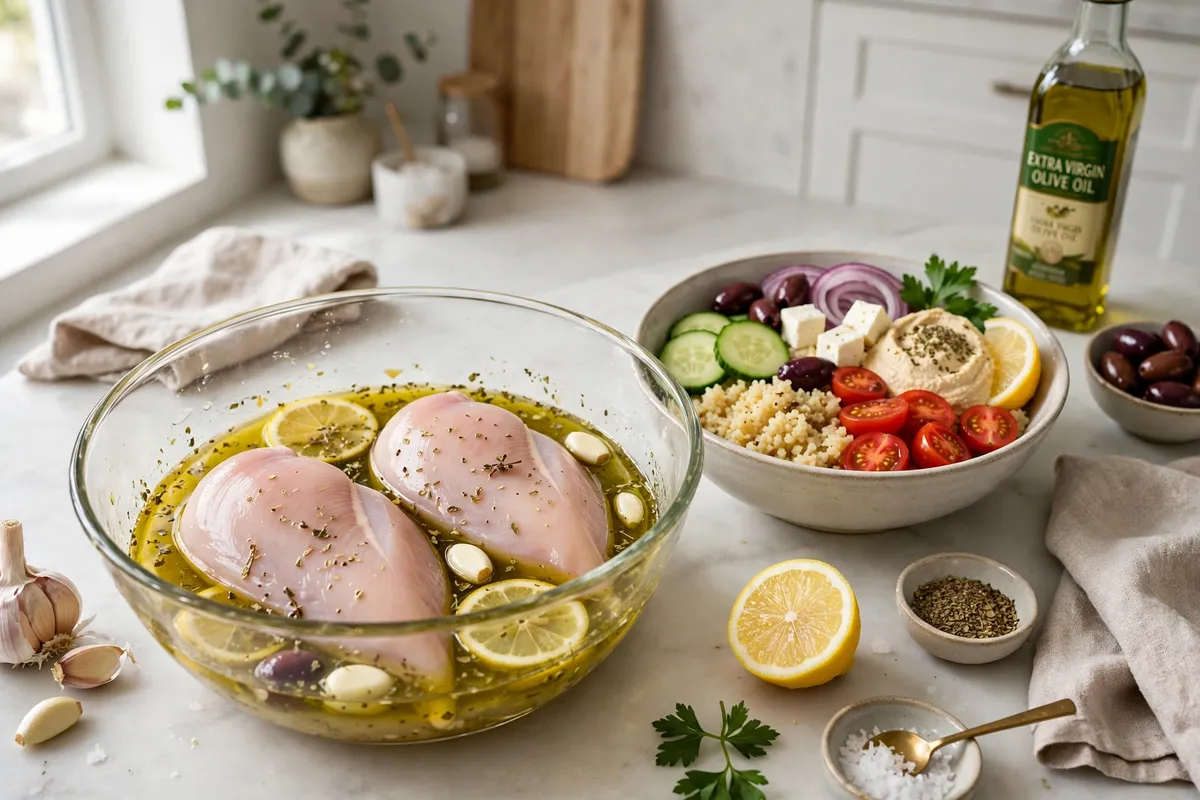
In a bowl, whisk the olive oil, lemon juice, garlic, oregano, 1/2 teaspoon of salt and a few grinds of pepper. Add the chicken breasts and turn to coat, then leave to marinate for 15 minutes while you start the quinoa.
Cook the quinoa
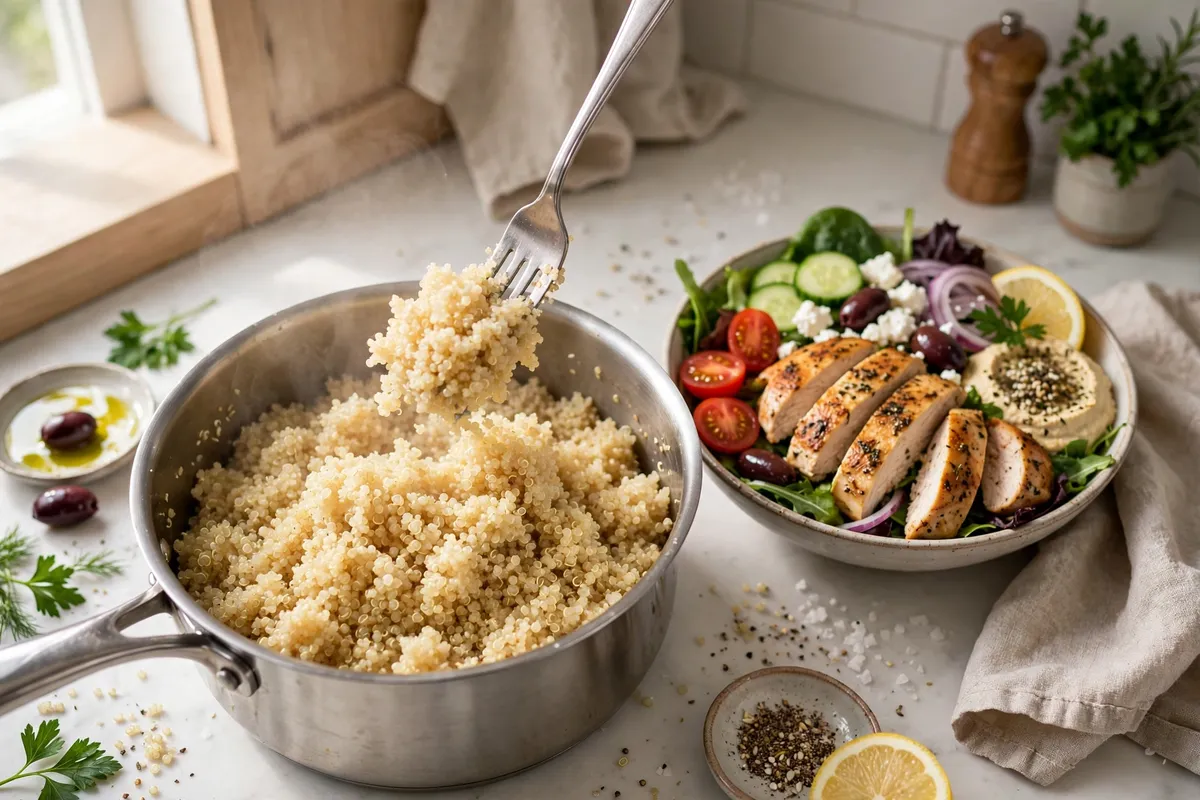
Bring the broth to a boil in a medium saucepan. Add the quinoa, cover, reduce to a low simmer and cook for 15 minutes. Remove from the heat, leave covered for 5 minutes, then fluff with a fork.
Sear the chicken
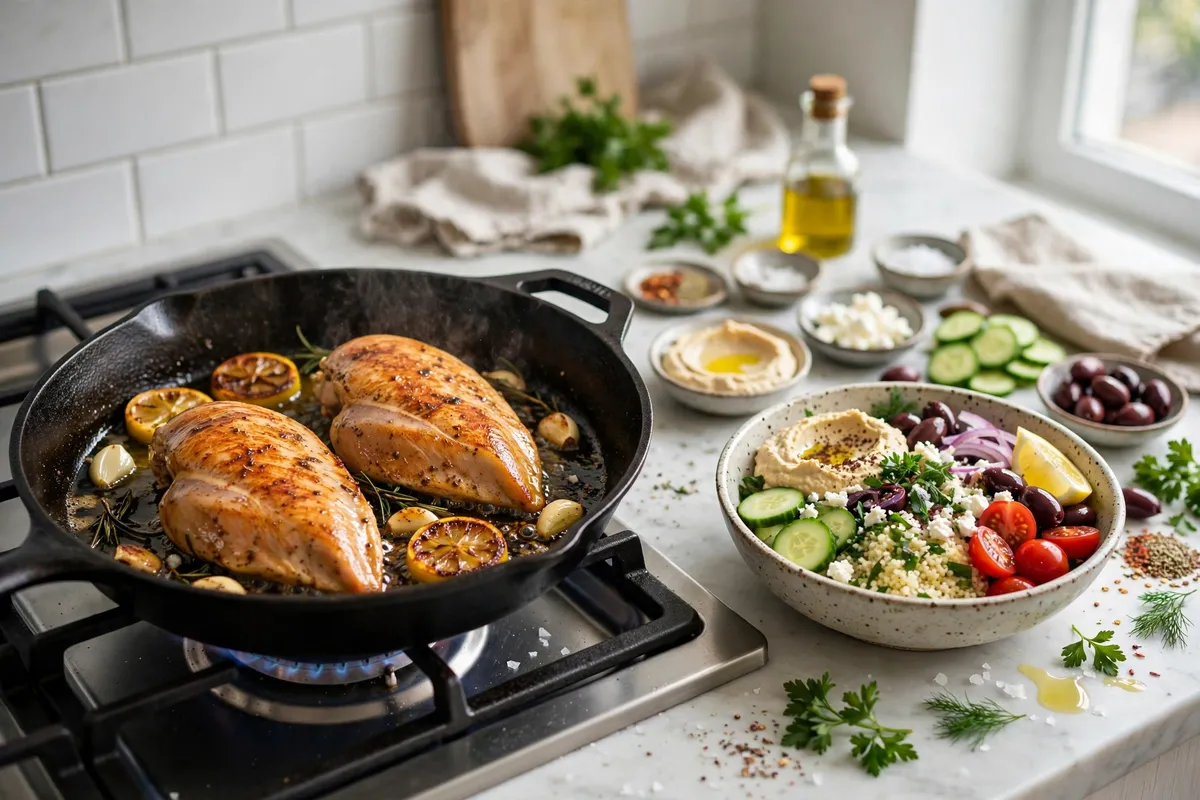
Heat a large skillet over medium-high heat. Sear the chicken for 6 to 7 minutes per side, until golden and cooked through to 165°F (74°C) in the thickest part. Rest for 5 minutes, then slice.
Prep the toppings
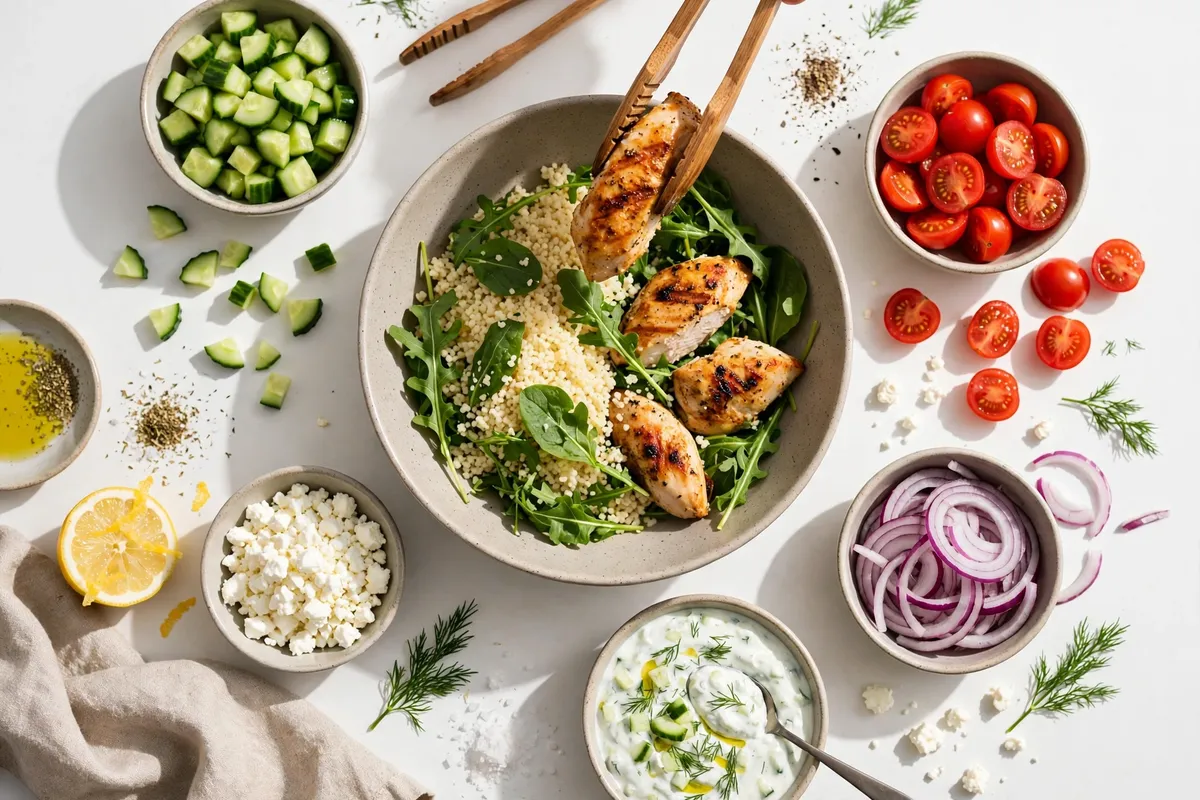
While the chicken rests, halve the tomatoes, dice the cucumber, slice the red onion and pepper, and drain and rinse the chickpeas. Set out the olives, feta and tzatziki so the bowls are quick to build.
Assemble the bowls
Divide the quinoa among 4 bowls. Top with the sliced chicken, chickpeas, tomatoes, cucumber, onion, olives, pepper and feta. Add a generous spoonful of tzatziki to each bowl and serve with a lemon wedge.
Tips for the best Mediterranean chicken bowl
- Cook the quinoa in broth. Water works, but broth adds a savoury depth that carries the whole bowl — it is the easiest upgrade in the recipe.
- Rest the chicken. Five minutes of resting keeps the juices in the meat instead of on the cutting board. Slice just before serving.
- Make your own tzatziki. Our tzatziki sauce recipe takes 15 minutes and tastes far fresher than a store-bought tub.
- Meal-prep it. Store the quinoa, chicken and toppings in separate containers and assemble fresh each day — the bowls keep for up to 4 days.
How to store Mediterranean chicken bowl
Store the components separately in airtight containers in the fridge for up to 4 days: quinoa, chicken, chickpeas and the chopped vegetables each keep well on their own. Keep the tzatziki in its own container. Reheat the quinoa and chicken gently in the microwave, then add the cold toppings fresh. The assembled bowl is best eaten the same day.
Mediterranean Diet FAQs
What foods are on the Mediterranean diet?
The Mediterranean diet is built around vegetables, fruit, whole grains, beans and lentils, olive oil, nuts, fish and seafood, with moderate amounts of dairy and poultry. Red meat, butter and heavily processed foods appear only occasionally.
What does a day on the Mediterranean diet look like?
A typical day might be Greek yogurt with fruit and walnuts for breakfast, a lentil and vegetable soup for lunch, a handful of nuts as a snack, and a dish like the Mediterranean chicken bowl — quinoa, chicken, chickpeas and vegetables with tzatziki — for dinner.
Can you eat chicken on the Mediterranean diet?
Yes. Poultry is eaten in moderate amounts on the Mediterranean diet — a few times a week rather than daily — while fish and plant proteins like beans and lentils are the everyday staples. Grilled or roasted chicken with vegetables fits the pattern well.
Is the Mediterranean diet good for beginners?
It is one of the easiest eating patterns to start because there is no calorie counting and no banned food group. Begin with two or three swaps — olive oil as your main cooking fat, a bean-based meal twice a week, fish once or twice a week — and build from there.
Your week of dinners, planned.
Build a free 7-day meal plan and download it as a beautiful image.