Shami Kabab
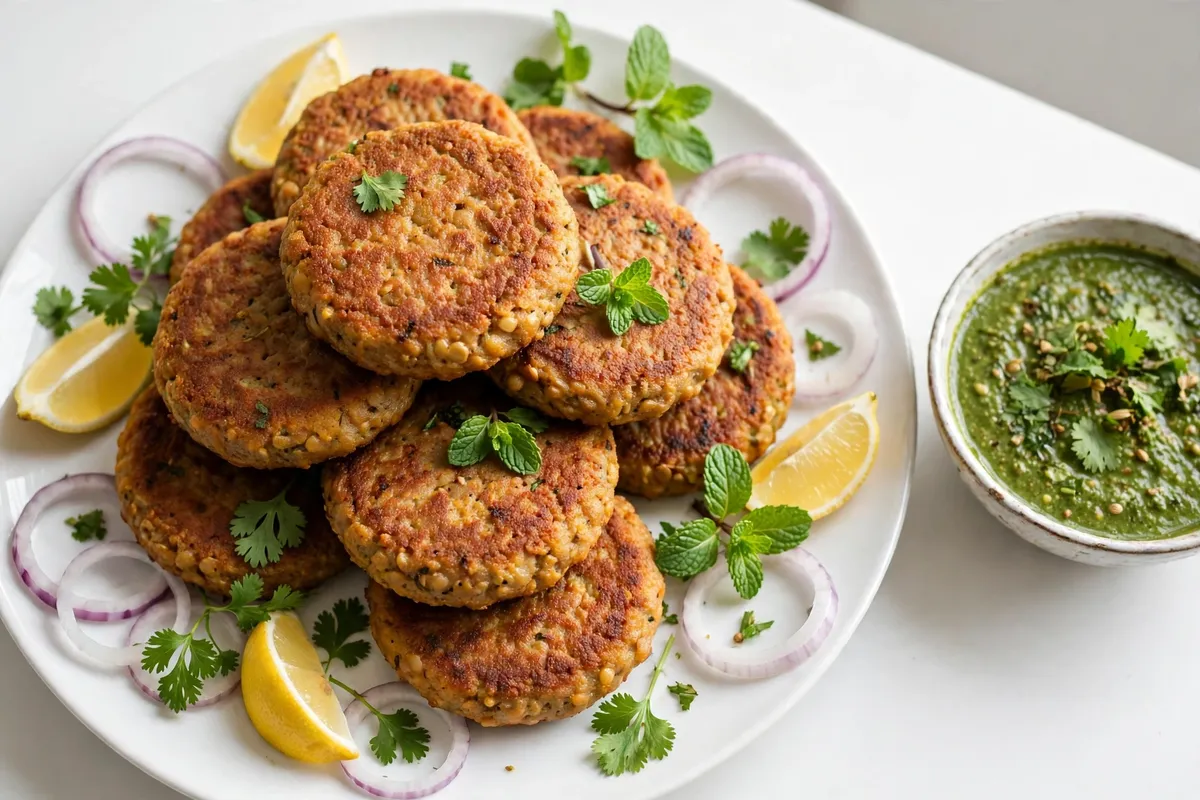
Shami kabab is the mainstay of Pakistani cooking: beef and chana dal simmered with a bundle of whole spices, ground and shaped into patties, then pan-fried until golden. It is the dawat appetiser, the Eid platter, the sandwich filling and the freezer staple all in one — and once you have a batch in the freezer, you are never more than ten minutes from a proper snack.
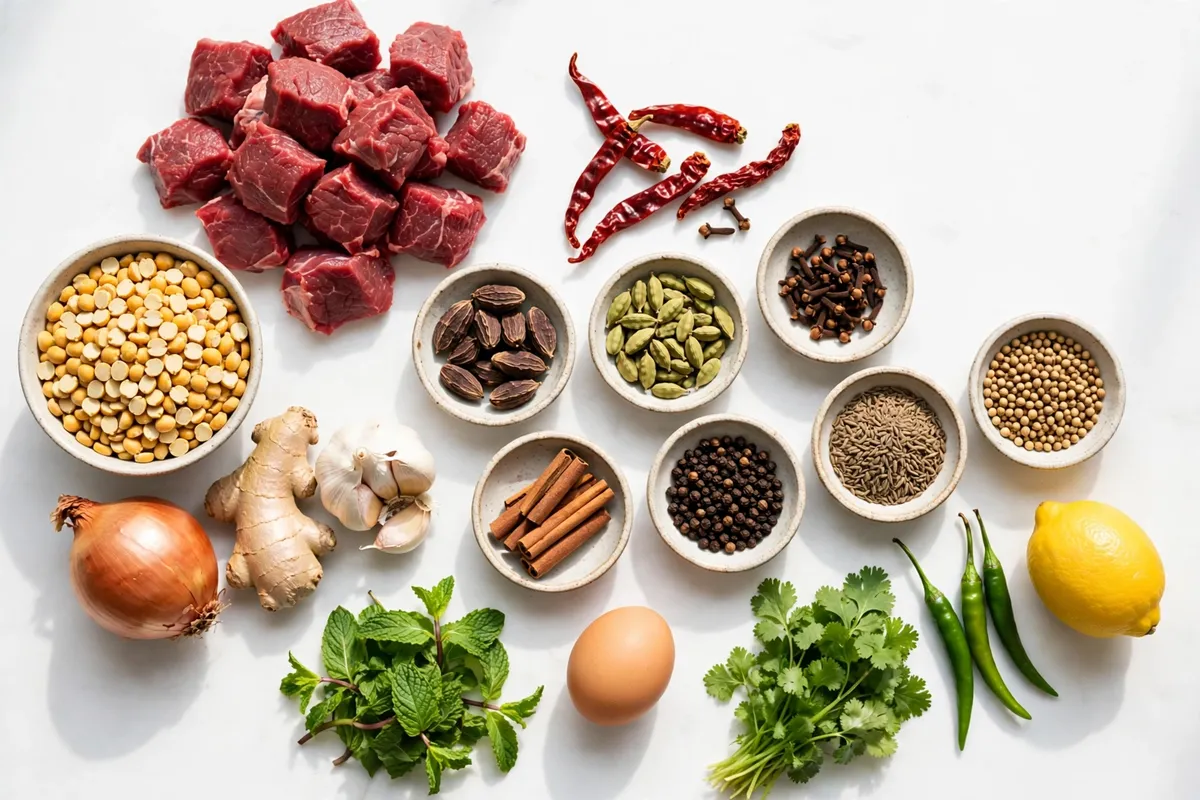
Ingredients
- 2 lb (900g) boneless beef stewing meat, cut into cubes
- 1 cup (200g) chana dal (split chickpeas), soaked 4 hours or overnight
- 1 onion, finely chopped
- 1 tbsp ginger paste
- 1 tbsp garlic paste
- 6 dried red chillies
- 1 tsp red chilli powder
- ½ tsp turmeric powder
- 2½ tsp salt, plus more to taste
- 3 cups (720ml) water
- 1 black cardamom pod
- 2 green cardamom pods
- 6 whole cloves
- 1 small cinnamon stick
- 2 tsp black peppercorns
- 1½ tsp coriander seeds
- 1½ tsp cumin seeds
- 3 bay leaves
- 1 egg, beaten
- ½ cup chopped coriander leaves
- ½ cup chopped mint leaves
- 3 green chillies, finely chopped
- Juice of ½ lemon
- Oil, for shallow frying
How to make shami kabab
Soak the dal and tie the potli
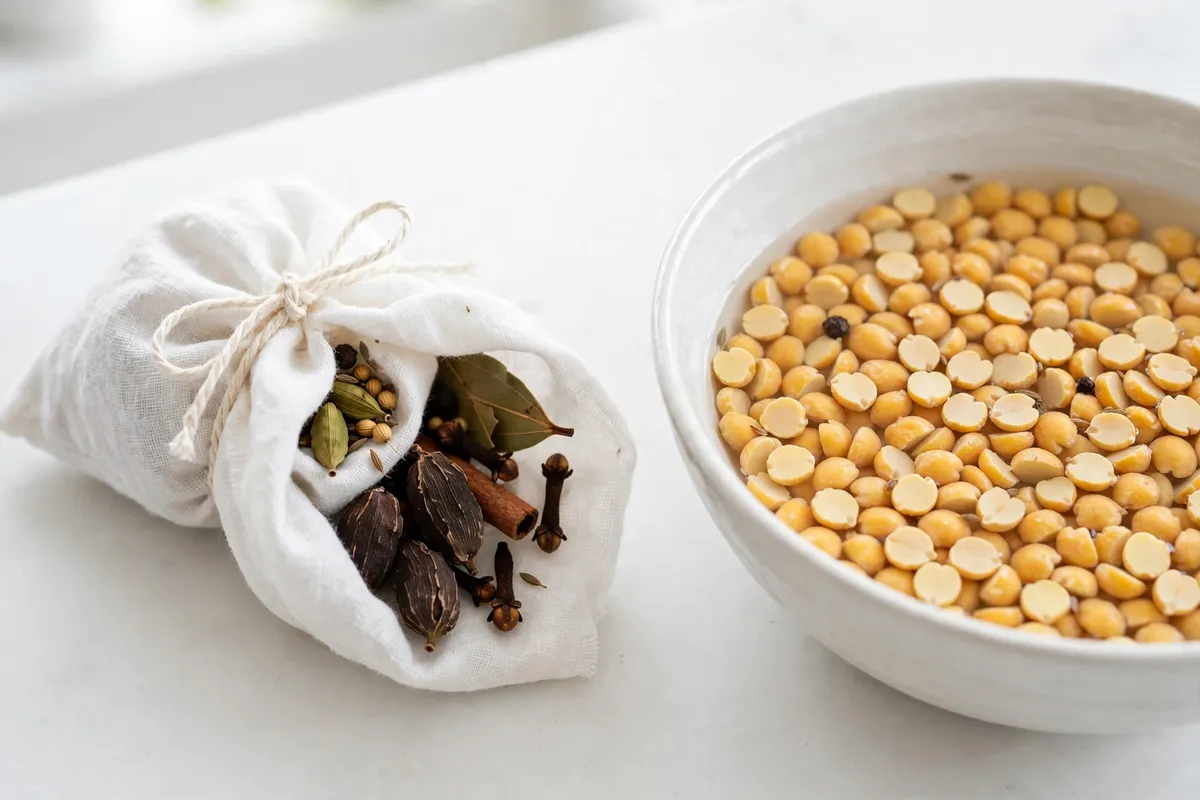
Rinse the chana dal until the water runs clear and soak for at least 4 hours, or overnight — soaking lets the dal dissolve completely into the mixture instead of staying grainy. Lay a small square of clean muslin on the counter and place the black and green cardamoms, cloves, cinnamon, peppercorns, coriander and cumin seeds and bay leaves in the centre. Gather the corners and tie tightly with kitchen twine to make a potli — a spice bundle that perfumes the meat without leaving whole spices in the final kabab.
Cook the beef and dal
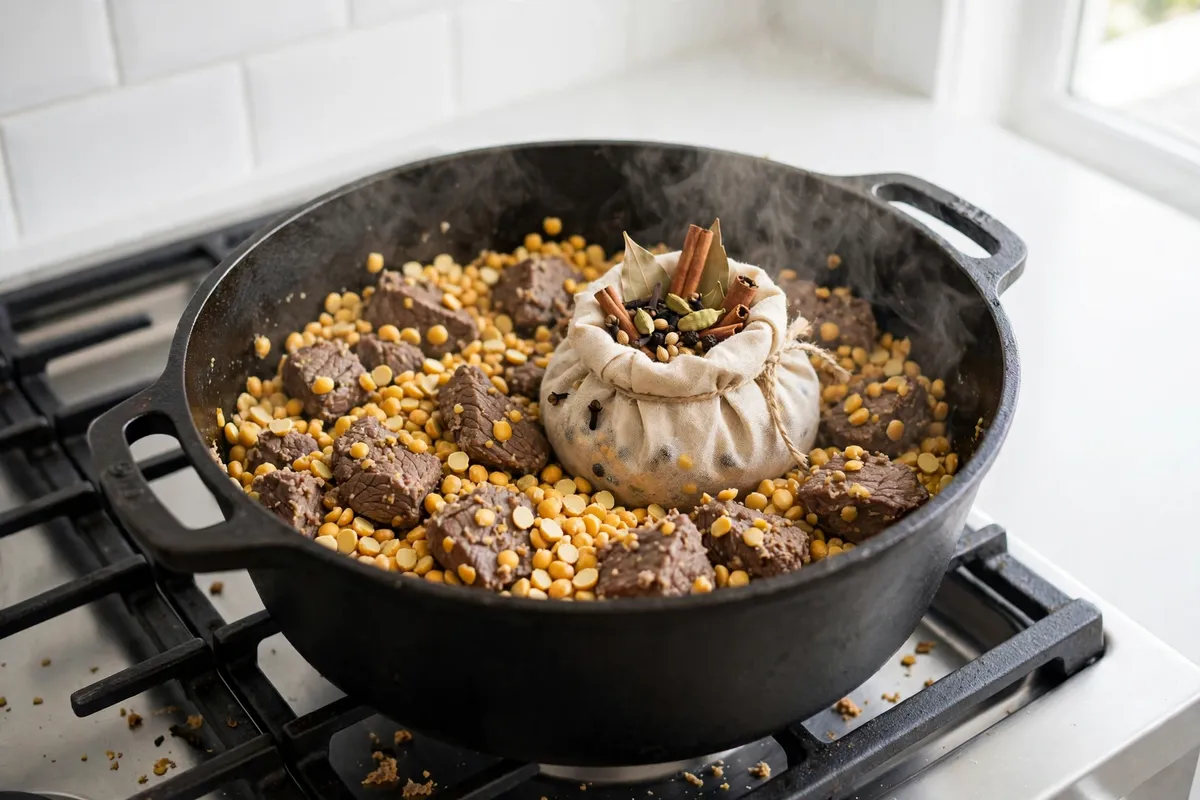
Put the beef, drained chana dal, onion, ginger and garlic pastes, dried chillies, chilli powder, turmeric, salt and water in a large heavy pot with the potli. Bring to a boil, then simmer covered on medium-low for 1 to 1½ hours, until the beef is very tender and the dal is soft. In a pressure cooker or Instant Pot, 30 minutes at high pressure does the same job. Then remove the lid and cook on high heat until ALL the water has evaporated — the mixture must be completely dry. A wet mixture is the single biggest reason shami kababs break in the pan.
Grind and mix
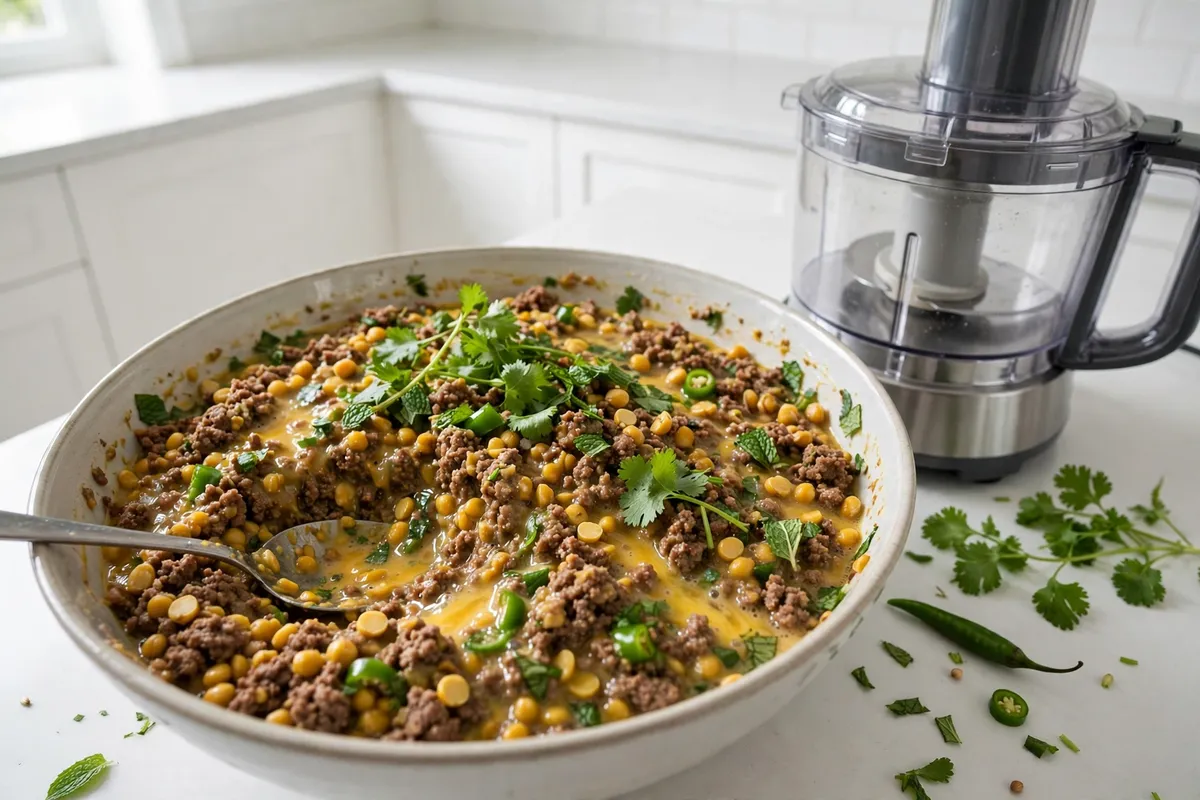
Discard the potli and let the mixture cool. Transfer it to a food processor and pulse until uniform but not a smooth paste — you want a little texture, the fibrous raishaydar bite that marks a good shami. Tip it into a bowl and mix in the beaten egg, chopped coriander and mint, green chillies and lemon juice. Taste and adjust the salt. If the mixture feels soft, refrigerate it for 30 minutes — cold mixture shapes far more cleanly.
Shape the patties
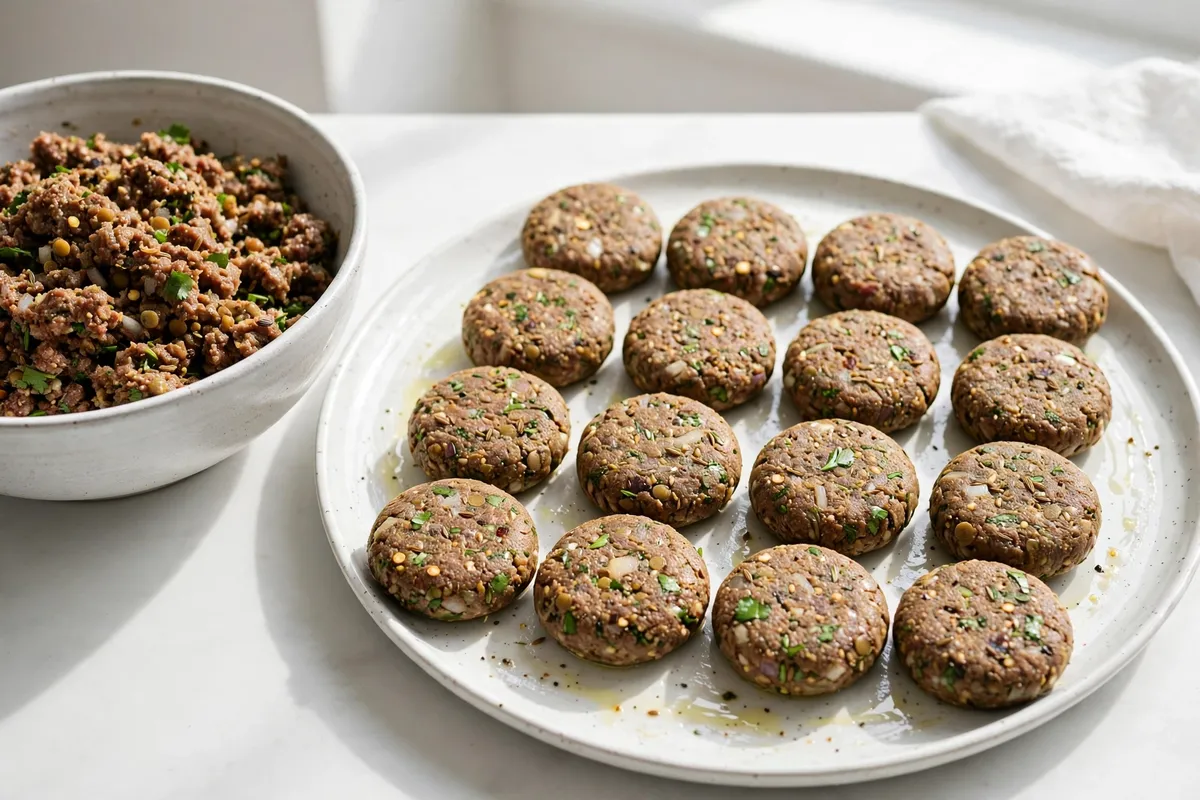
With lightly oiled hands, divide the mixture into about 20 portions of roughly 60g each. Compact each portion firmly in your fist, then flatten into a round patty about ½ inch thick, smoothing the edges. Place on a greased plate or tray. If you are freezing a batch, freeze the shaped patties on the tray first, then stack them in a freezer bag with baking paper between the layers.
Fry and serve
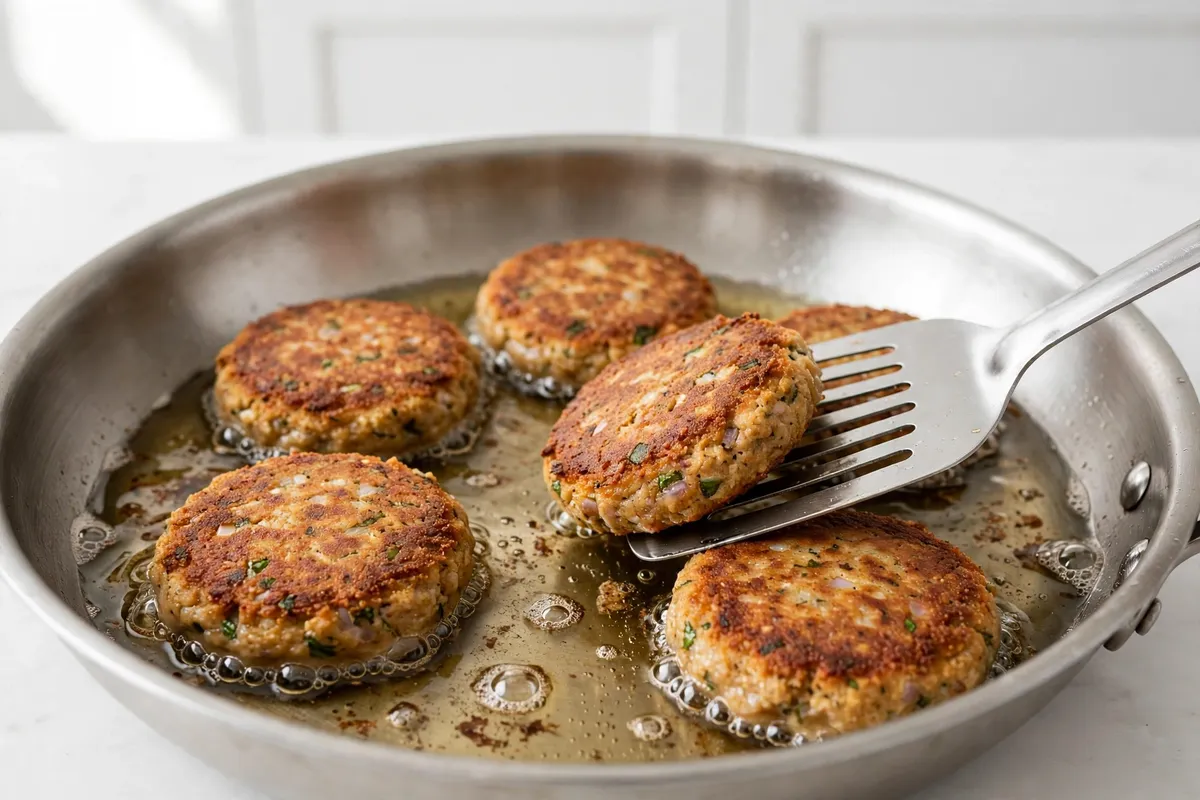
Heat oil about ½ inch deep in a pan to 350°F (180°C). Fry the kababs in batches on medium heat for about 2 minutes per side, until deep golden and crisp at the edges — do not crowd the pan and do not flip more than once. Drain briefly on kitchen paper and serve hot with mint chutney, sliced onions and lemon, or tucked into a paratha with chutney and salad.
Tips for the best shami kabab
- Use beef chunks, not mince. Whole stewing meat cooked with the dal and ground afterwards gives the fibrous, shreddy texture that defines a shami. Mince makes a smooth, burger-like patty — tasty, but not a shami.
- Dry the mixture completely. This is the step that decides everything. After the meat is tender, cook off every drop of water on high heat, stirring, until the mixture looks dry and crumbly. Wet mixture means broken kababs.
- Chill before shaping. A cold mixture holds its shape; a warm one slumps. Thirty minutes in the fridge after mixing makes shaping effortless and gives cleaner, firmer patties.
- Freeze before frying for the crispiest result. Patties fried from chilled or lightly frozen hold their shape best and brown more evenly. Many cooks shape the whole batch, freeze it, and fry straight from the freezer.
How to store shami kabab
Uncooked shaped patties keep for 2 days in the fridge or 6–9 months in the freezer (freeze on a tray first, then bag with baking paper between layers). Fried kababs keep for 2–3 days in the fridge; reheat in a hot pan or air fryer to re-crisp — the microwave makes them soft. Fry frozen patties straight from the freezer on medium heat, a few minutes longer per side.
Shami Kabab FAQs
Why do my shami kababs break while frying?
Almost always because the cooked mixture was too wet. The beef and dal must be cooked until every drop of water has evaporated before grinding — a wet mixture never binds, no matter how much egg you add. Other causes: shaping with warm mixture (chill it first), oil that is not hot enough, or flipping too often. One flip, hot oil, dry mixture, and they hold.
Can I freeze shami kababs?
Yes — shami kababs are one of the best freezer foods there is. Shape the patties, freeze them in a single layer on a tray, then stack in a freezer bag with baking paper between layers. They keep for 6–9 months. Fry straight from frozen on medium heat for a few minutes longer per side, or thaw in the fridge for an hour first. This is why Pakistani households make huge Ramadan batches.
Beef or mutton — which is best for shami kabab?
Both are traditional. Beef gives a firmer, meatier kabab and is the most common choice in Pakistan; mutton (goat) gives a richer, slightly fattier kabab with a deeper flavour. Use boneless stewing chunks of either — not mince — because whole meat ground after cooking gives the characteristic fibrous texture. Chicken works too, but it makes a softer, milder kabab.
Can I make shami kabab without a food processor?
Yes. If the beef and dal are cooked until truly tender and dry, you can mash them with a potato masher or a heavy spoon, then knead by hand until uniform. It takes more effort and the texture is a little coarser, which many people prefer. A hand mincer (keema machine) is the traditional tool and gives the best texture of all.
Your week of dinners, planned.
Build a free 7-day meal plan and download it as a beautiful image.