Sarson Ka Saag
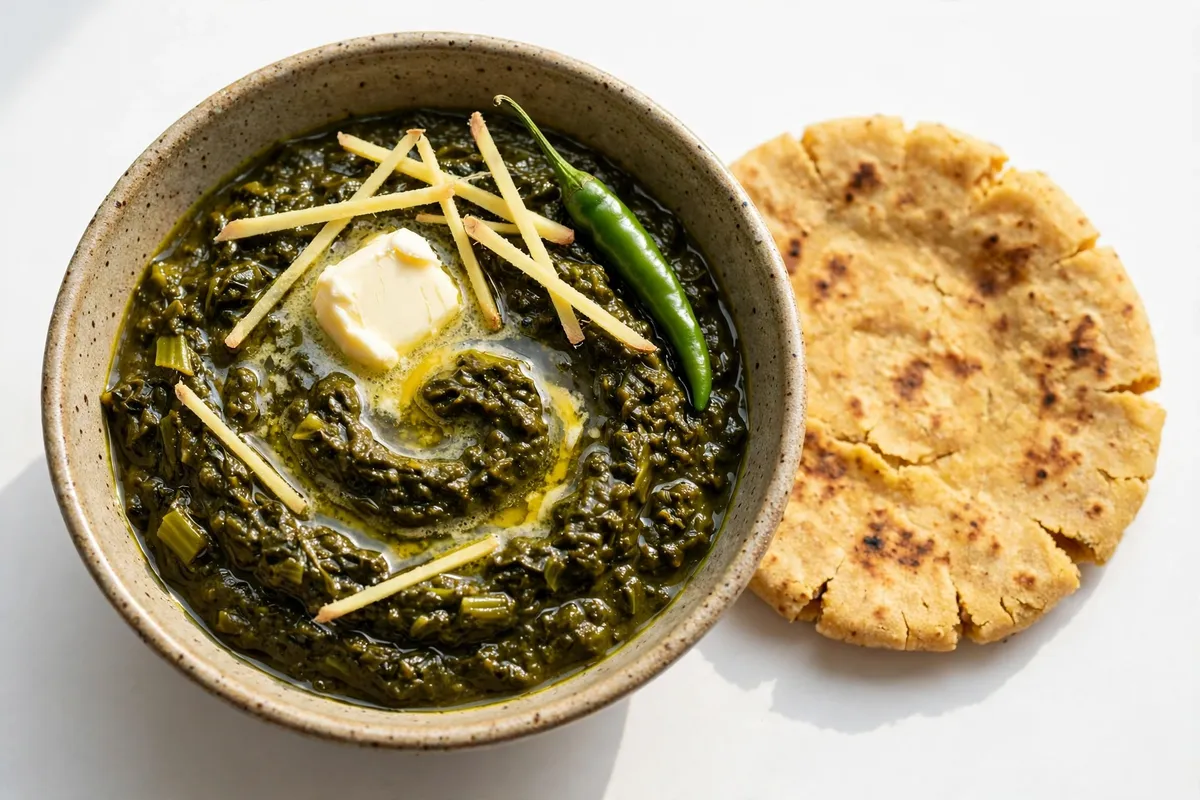
Sarson ka saag is Punjab's winter signature: mustard greens, spinach and bathua cooked down to a thick, dark, earthy curry, finished with a ghee tarka and served with makki di roti and a knob of white butter. It is a seasonal dish — mustard greens are at their best from November to January — and it tastes like the season it belongs to.
Ingredients
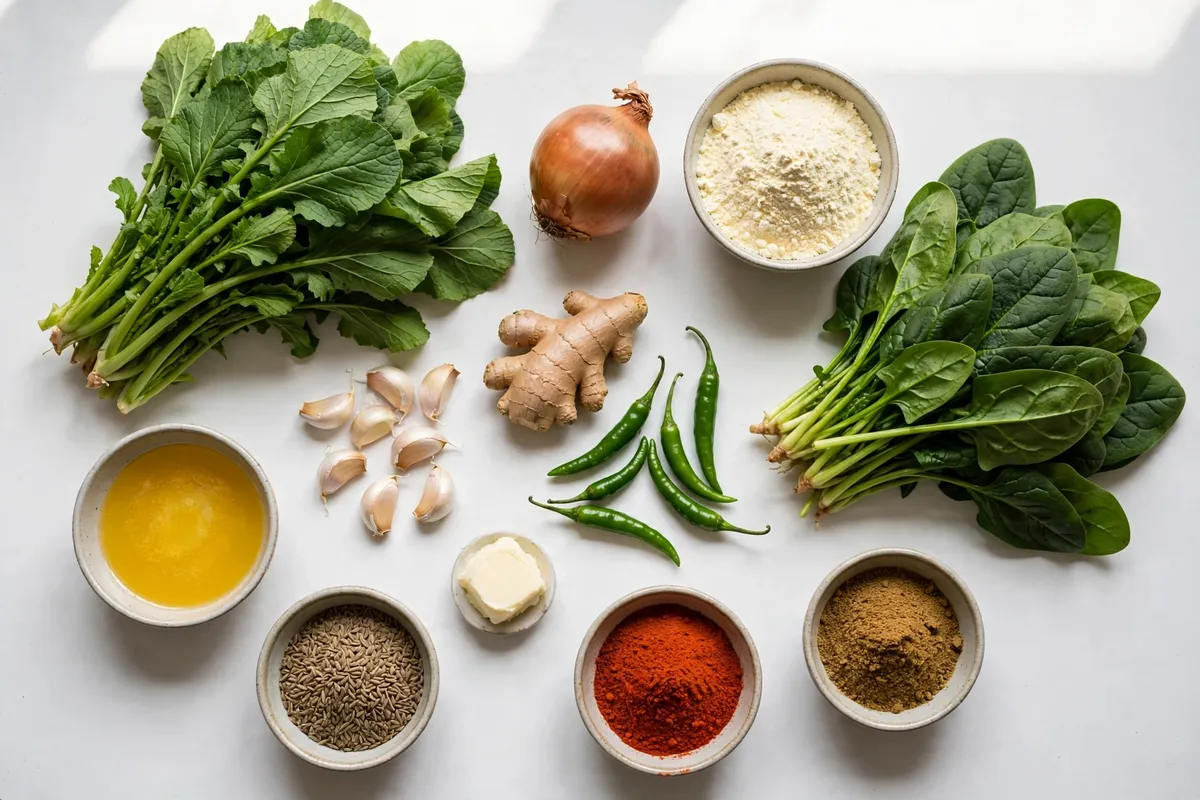
- 500g mustard greens (sarson), washed and roughly chopped
- 250g spinach leaves, washed
- 100g bathua (goosefoot), or extra spinach
- 3 green chillies, chopped
- 1 tbsp fresh ginger, sliced
- 2 tbsp maize flour (makki ka atta)
- 2 tbsp ghee, for the tarka
- 1 medium onion, thinly sliced
- 6 cloves garlic, thinly sliced
- 2 dried red chillies
- 1 tsp cumin seeds
- ½ tsp red chilli powder
- ½ tsp garam masala
- 1 tsp salt, or to taste
- White butter, to serve
- Makki di roti, to serve
How to make sarson ka saag
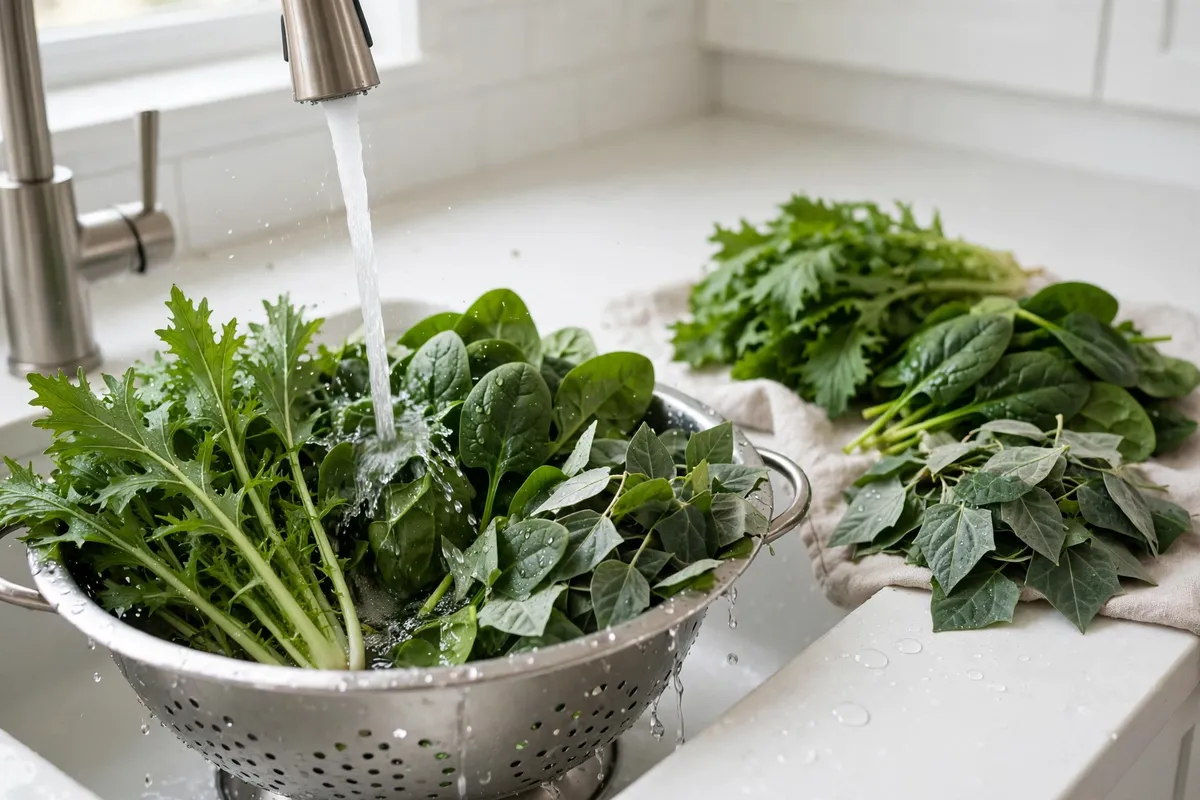
Wash the greens well
Wash the mustard greens, spinach and bathua in several changes of water — field greens carry a lot of grit, and one sandy mouthful ruins the dish. Roughly chop, discarding the thickest stems.
Cook the greens until soft
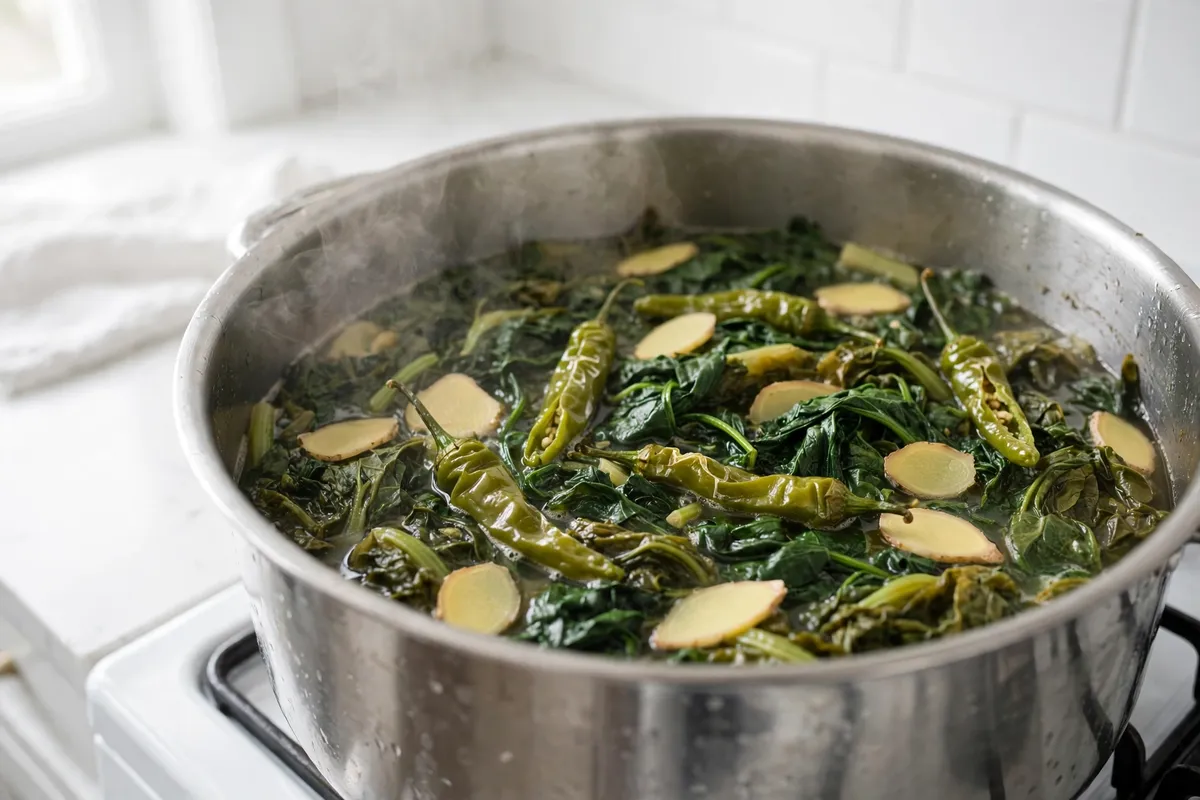
Put the greens in a large pot with the green chillies, ginger and 1 cup of water. Pressure cook for 4–5 whistles, or simmer covered for 25–30 minutes, until the greens are completely soft and dark. The mustard leaves should fall apart when pressed.
Mash coarse and thicken with maize flour
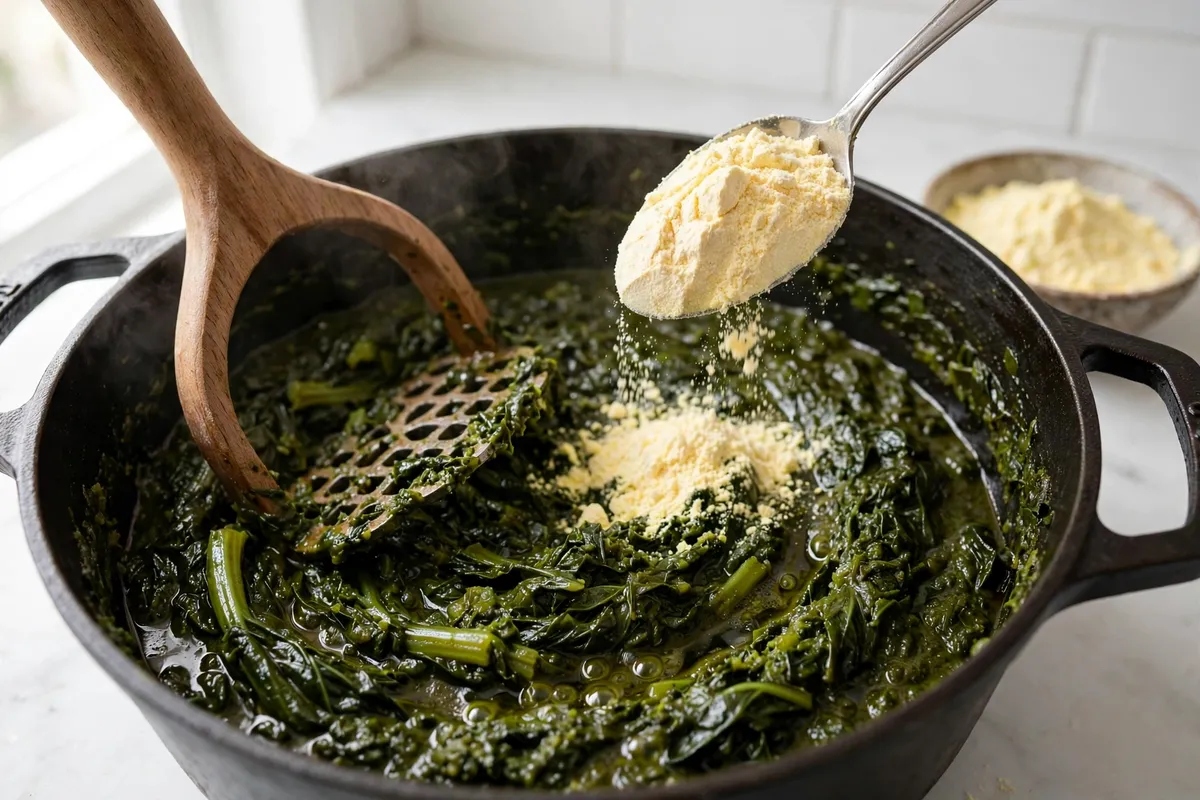
Mash the cooked greens coarse with a wooden masher — never blend them smooth, saag should have texture you can see. Stir in the maize flour, a spoonful at a time, and simmer for 10 minutes until the saag thickens and turns glossy.
Make the ghee tarka
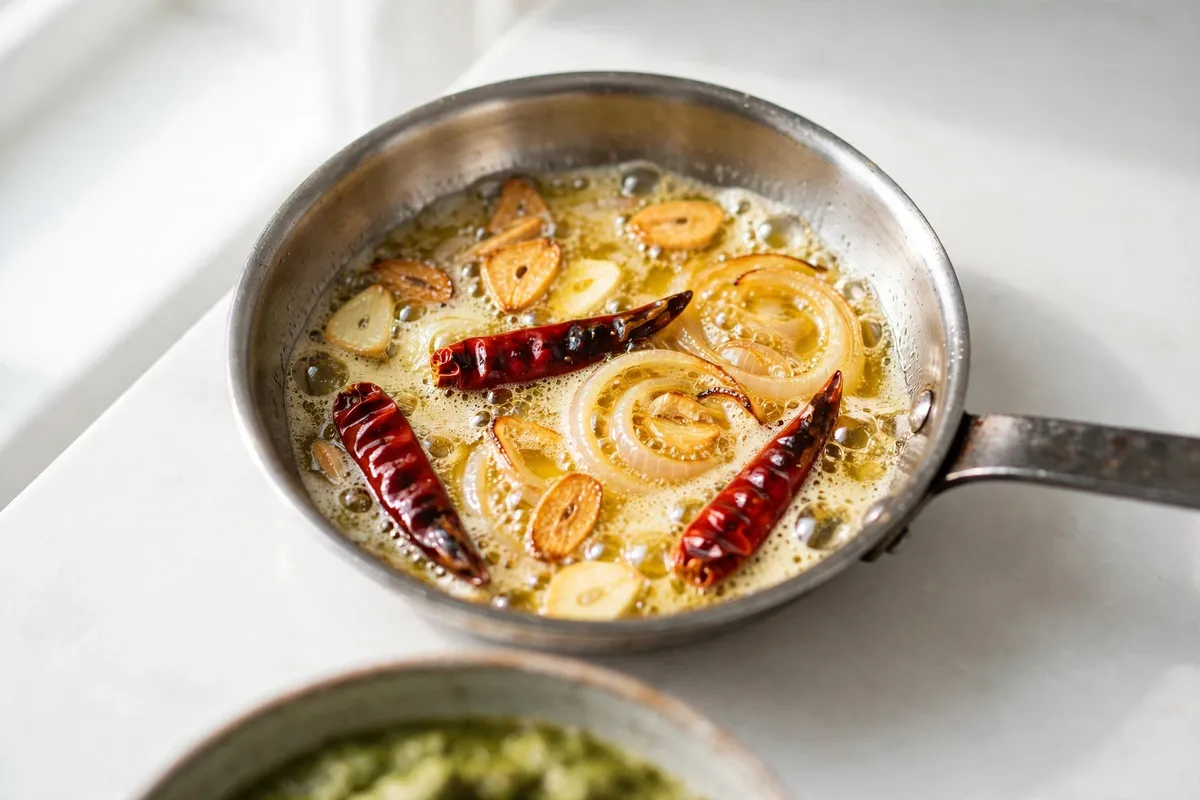
Heat the ghee in a small pan over medium heat. Toast the cumin seeds for 30 seconds, add the onion and cook until golden, then add the garlic and dried red chillies and cook until the garlic is pale gold. Take off the heat and stir in the chilli powder and garam masala.
Finish and serve
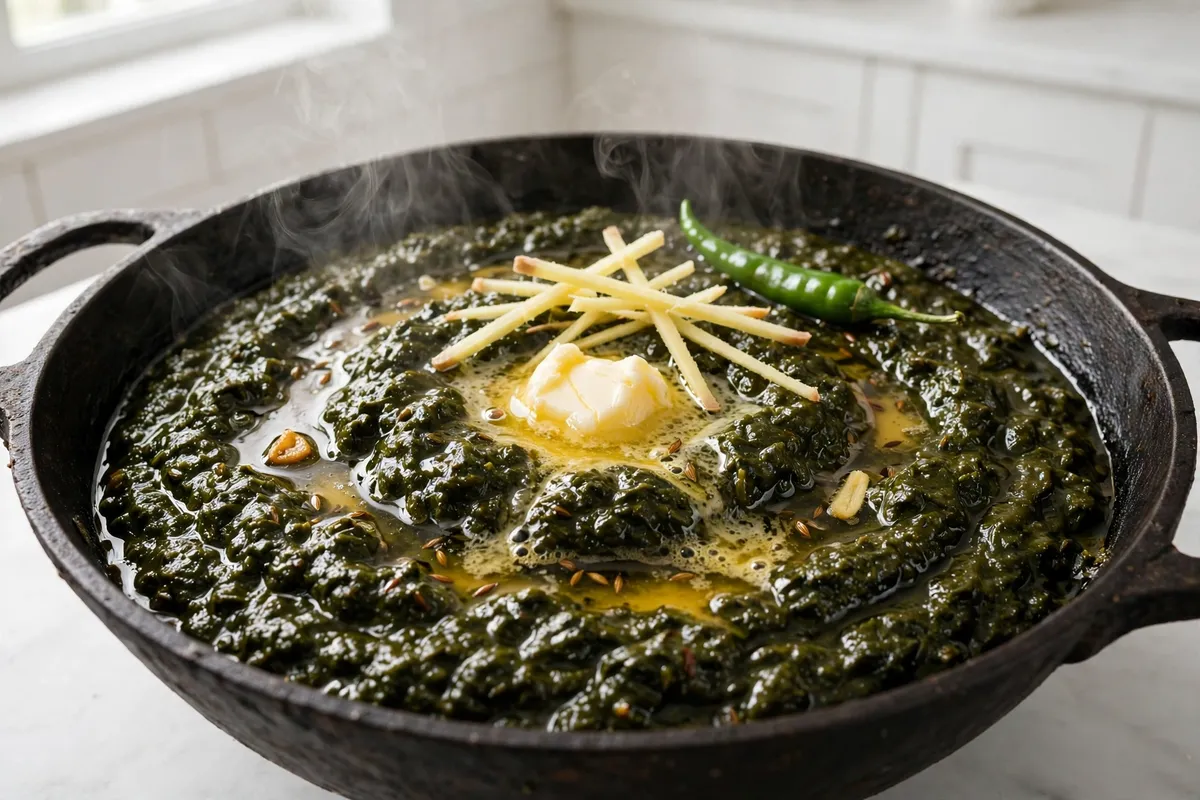
Pour the tarka over the saag and stir it through, keeping some of the golden garlic and chillies on top. Serve hot with makki di roti and a generous knob of white butter melting into the saag.
Tips for the best sarson ka saag
- Respect the ratio. Two parts mustard greens to one part spinach to one part bathua is the balance that keeps the saag earthy without tipping into bitter. All-mustard saag is a village tradition, but it is an acquired taste most people do not acquire on the first try.
- Never blend it smooth. Saag is not a soup. A wooden masher leaves the coarse, rustic texture that defines the dish — a blender turns it into baby food. Mash until it holds together but you can still see leaf.
- Use maize flour, not wheat. Makki ka atta is the traditional thickener and it adds a faint sweetness and body that wheat flour cannot. Stir it in a spoonful at a time so it does not clump.
- Serve with white butter. The unsalted white butter (makhan) that melts into the hot saag is not a garnish — it is part of the dish. Salted yellow butter changes the flavour; if white butter is unavailable, use a little extra ghee instead.
How to store sarson ka saag
Sarson ka saag keeps for 3 days in the fridge and freezes well for up to 2 months — freeze the saag before adding the tarka, and make a fresh tarka when you reheat. Reheat gently with a splash of water. The saag thickens as it sits, so loosen it with a little hot water and finish with a fresh knob of white butter.
Sarson Ka Saag FAQs
What greens go into sarson ka saag?
The classic mix is mustard greens (sarson), spinach (palak) and bathua (goosefoot) in a 2:1:1 ratio by weight — 500g mustard, 250g spinach, 100g bathua. The spinach and bathua soften the mustard's sharp, bitter edge. All-mustard saag is traditional in some villages, but most home cooks find it too bitter.
Why is my sarson ka saag bitter?
Mustard greens are naturally bitter, and the bitterness is strongest in older, tougher leaves. Use young, tender mustard greens, keep the 2:1:1 ratio with spinach and bathua, and cook the greens until they are completely soft — undercooked mustard greens taste much more bitter. The ghee tarka and white butter also mellow the flavour considerably.
What can I use instead of bathua?
Extra spinach is the simplest substitute — use 350g spinach in total. Bathua (goosefoot, also called lamb's quarters) is a winter green common in Punjab but hard to find outside India and Pakistan. Fenugreek leaves (methi) also work in a small amount, but use only 50g, as they are bitter too.
What is makki di roti?
Makki di roti is a rustic flatbread made from maize flour (makki ka atta), water and salt — no gluten, so it is patted out by hand rather than rolled. It is the traditional partner for sarson ka saag, and the two together are Punjab's most famous winter meal. If you cannot make it, serve the saag with any whole wheat roti or paratha.
Your week of dinners, planned.
Build a free 7-day meal plan and download it as a beautiful image.