Chicken Sajji
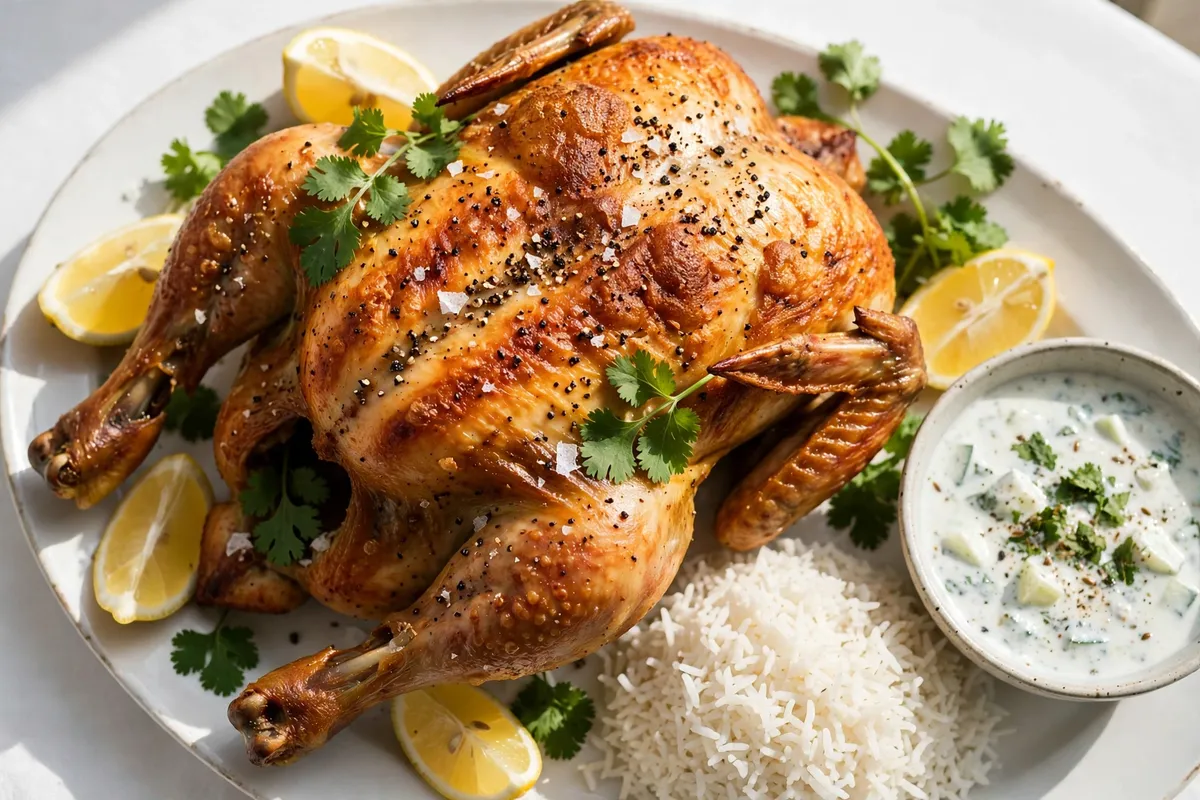
Sajji is the whole roast chicken of Balochistan — a bird brined, rubbed with nothing more than salt, cracked pepper and lemon, and slow-roasted until the skin crackles and the meat falls off the bone. There is no marinade of spices, no sauce, no garnish beyond lemon and green chillies. The whole dish is an argument for simplicity: a good chicken, low heat, and time.
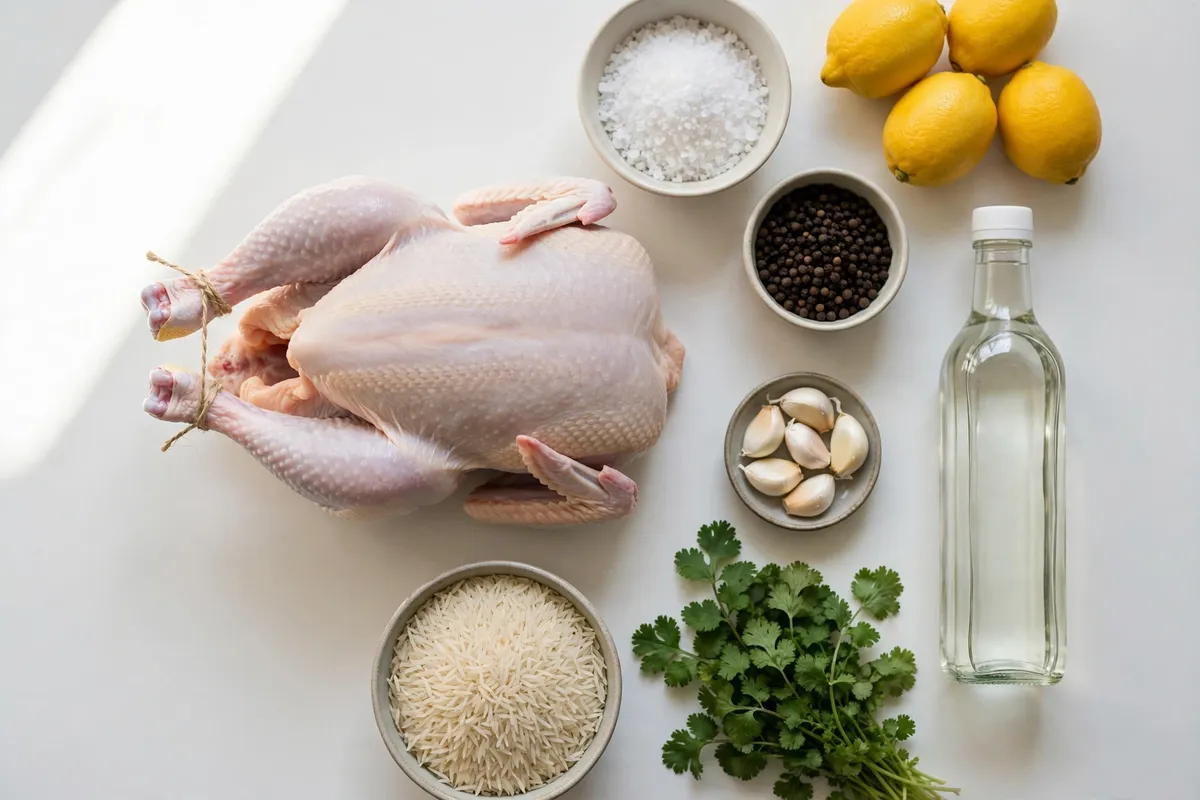
Ingredients
- 1 whole chicken (about 4 lb / 1.8kg), skin on
- 4 litres cold water
- ½ cup (120g) fine sea salt
- ¼ cup white vinegar
- 2 lemons, halved
- 1 tbsp whole black peppercorns
- 3 tbsp coarse sea salt
- 2 tbsp coarsely cracked black pepper
- 2 tbsp vegetable oil
- 1 tsp garlic powder (optional)
- 1 tsp ground cumin (optional, for serving)
- 1 tsp chaat masala (optional, for serving)
- Fresh coriander, lemon wedges and green chillies, to serve
- Steamed basmati rice or naan, to serve
How to make chicken sajji
Brine the chicken
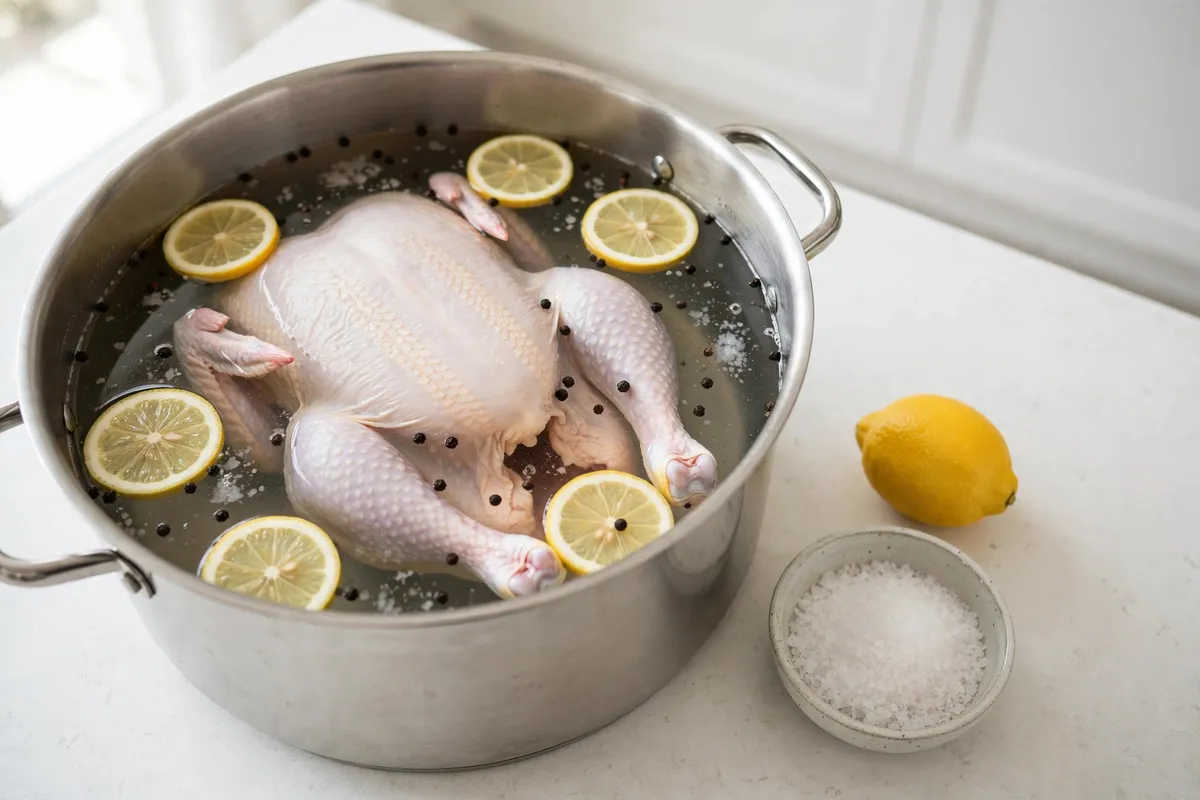
Dissolve the salt in the cold water in a large pot or container, then stir in the vinegar. Add the chicken, the halved lemons and the peppercorns, making sure the bird is fully submerged. Refrigerate for at least 4 hours and up to overnight — the brine seasons the meat all the way through and keeps the breast from drying out during the long roast.
Rub with salt and pepper
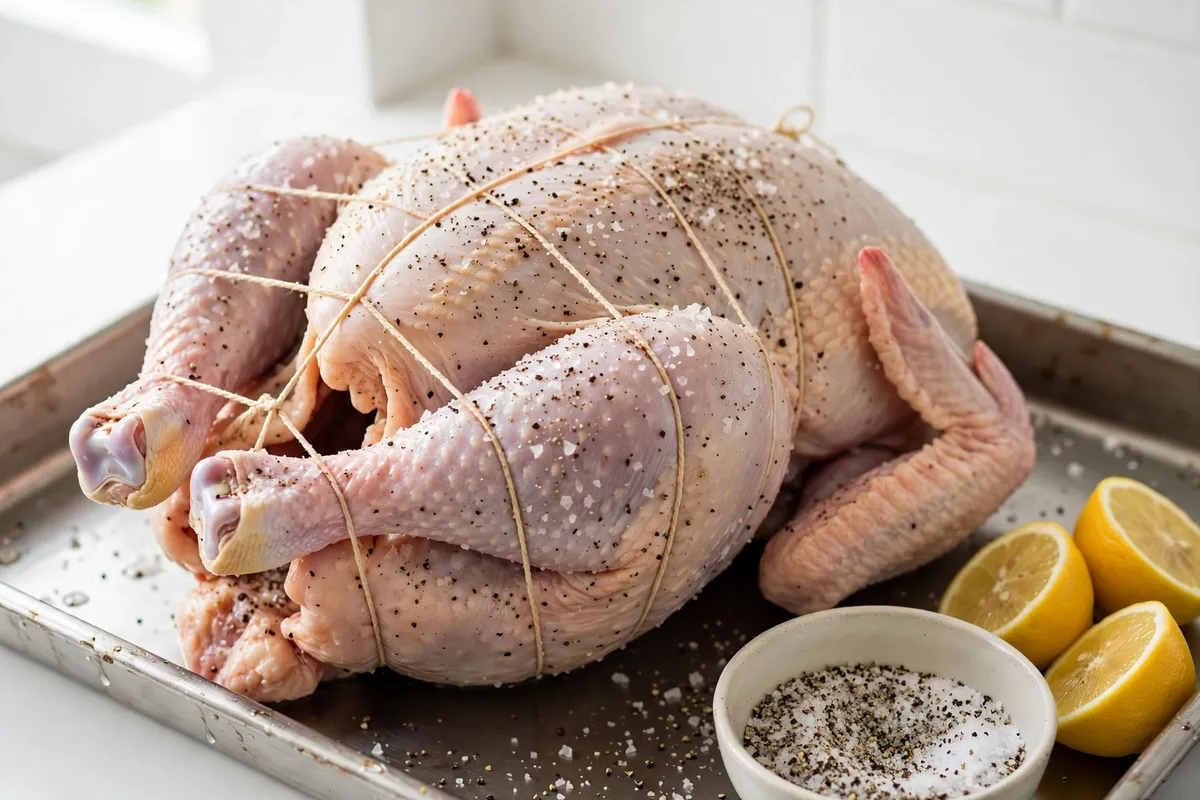
Remove the chicken from the brine and pat it very dry with kitchen paper — dry skin is the secret to crisp skin. Leave it uncovered on a rack in the fridge for at least 1 hour if you can; the air-drying makes a real difference. Rub the whole bird with the oil, then massage in the coarse salt and cracked black pepper, inside and out, with the garlic powder if using. Truss the legs with kitchen twine and tuck the wings under.
Roast low and slow
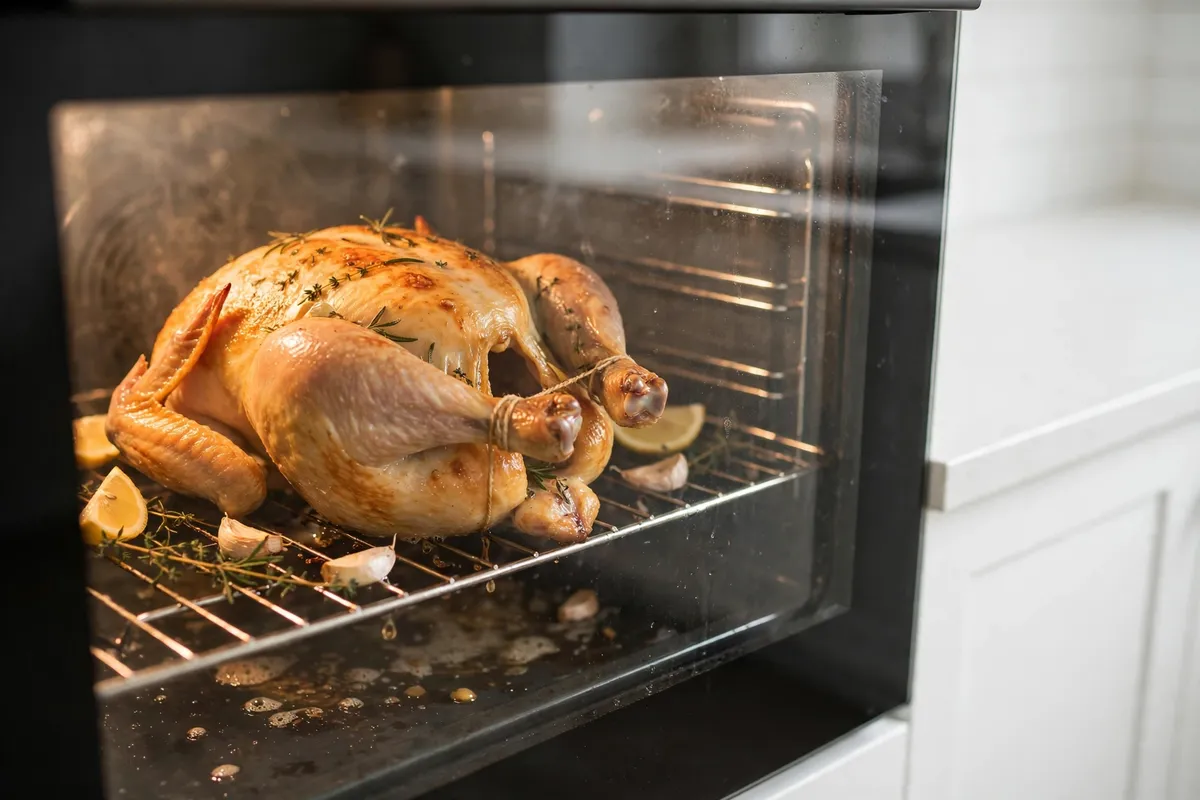
Preheat the oven to 300°F (150°C). Set the chicken on a rack in a roasting pan, breast side up, and roast for 1½ to 2 hours, basting once or twice with the pan juices. Low, slow heat renders the fat gently and keeps the meat tender and juicy. Traditionally sajji roasts on a spit over an open fire; the oven version keeps the same slow-roast character.
Crisp the skin
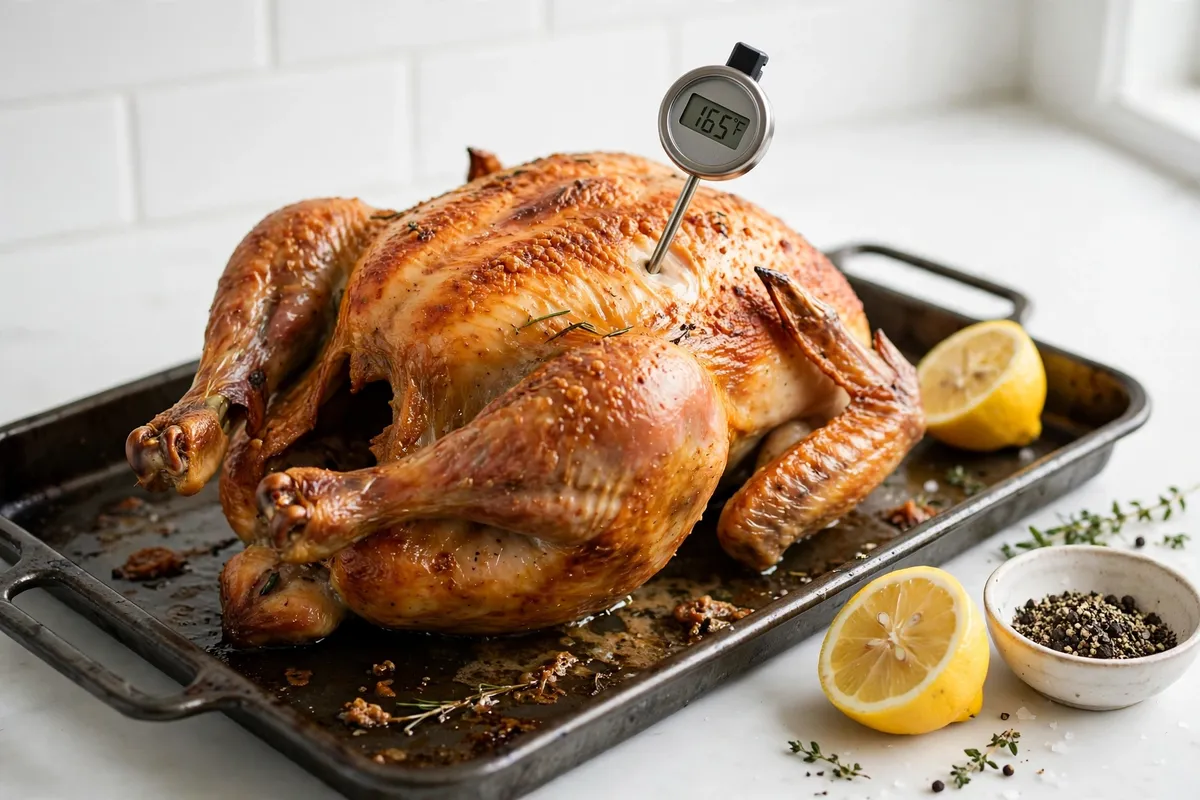
In the last 20 minutes, turn the oven up to 425°F (220°C) and roast until the skin is deeply golden and crackling. The thigh should read 165°F (74°C) on a meat thermometer. If the skin needs more colour, finish under the broiler for 2–3 minutes, watching it closely — crackling skin is the prize of sajji, but it can go from golden to burnt quickly.
Rest and serve
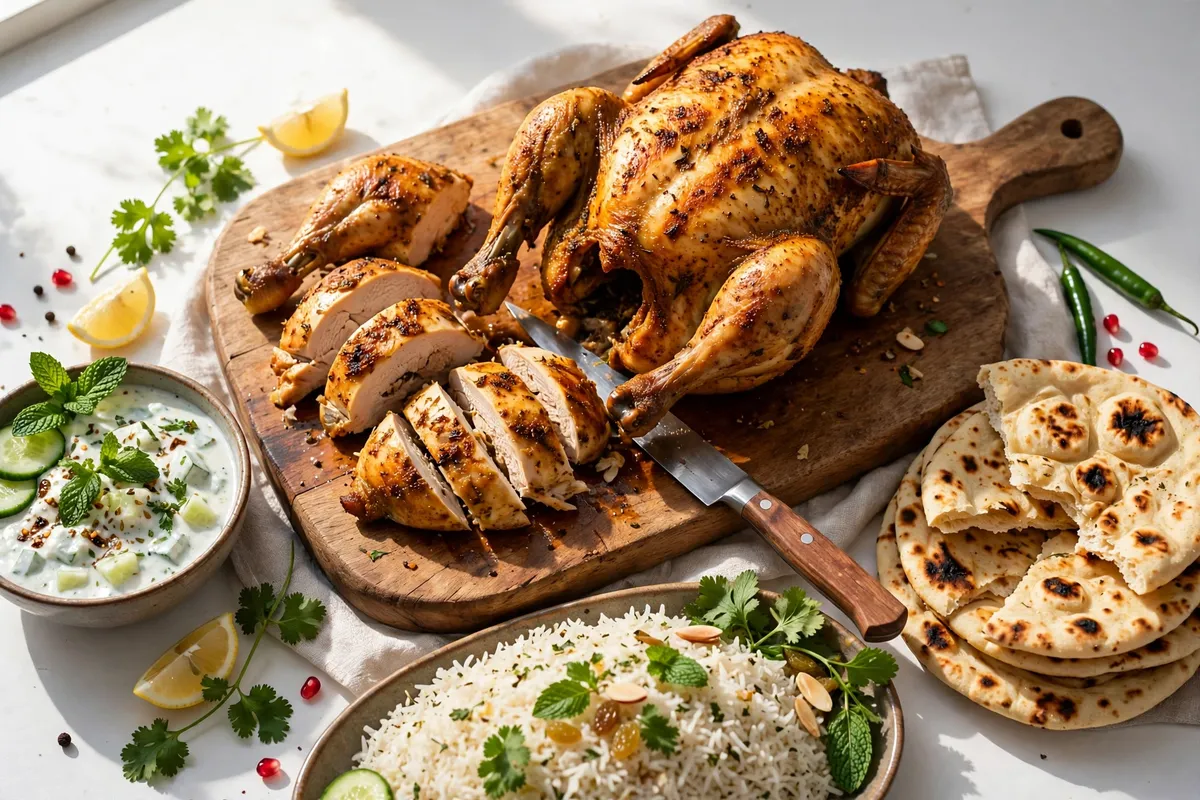
Transfer the chicken to a board and rest for 15–20 minutes before carving — cutting too soon lets the juices run out. Carve into pieces and scatter over a little extra cracked pepper, ground cumin and chaat masala if you like. Serve with steamed basmati rice or warm naan, raita, sliced onions, lemon wedges and green chillies.
Tips for the best sajji
- Pat the skin bone-dry. Wet skin steams; dry skin crackles. Pat the brined chicken dry with kitchen paper, then let it air-dry uncovered in the fridge for an hour — or overnight for the crispest possible skin.
- Keep the spices minimal. The point of sajji is that it is not a spice-heavy dish. Salt, black pepper and lemon are the whole seasoning — resist the urge to add a masala, and let the slow roast and the crackling skin do the work.
- Use a thermometer, not the clock. A 4 lb bird at 300°F (150°C) takes roughly 1½ to 2 hours, but birds vary. The thigh should read 165°F (74°C) at the thickest part, and the juices should run clear.
- Rest the bird. Fifteen to twenty minutes of rest lets the juices settle back into the meat. Tent the chicken loosely with foil — do not wrap it tightly, or the skin will steam and lose its crackle.
How to store sajji
Leftover sajji keeps for 3–4 days in the fridge. Strip the meat from the bones and store it separately — it is superb in sandwiches, wraps and fried rice. Reheat gently in a hot oven (375°F / 190°C) for 10 minutes to re-crisp the skin, or in the air fryer. The carcass makes an excellent stock: simmer it with onion, carrot and peppercorns for 2 hours.
Chicken Sajji FAQs
What is sajji?
Sajji is a whole chicken (or lamb) roasted slowly over an open fire, from Balochistan in Pakistan. It is deliberately minimalist — just salt, black pepper and lemon, sometimes with a little vinegar in the brine — and the flavour comes from the slow roasting and the crackling skin. It is served with rice or naan and eaten with the hands, usually at a gathering.
Do you brine sajji chicken?
It is not traditional, but it is the best improvement you can make at home. A simple salt-and-vinegar brine for 4 hours to overnight seasons the meat all the way through and keeps the breast juicy during a 2-hour roast. If you are short on time, a dry brine — salt and pepper rubbed on the bird 4 hours ahead — gives most of the benefit.
Can I make sajji without an open fire?
Yes — a low oven does the job well. Roast at 300°F (150°C) for 1½ to 2 hours, then finish at 425°F (220°C) to crisp the skin. A charcoal grill with indirect heat is even closer to the original, and a rotisserie attachment gives the most even result. You lose some smoke, but the crackling skin and juicy meat are the same.
What do you serve with sajji?
Steamed basmati rice or warm naan are the classics, plus raita, sliced onions, lemon wedges and green chillies. In Balochistan the sajji is often laid on top of the rice itself, so the juices run into it. A simple kachumber salad and a pot of green chutney complete the table.
Your week of dinners, planned.
Build a free 7-day meal plan and download it as a beautiful image.