Beef Haleem
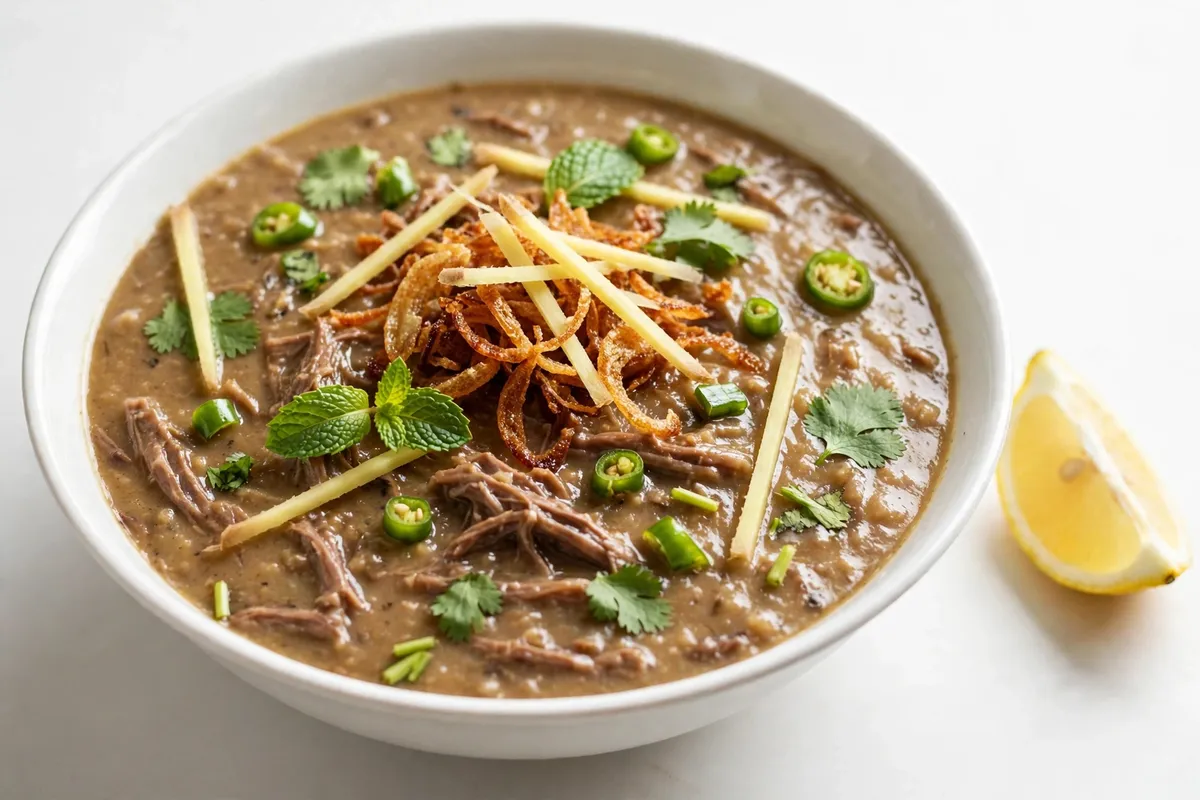
Haleem is one of the great slow dishes of Pakistan: wheat, barley and lentils cooked until they collapse, then beaten together with a spiced beef qorma until the meat breaks into long threads and the whole pot turns thick, glossy and almost elastic. It is the dish of Ramadan and Muharram, cooked in huge pots and shared — and this home version is worth every hour.
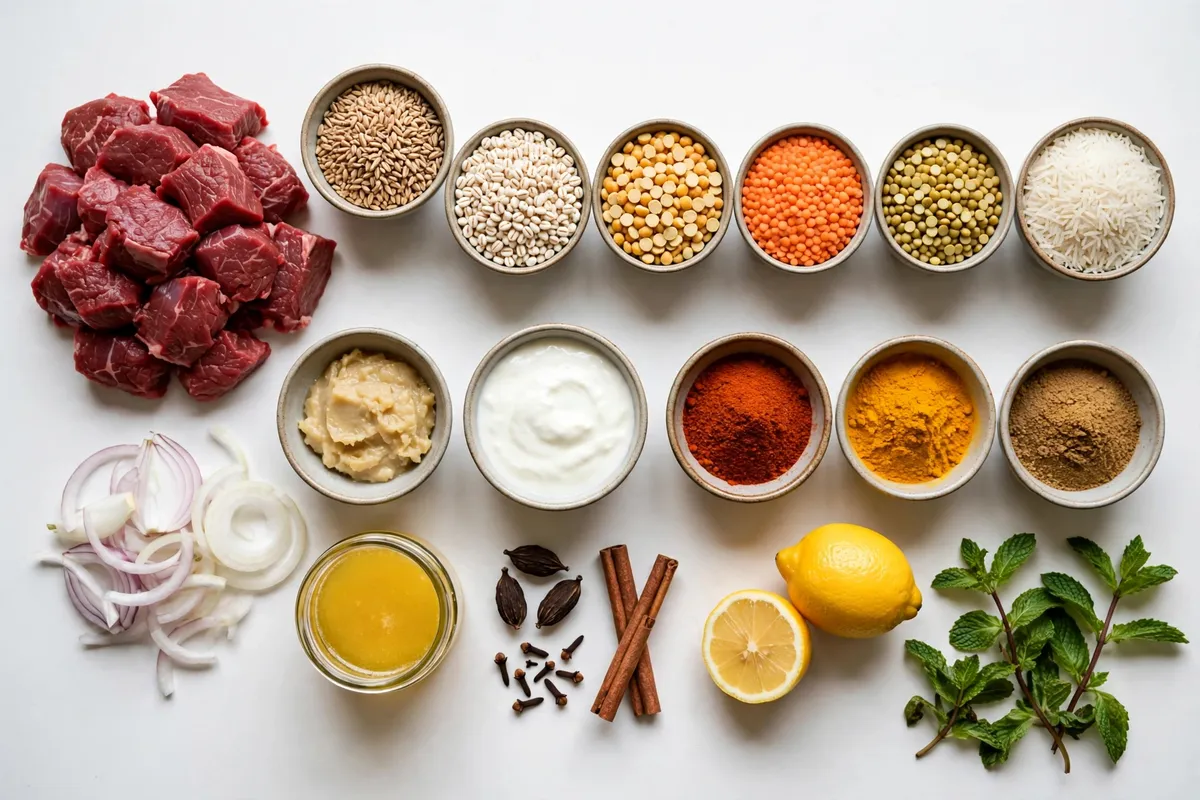
Ingredients
- 1 lb 10 oz (750g) boneless beef, shin or shoulder, cut into large pieces
- 1 cup (190g) cracked wheat (dalia), soaked overnight
- ¼ cup (50g) pearl barley, soaked overnight
- ¼ cup (50g) chana dal, soaked overnight
- ¼ cup (50g) masoor dal (red lentils), soaked 1 hour
- ¼ cup (50g) moong dal, soaked 1 hour
- 2 tbsp basmati rice, soaked 1 hour
- 2 large onions, thinly sliced
- 2 tbsp ginger-garlic paste
- 2 tsp red chilli powder
- ½ tsp turmeric powder
- 1 tbsp coriander powder
- 1 tsp cumin powder
- 2 tsp garam masala
- 6 black cardamom pods
- 8 whole cloves
- 1 cinnamon stick, about 2 inches
- 1 tbsp salt, plus more to taste
- ½ cup (120g) plain yogurt, whisked
- ½ cup (115g) ghee
- 10 cups (2.4 litres) water, plus more as needed
- Julienned ginger, sliced green chillies, chopped mint and coriander, fried onions and lemon wedges, to serve
How to make beef haleem
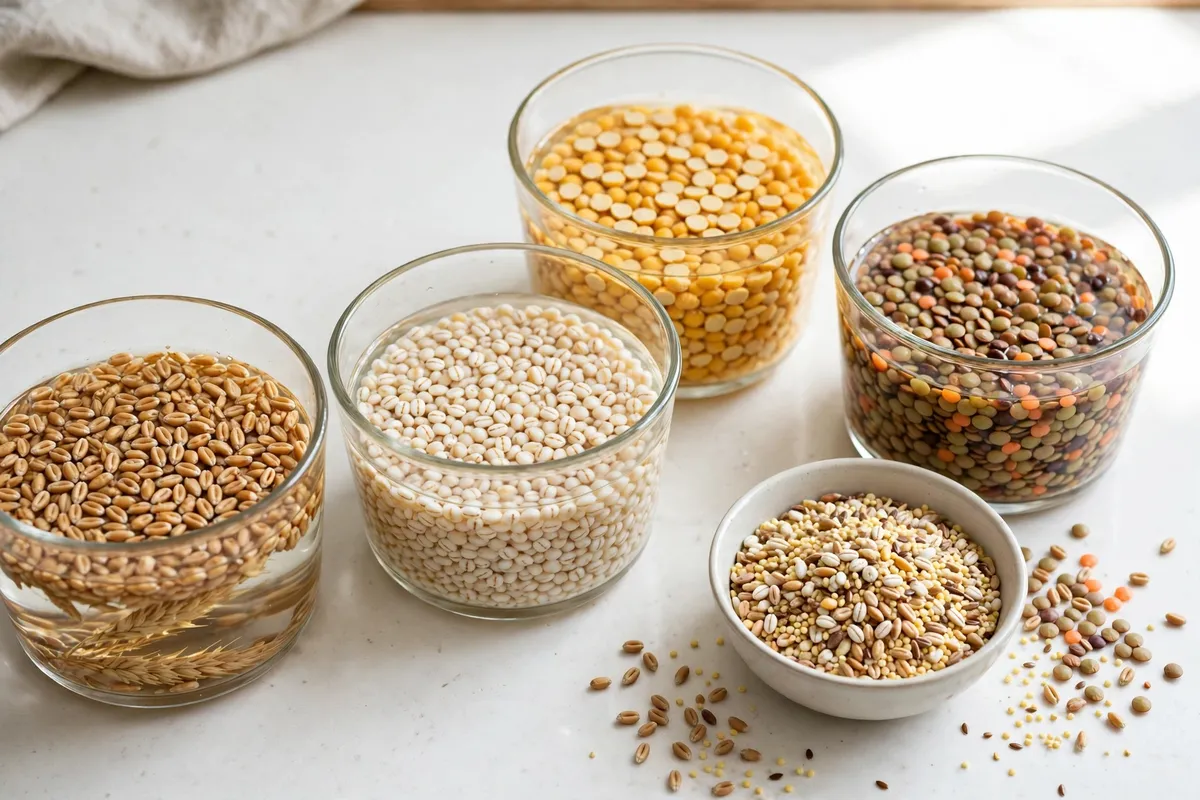
Soak the grains and lentils
Rinse the cracked wheat, barley and chana dal until the water runs clear, then soak them overnight in plenty of cold water. Two hours before cooking, rinse the masoor and moong dals and the rice together and soak them separately. Soaking is what lets everything collapse into a smooth porridge later — skip it and the wheat stays stubbornly grainy.
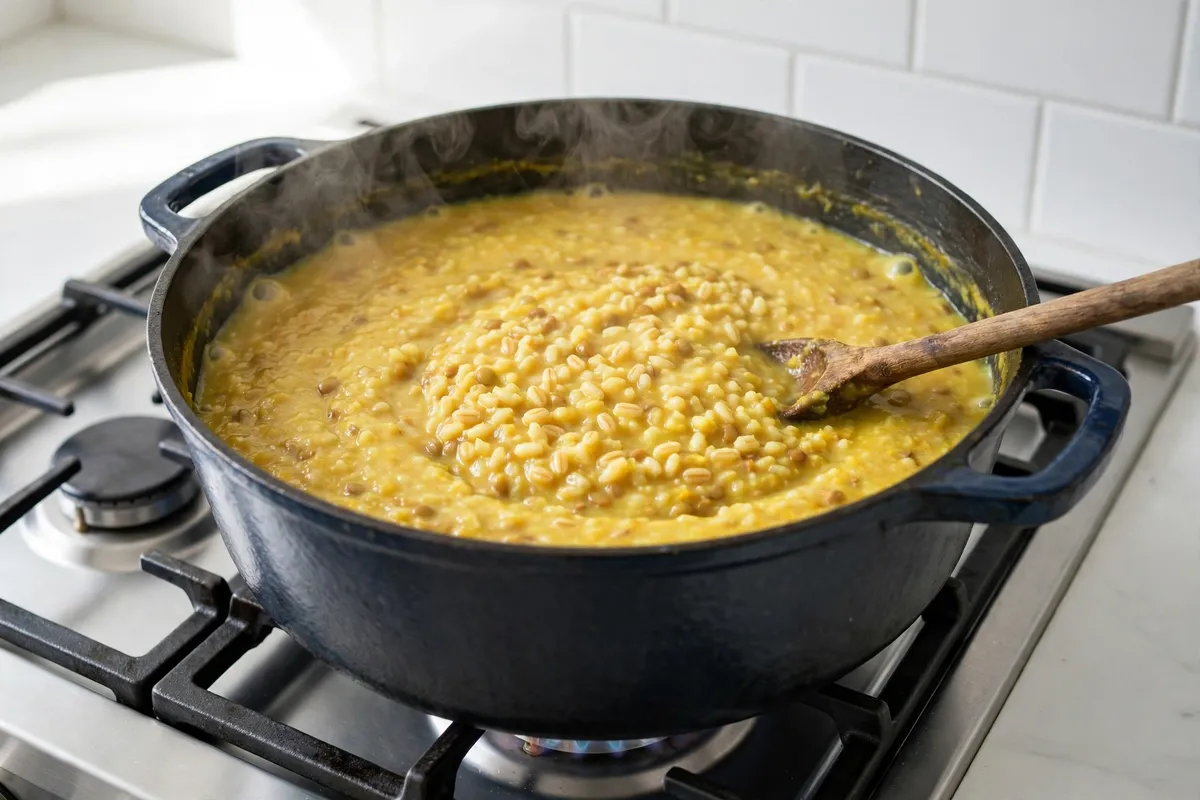
Cook the grains until soft
Drain the soaked wheat, barley, dals and rice and tip them into a large heavy pot with 4 cups of water, the turmeric and a pinch of salt. Bring to a boil, then simmer on low for 1½ to 2 hours, stirring often so nothing sticks, until the grains are completely soft and falling apart. Blend coarsely with a stick blender or potato masher — you want a thick grain porridge, not a smooth purée.
Cook the beef qorma
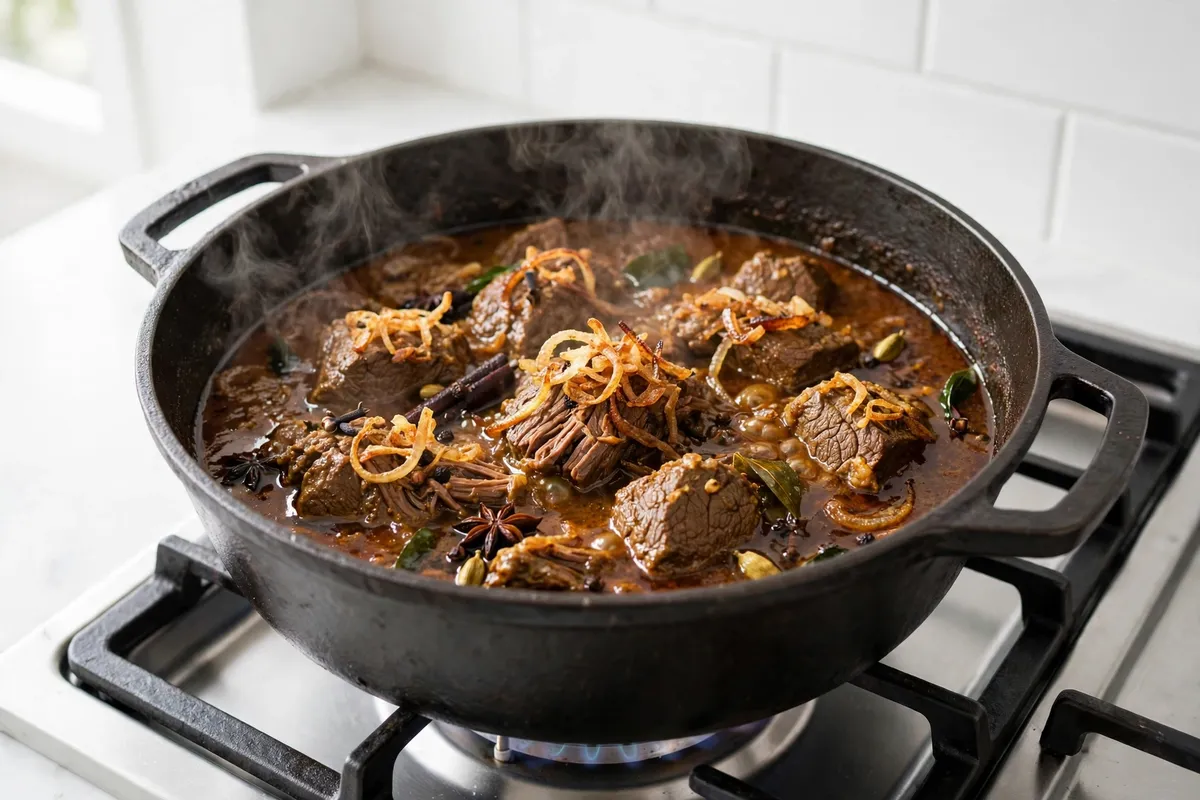
While the grains cook, heat half the ghee in a second heavy pot and fry one sliced onion until golden and crisp; lift it out and set aside. Add the beef, ginger-garlic paste, chilli powder, coriander, cumin, salt and the whole spices, and sauté for 8 minutes. Stir in the yogurt, add 6 cups of water, cover and cook on low for 1½ to 2 hours until the beef shreds easily. Lift out the beef, shred it with two forks and keep the stock. In a pressure cooker, the beef takes about 45 minutes.
Combine and beat until silky
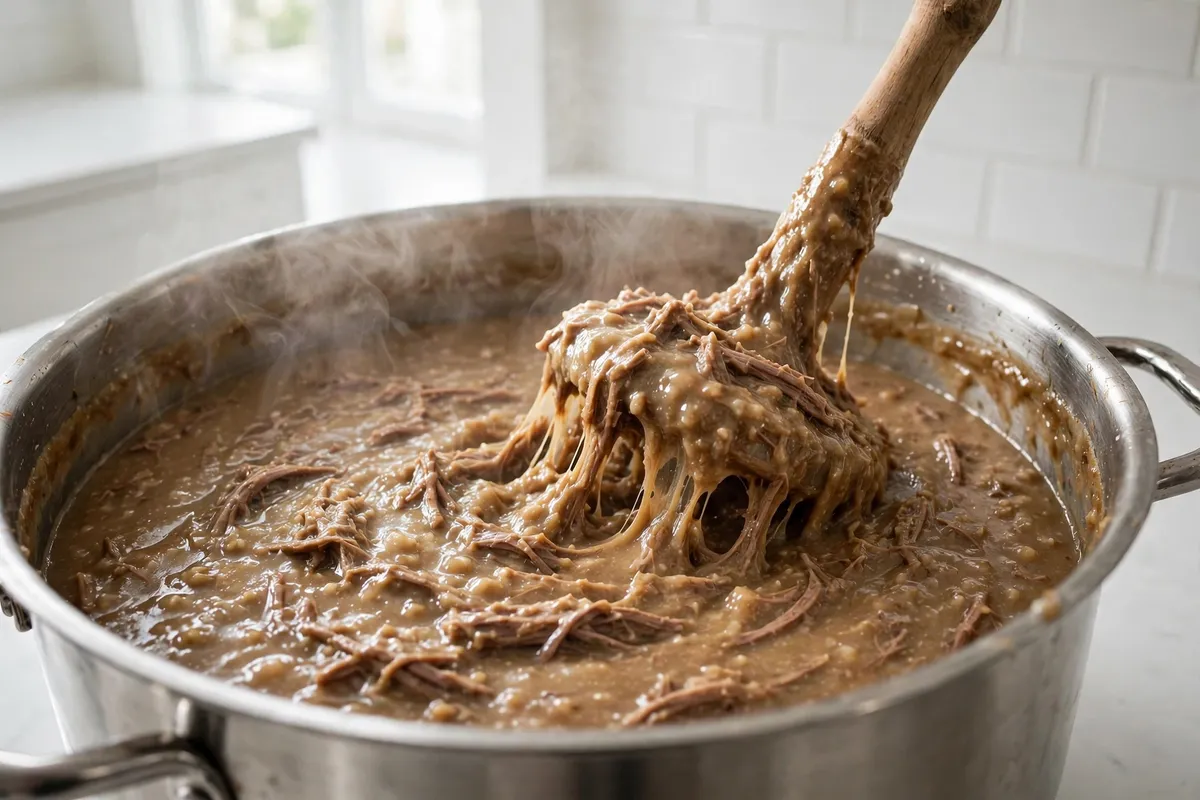
Return the shredded beef and its stock to the pot of cooked grains. Over low heat, beat the mixture with a wooden masher or ghotna for 10–15 minutes, stirring in one direction, until it turns thick, glossy and stretchy — a spoonful should pull into long strands. This beating is the heart of haleem: it is what turns grains and meat into one silky whole. Add hot water a little at a time if it gets too thick to stir.
Tarka and serve
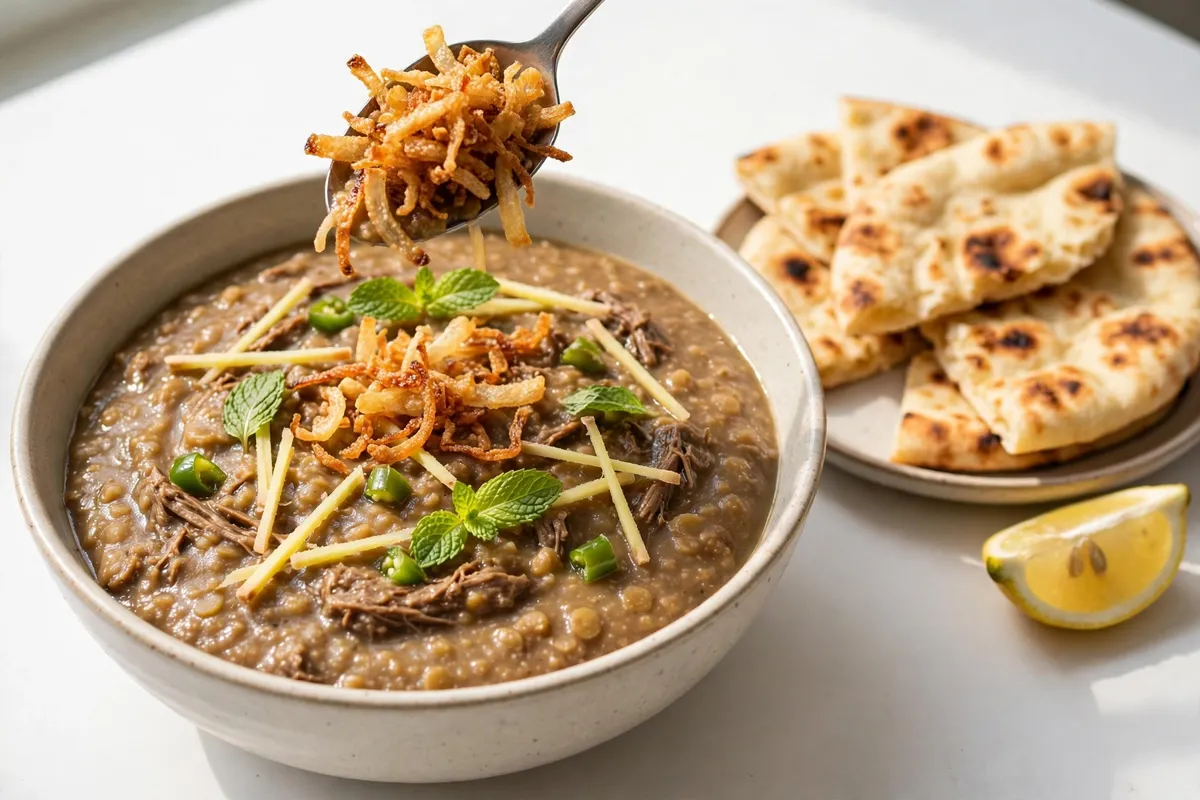
Fry the second sliced onion in the remaining ghee until crisp. Pour half the ghee and onions over the haleem with the garam masala and stir it through. Serve hot in deep bowls, topped with the remaining fried onions, julienned ginger, green chillies, mint, coriander and a squeeze of lemon, with naan on the side.
Tips for the best beef haleem
- Cook the grains and meat in two pots. They finish at different speeds, and cooking them side by side is faster than doing them one after the other. Start the grains first — the wheat is the slowest part of the dish.
- Do not rush the beating. Ten to fifteen minutes of steady mashing is what builds the stretchy, elastic texture. If your arm tires, a stick blender in short bursts gets you most of the way there — finish with a few minutes of hand-beating.
- Keep hot water on hand. Haleem thickens as it stands, and it will seize up the moment it cools. Loosen it with hot water, a ladle at a time, until it flows slowly off the spoon.
- Season at the end. The long cook concentrates the salt, so hold back and adjust once the haleem is beaten. A squeeze of lemon and a pinch of chaat masala over each bowl wakes the whole dish up.
How to store beef haleem
Refrigerate leftover haleem within two hours of serving — it keeps for 3–4 days in an airtight container and tastes even better the next day. Reheat gently on the stove with a splash of hot water, stirring often, until it loosens back to a porridge. Haleem freezes well for up to 3 months; thaw overnight in the fridge before reheating. Store the fried onions and fresh garnishes separately and add them fresh.
Beef Haleem FAQs
What is the difference between haleem and daleem?
They are the same dish. Daleem is the name used in Pakistan for beef or mutton haleem cooked with wheat and lentils — the word comes from dal, the lentils at its heart. In India and the Middle East the same stew is usually called haleem, after the Arabic harees it descends from. Order either name and you get the same thick, stretchy porridge.
Can I make haleem in a slow cooker?
Yes — a slow cooker suits haleem well. Brown the beef with the spices first, then transfer it to the slow cooker with the stock ingredients and cook on low for 8 hours. Add the soaked grains for the final 3 hours, then mash and beat everything together on the hob. Some cooks do the whole thing in two slow-cooker rounds for the silkiest texture.
Do I need to soak the grains overnight?
The wheat, barley and chana dal should soak overnight (8–12 hours) — they are the slowest to soften, and unsoaked wheat stays gritty no matter how long you cook it. The smaller lentils and rice only need an hour or two. If you forgot to soak, a pressure cooker can rescue the grains: cook them at high pressure for 25–30 minutes before combining.
How do you get haleem silky and stretchy?
Three things: cook the grains until they completely collapse, shred the beef finely, and then beat the combined pot for a full 10–15 minutes with a wooden masher or ghotna, stirring in one direction. The beating breaks the meat into long threads and works the wheat starch through the pot — that is what gives haleem its famous stretch. A stick blender helps, but hand-beating gives the best texture.
Your week of dinners, planned.
Build a free 7-day meal plan and download it as a beautiful image.