Gulab Jamun
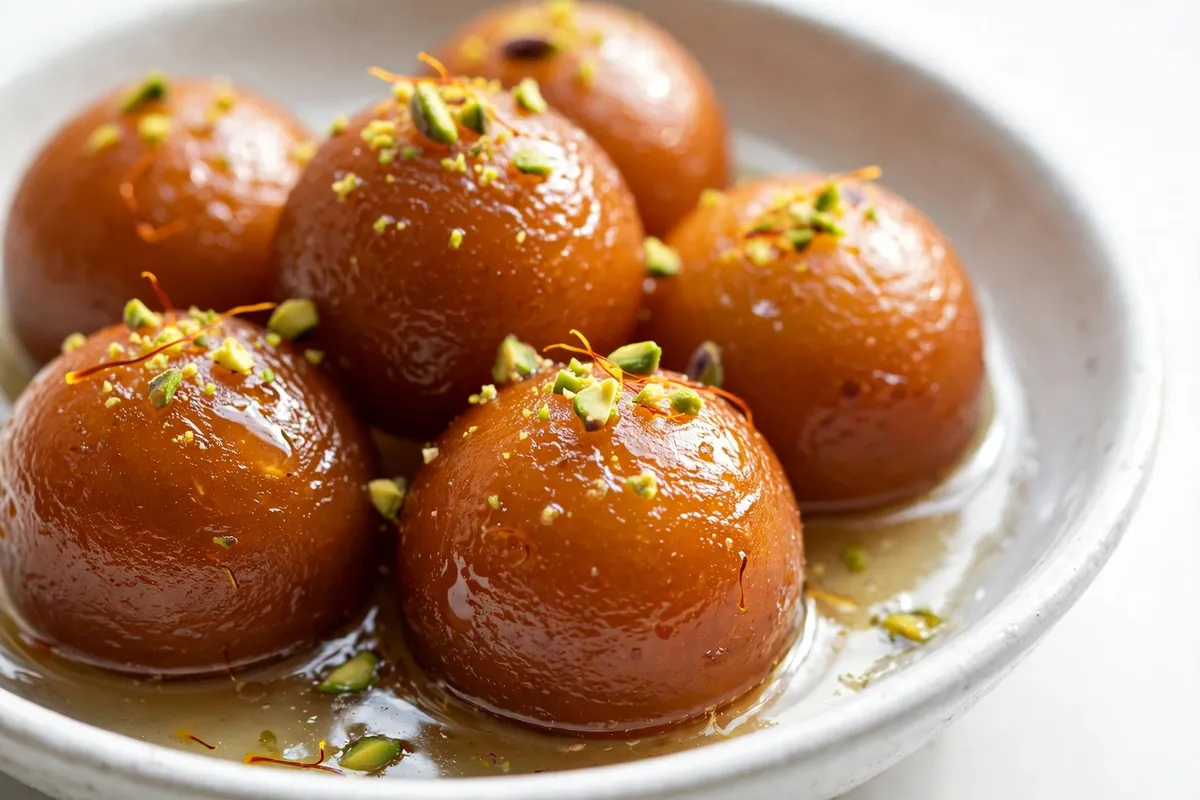
Gulab jamun is the dessert every Indian celebration ends with: soft milk dumplings fried deep golden and soaked in a fragrant cardamom, saffron and rose syrup until they are plump and melt in your mouth. This milk-powder version needs no khoya and no special equipment — just a bowl, a pan and a little patience while they fry low and slow.
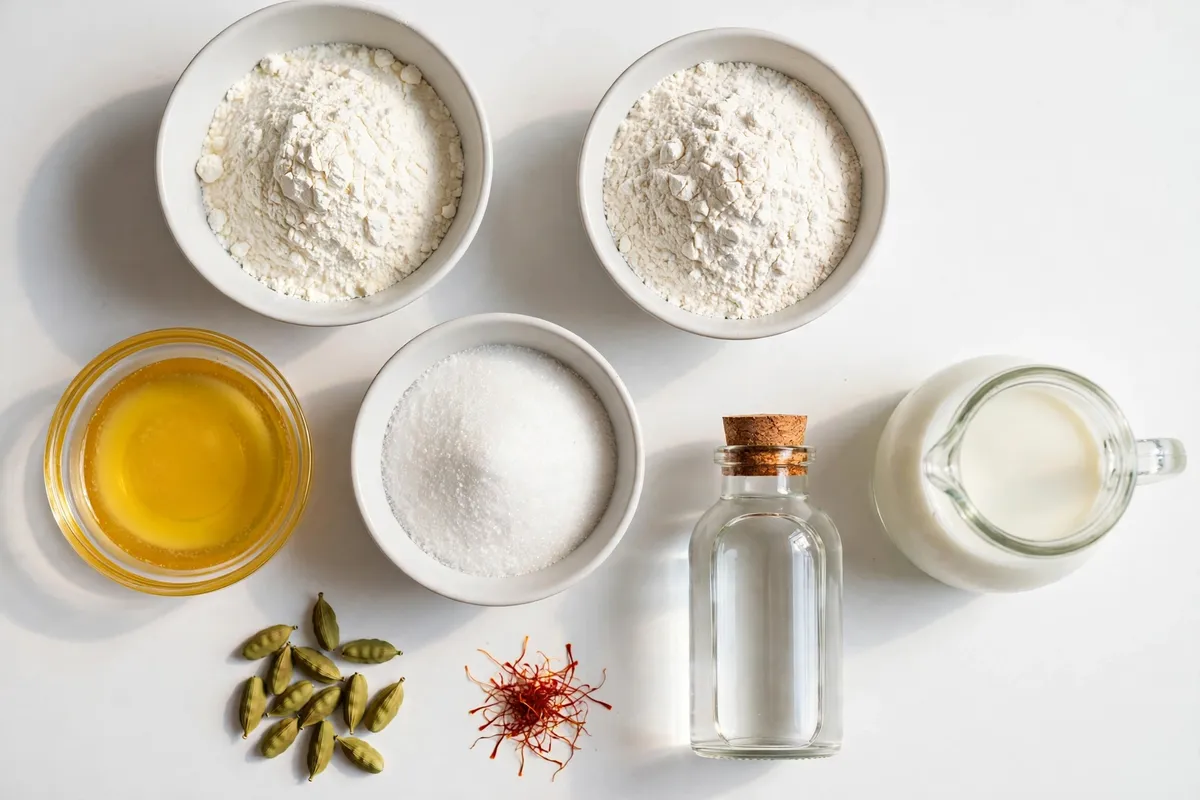
Ingredients
- 1½ cups (300g) granulated sugar
- 1½ cups (360ml) water
- 4 green cardamom pods, lightly crushed
- A pinch of saffron threads
- 1 tsp rose water
- ½ tsp lemon juice
- 1 cup (120g) full-fat milk powder
- ¼ cup (30g) all-purpose flour
- ¼ tsp baking soda
- 2 tbsp (28g) ghee, melted, plus more for your hands
- ¼–⅓ cup (60–80ml) whole milk, warm
- Ghee or neutral oil, for deep-frying
- 2 tbsp chopped pistachios, to garnish
How to make gulab jamun
Make the sugar syrup
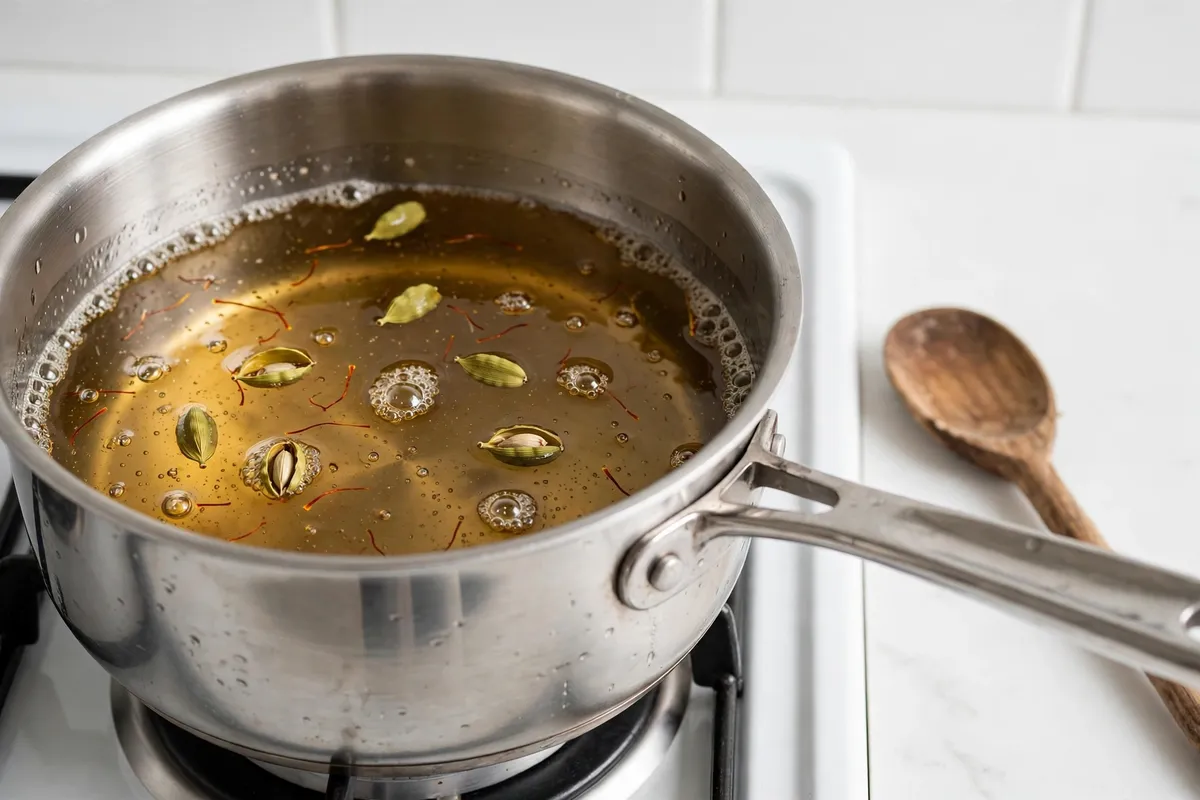
Combine the sugar, water, cardamom and saffron in a wide saucepan. Bring to a boil, stirring until the sugar dissolves, then simmer for 5 minutes until slightly sticky but not stringy. Stir in the lemon juice and rose water, then keep the syrup warm over the lowest heat — warm syrup, not hot, so the jamuns absorb it evenly.
Mix the dough
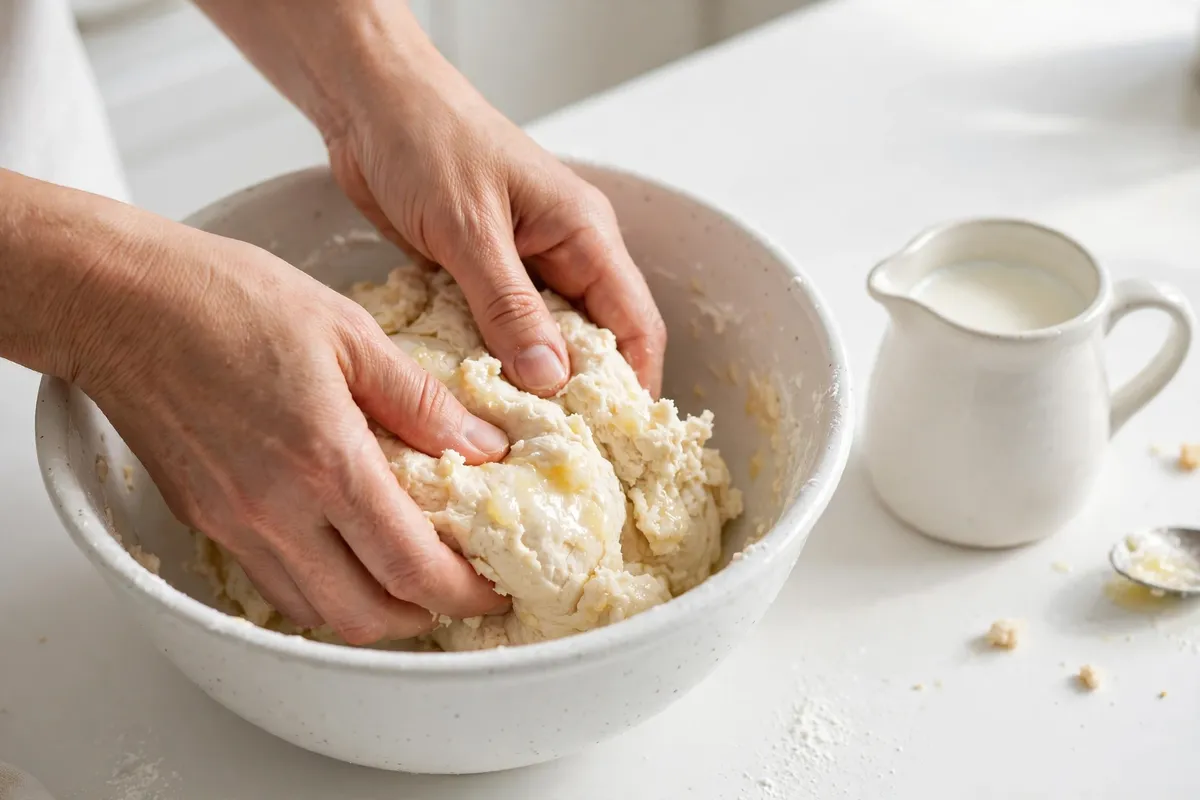
Whisk the milk powder, flour and baking soda together in a bowl. Rub in the melted ghee with your fingertips until crumbly. Add the warm milk a tablespoon at a time and mix gently into a soft, slightly sticky dough. Do not knead it — overworked dough makes hard jamuns. Cover and rest for 10 minutes.
Shape smooth balls
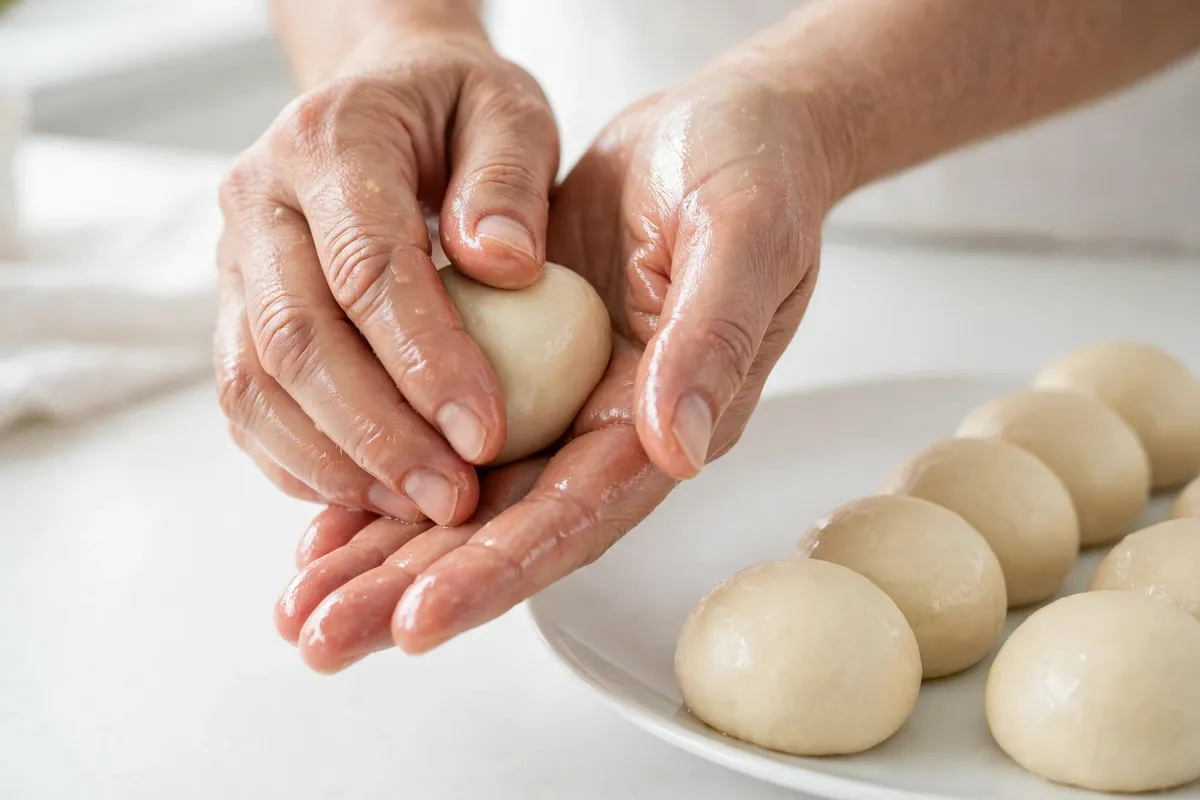
Grease your palms with ghee. Divide the dough into 18 portions and roll each between your palms into a perfectly smooth ball with no cracks — cracks split open while frying. Keep the balls small; they nearly double in size in the syrup.
Fry low and slow
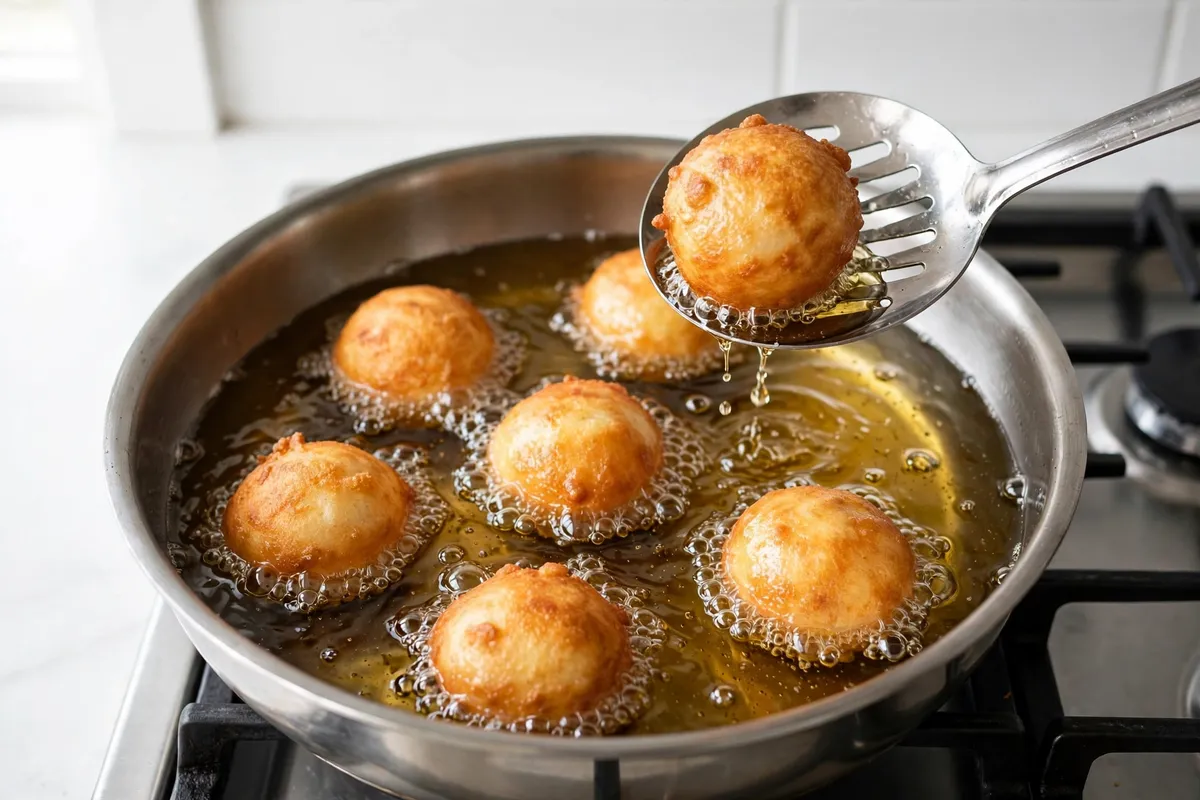
Heat 2 inches (5cm) of ghee or oil in a heavy pan over low heat to 275–300°F (135–150°C). A small piece of dough should rise slowly with gentle bubbles. Fry the balls in batches, gently swirling the oil rather than touching them, for 7–10 minutes until evenly deep golden brown all over.
Soak in warm syrup
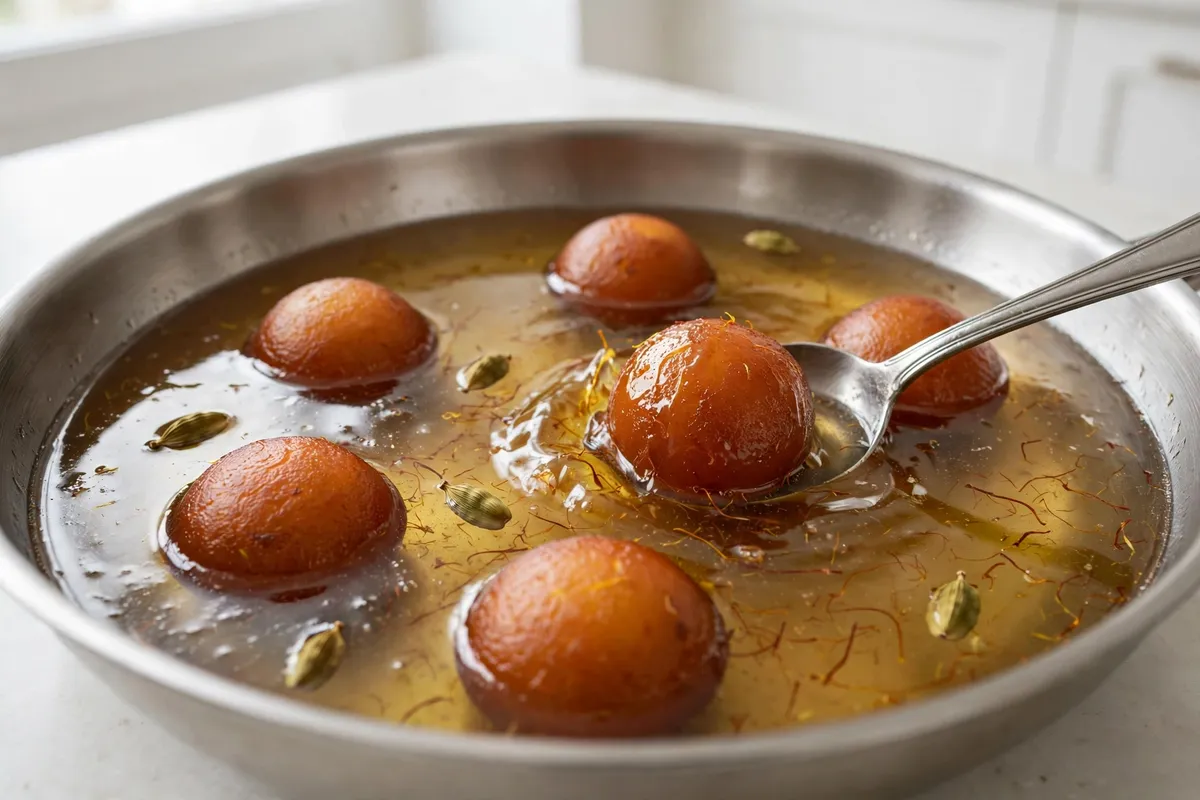
Lift the fried jamuns out with a slotted spoon, drain for 30 seconds and drop them straight into the warm syrup. Let them soak for at least 2 hours, until plump and soft all the way through. Serve warm or at room temperature with a little syrup, garnished with pistachios.
Tips for the best gulab jamun
- Use full-fat milk powder. Skimmed milk powder makes dry, dense jamuns. A full-fat brand like Nido is a reliable supermarket choice.
- Fry low and slow. Oil that is too hot browns the outside while the centre stays raw and hard. If a test ball browns in under 2 minutes, the oil is too hot — take the pan off the heat for a minute.
- Keep the syrup warm, not boiling. Jamuns dropped into boiling syrup can burst; cold syrup will not soak in. Warm to the touch is right.
- No cracks, no splits. Roll each ball until perfectly smooth. If the dough dries out while you shape, rub a drop of milk into your palms and keep going.
How to store gulab jamun
Refrigerate gulab jamun in their syrup in an airtight container for up to 1 week — reheat gently in the syrup before serving. They also freeze well for up to 3 months without syrup; thaw overnight in the fridge, then warm in fresh syrup for 10 minutes before serving.
Gulab Jamun FAQs
Why do my gulab jamun crack while frying?
Cracks in the shaped balls open up in hot oil. Roll each ball between greased palms until it is perfectly smooth, with no seams or lines. If the dough dries out while you shape, rub a drop of milk into your palms. Frying in oil that is too hot also splits them — keep it at 275–300°F (135–150°C).
Can I make gulab jamun without khoya?
Yes — this recipe uses full-fat milk powder instead of khoya, and the result is just as soft and juicy. Khoya (reduced milk solids) is hard to find outside South Asia, which is why the milk-powder method is the one most home cooks use. Use full-fat milk powder, not skimmed, for the best texture.
How long should gulab jamun soak in syrup?
At least 2 hours, until the jamuns are plump and soft all the way through — they nearly double in size as they absorb the syrup. Soaking overnight in the fridge makes them even better. The syrup should be warm when the fried jamuns go in; boiling syrup can burst them, and cold syrup will not soak in.
Why are my gulab jamun hard inside?
Usually the oil was too hot: the outside browns before the centre cooks through, leaving a hard core. Fry low and slow at 275–300°F (135–150°C) for 7–10 minutes. Over-kneading the dough also makes hard jamuns — mix it just until it comes together, and do not skip the baking soda, which keeps the inside light.
Your week of dinners, planned.
Build a free 7-day meal plan and download it as a beautiful image.