Dahi Bhalla
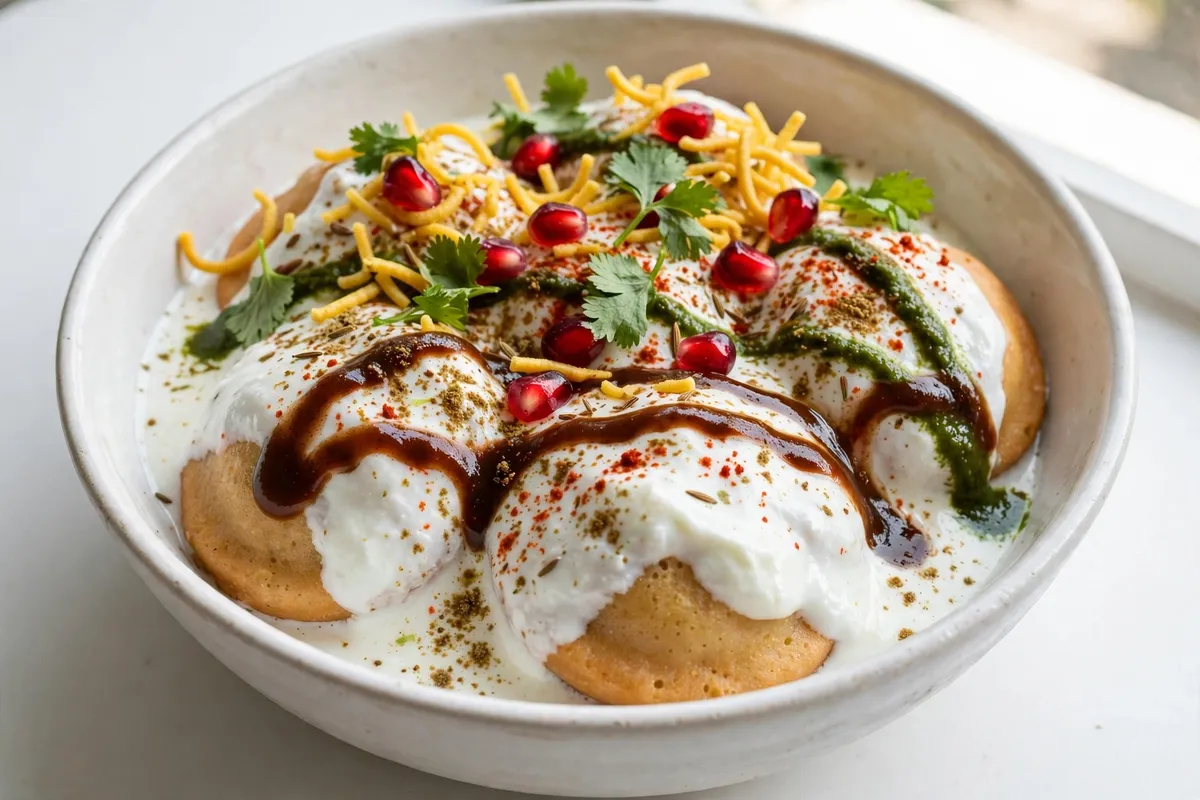
Dahi bhalla is North India's most loved chaat: soft, spongy lentil dumplings drowned in chilled yogurt, drizzled with sweet tamarind and sharp mint chutneys, and finished with pomegranate, sev and a dusting of chaat masala. The secret is all in the batter — whisked until it floats — and the water soak that turns a crisp fritter pillow-soft.
Ingredients
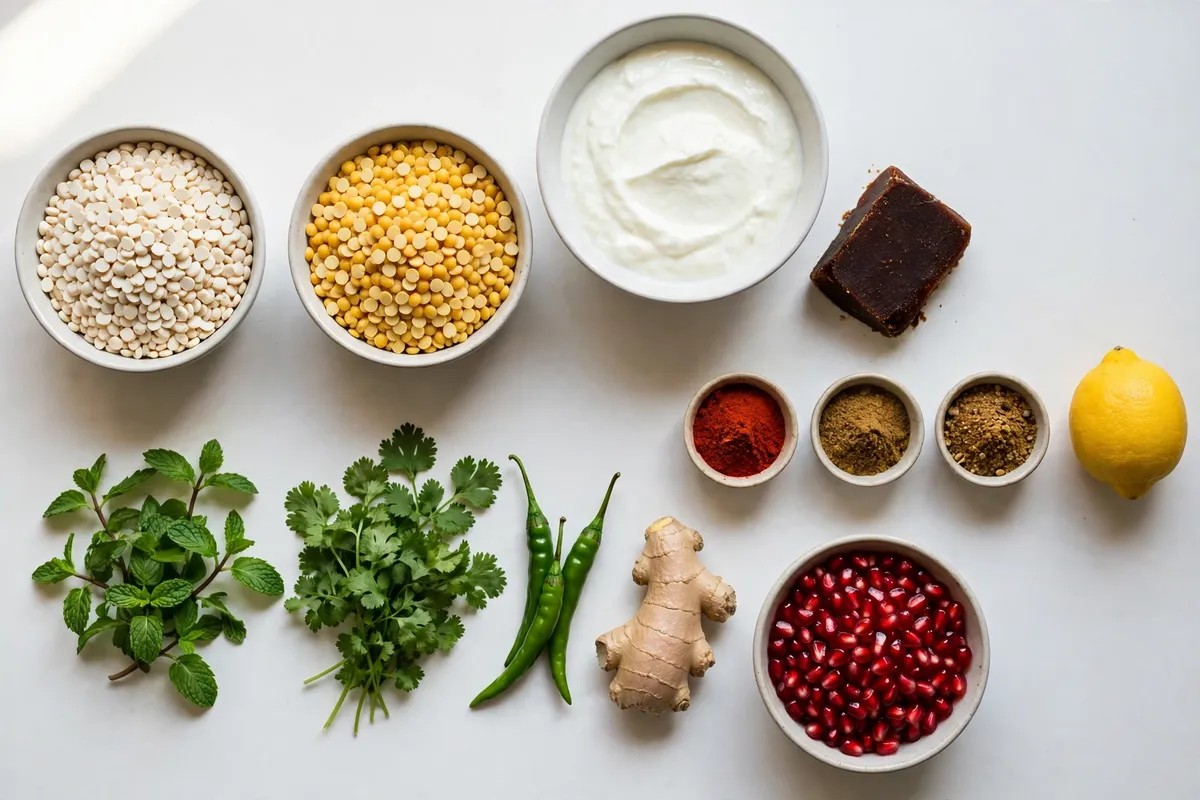
- 1 cup (200g) urad dal (split black gram), soaked 5 hours or overnight
- ¼ cup (50g) moong dal, soaked with the urad dal
- ½ tsp cumin seeds
- 1 pinch asafoetida (hing)
- 1 tsp ginger, finely grated
- 1 green chilli, finely chopped
- ½ tsp salt, plus more to taste
- Oil, for deep frying
- 3 cups (750g) thick plain yogurt, chilled
- 2 tbsp sugar
- 1 tsp roasted cumin powder
- 1 tsp chaat masala
- ½ tsp red chilli powder
- ⅓ cup tamarind chutney
- ⅓ cup mint-coriander chutney
- ⅓ cup pomegranate arils
- ½ cup sev (crispy chickpea noodles)
- Chopped coriander leaves, to serve
How to make dahi bhalla
Soak and grind the dal
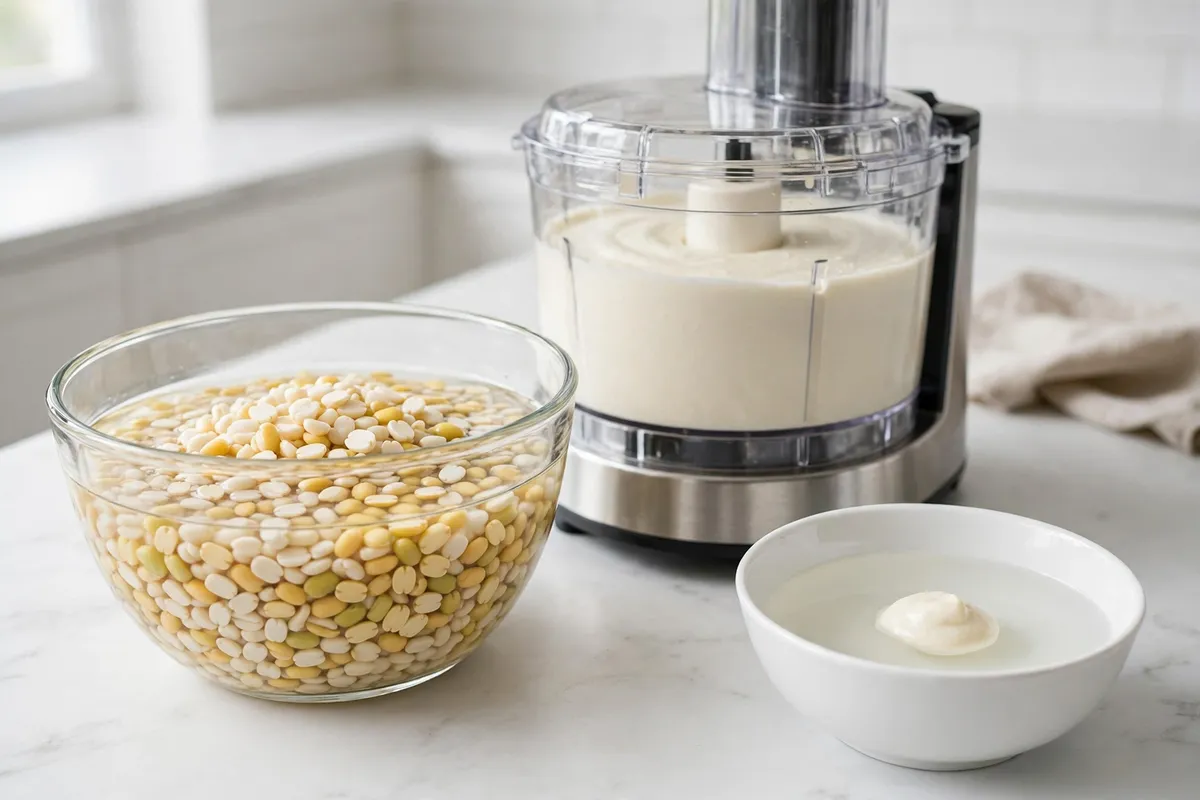
Rinse the urad and moong dal until the water runs clear, then soak together in plenty of water for at least 5 hours or overnight. Drain very well and grind in a food processor with the cumin seeds, asafoetida, ginger and green chilli, adding only 2–3 tablespoons of water — the batter must be thick and smooth, not runny. Tip it into a bowl and whisk briskly for 2–3 minutes until light and fluffy; a teaspoon of batter dropped in water should float. That float test is the difference between soft bhallas and dense ones.
Whisk and fry the bhallas
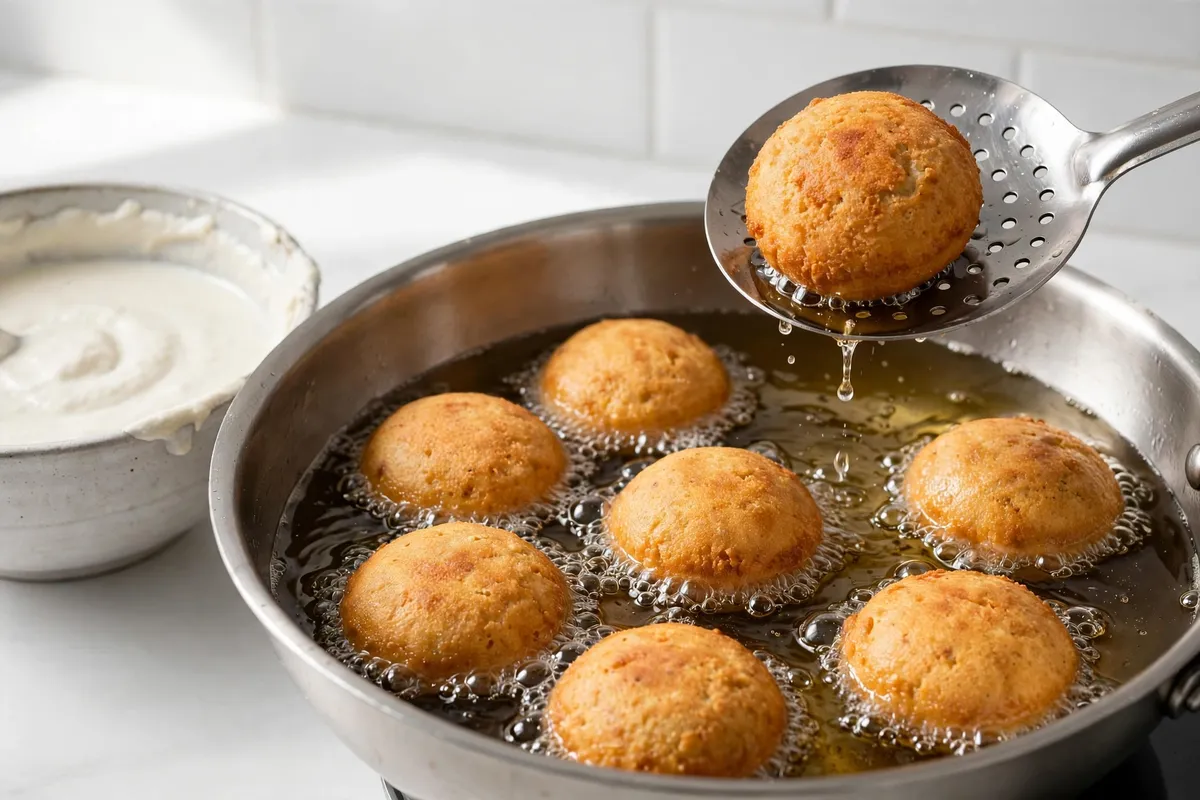
Stir the salt into the batter just before frying. Heat oil in a deep pan to 350°F (175°C) — a drop of batter should rise to the surface at once without browning too fast. With wet hands or a wet spoon, drop spoonfuls of batter into the oil, about 2 tablespoons each, without crowding the pan. Fry for 5–6 minutes, turning once or twice, until golden and crisp all over. Drain on kitchen paper and fry the rest the same way.
Soak in water
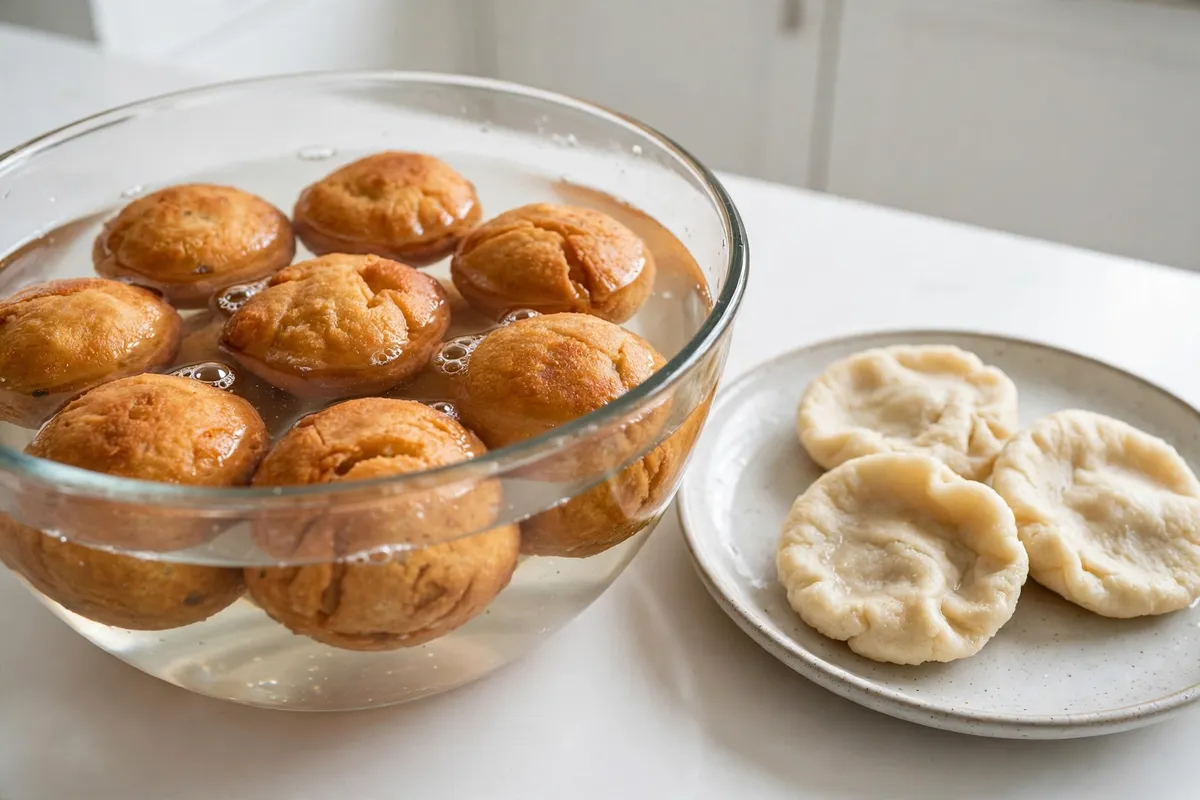
Drop the hot fried bhallas straight into a large bowl of warm water and leave them to soak for 20–30 minutes. This step is essential: it pulls out the excess oil and turns the crisp shells soft and spongy. Lift them out and squeeze gently between your palms to remove the water — but only about 70% of it. Squeezed bone-dry, the bhallas will steal the moisture from the yogurt and the dish turns stiff.
Whisk the yogurt and chutneys
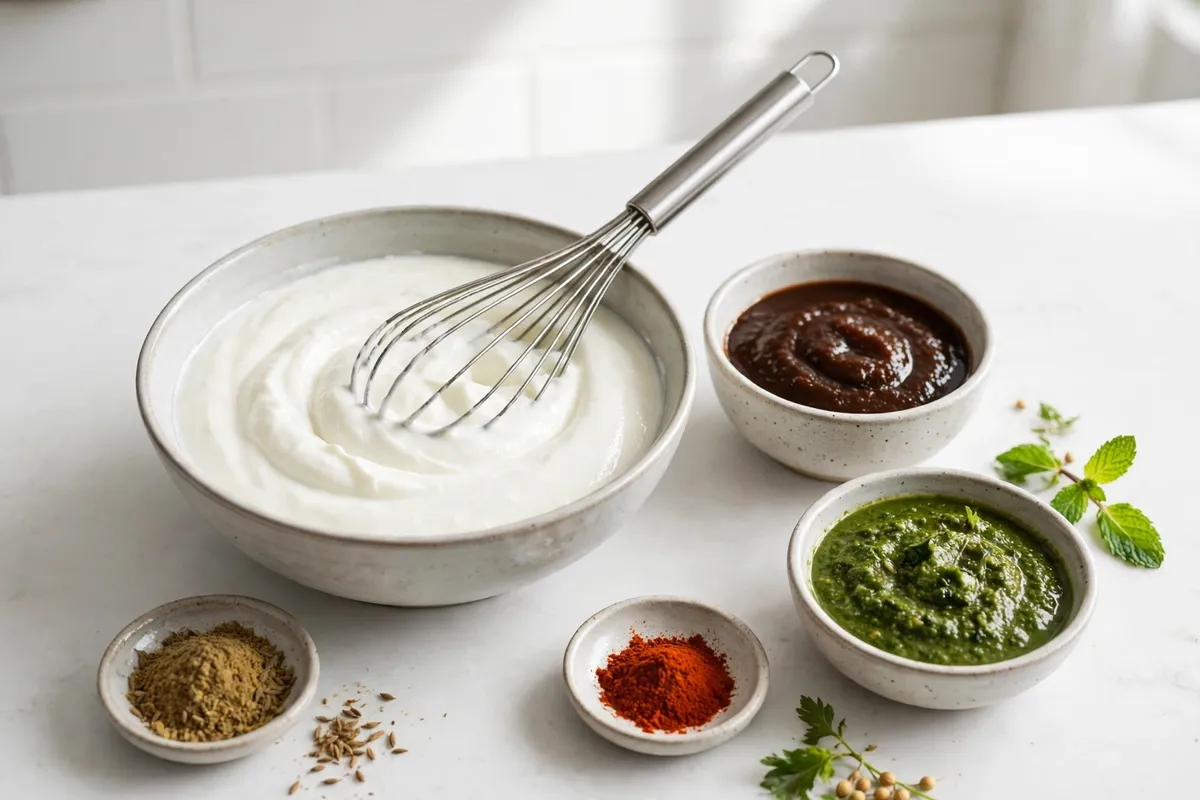
While the bhallas soak, whisk the chilled yogurt with the sugar and a pinch of salt until completely smooth, then refrigerate until serving. If you are making the chutneys from scratch, blend the mint and coriander with green chilli, lemon juice and salt for the green chutney, and simmer tamarind pulp with sugar, salt and roasted cumin for the sweet one — or use good shop-bought chutneys, which is what most home cooks do.
Assemble and serve
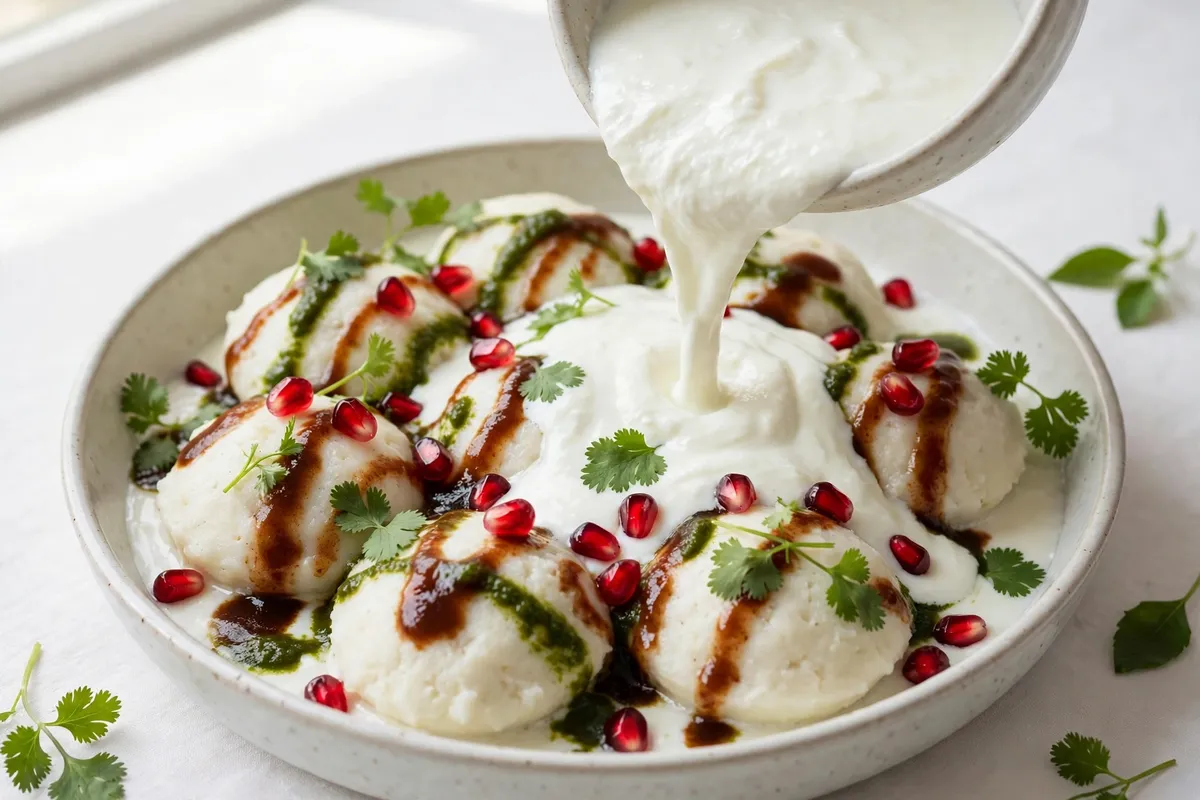
Arrange the squeezed bhallas in a serving dish and pour the chilled yogurt generously over them — it should completely cover them. Leave to soak in the yogurt for at least 30 minutes, or refrigerate for up to 2 hours. Just before serving, drizzle over the tamarind and mint chutneys, dust with roasted cumin powder, chaat masala and red chilli powder, and scatter with pomegranate arils, sev and chopped coriander.
Tips for the best dahi bhalla
- Use both dals. Urad dal gives the structure, moong dal gives the softness. Bhallas made from urad alone are noticeably denser — the combination is what street vendors use.
- Trust the float test. Drop a teaspoon of batter into a bowl of water. If it floats, the batter is aerated enough for soft, hollow bhallas. If it sinks, whisk for another minute or two and test again.
- Add salt last. Salt thins the batter if it sits in it, so stir it in just before frying. The same goes for any baking soda — add it at the last moment or it loses its lift.
- Serve it cold. Dahi bhalla is at its best well chilled, after the bhallas have soaked up the seasoned yogurt for at least 30 minutes. The flavours meld, the texture turns pillowy, and the contrast with the warm spices is the whole point.
How to store dahi bhalla
Assembled dahi bhalla keeps for 1–2 days in the fridge in an airtight container, though the sev softens — add fresh sev when serving. For longer storage, keep the parts separate: fried (unsoaked) bhallas freeze for up to a month, the yogurt and chutneys keep for 2–3 days refrigerated. Soak frozen bhallas in warm water for 30 minutes, squeeze, and assemble as usual.
Dahi Bhalla FAQs
How do you make dahi bhalla soft?
Four things: use both urad and moong dal, grind with as little water as possible, whisk the batter until a spoonful floats in water, and soak the fried bhallas in warm water for 20–30 minutes before squeezing. The float test is the key check — if the batter sinks, whisk it longer. A pinch of baking soda also helps, but a well-whisked batter needs none.
What is the difference between dahi bhalla and dahi vada?
They are close cousins. Dahi bhalla is the North Indian name — soft, round lentil dumplings in yogurt with chutneys, sev and pomegranate. Dahi vada is the South Indian name, where the vadas are often doughnut-shaped with a hole in the middle and the yogurt is seasoned more simply. The batter and the soak are essentially the same.
Can I make dahi bhalla ahead of time?
Yes — it is a great make-ahead chaat. Fry the bhallas up to 2 days ahead and refrigerate them after soaking and squeezing, or freeze the fried (unsoaked) bhallas for up to a month. The yogurt and chutneys keep for 2–3 days in the fridge. Assemble and garnish just before serving so the sev stays crisp.
Why do my bhallas turn hard?
Usually one of three things: the batter was too thin (too much water while grinding), it was not whisked enough to trap air, or the fried bhallas skipped the water soak. Grind with minimal water, whisk until the batter floats, fry at the right temperature so the centres cook through, and never skip the 20–30 minute soak.
Your week of dinners, planned.
Build a free 7-day meal plan and download it as a beautiful image.