Chicken Pulao
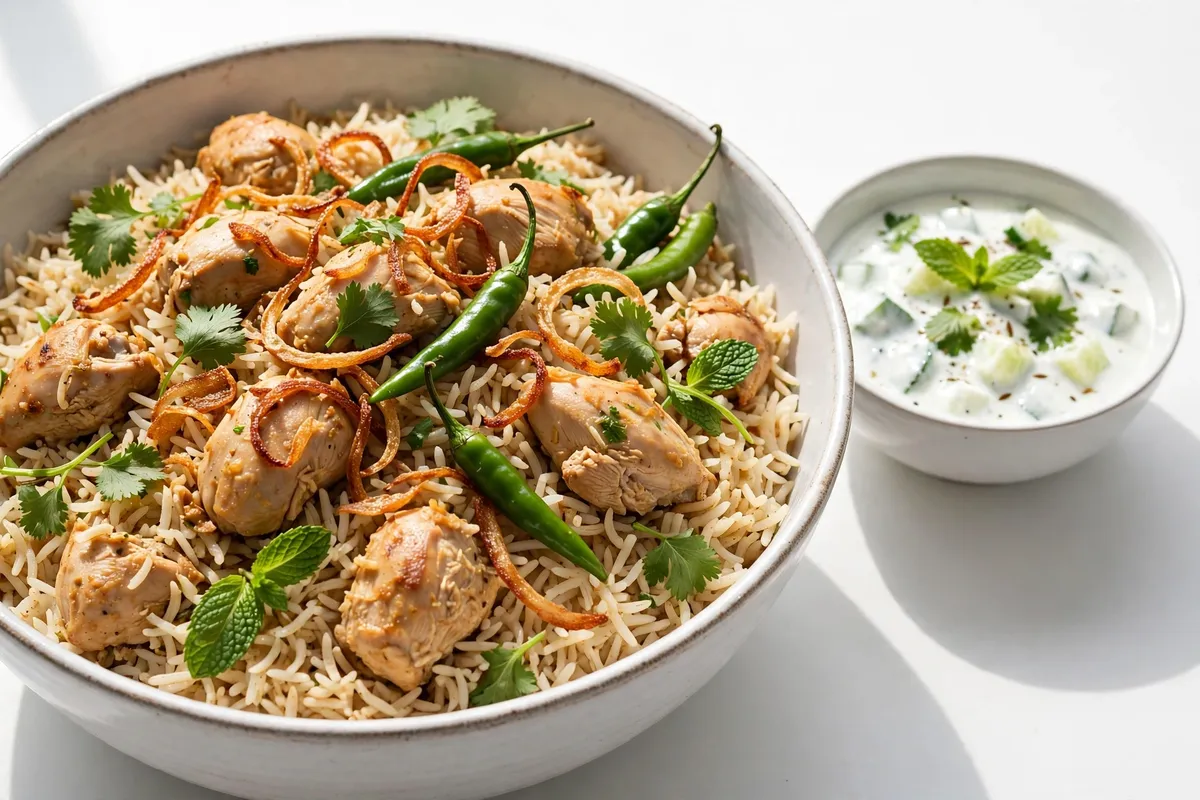
Chicken pulao is Pakistan's everyday comfort rice: tender chicken simmered in a fragrant whole-spice stock, then basmati cooked in that very stock until every grain is separate, long and perfumed. No layering, no food colouring, no fuss — just the yakhni method, an exact stock ratio, and a patient dum. This is the pulao that shows up at family dinners, daawats and Friday lunches across the country.
Ingredients
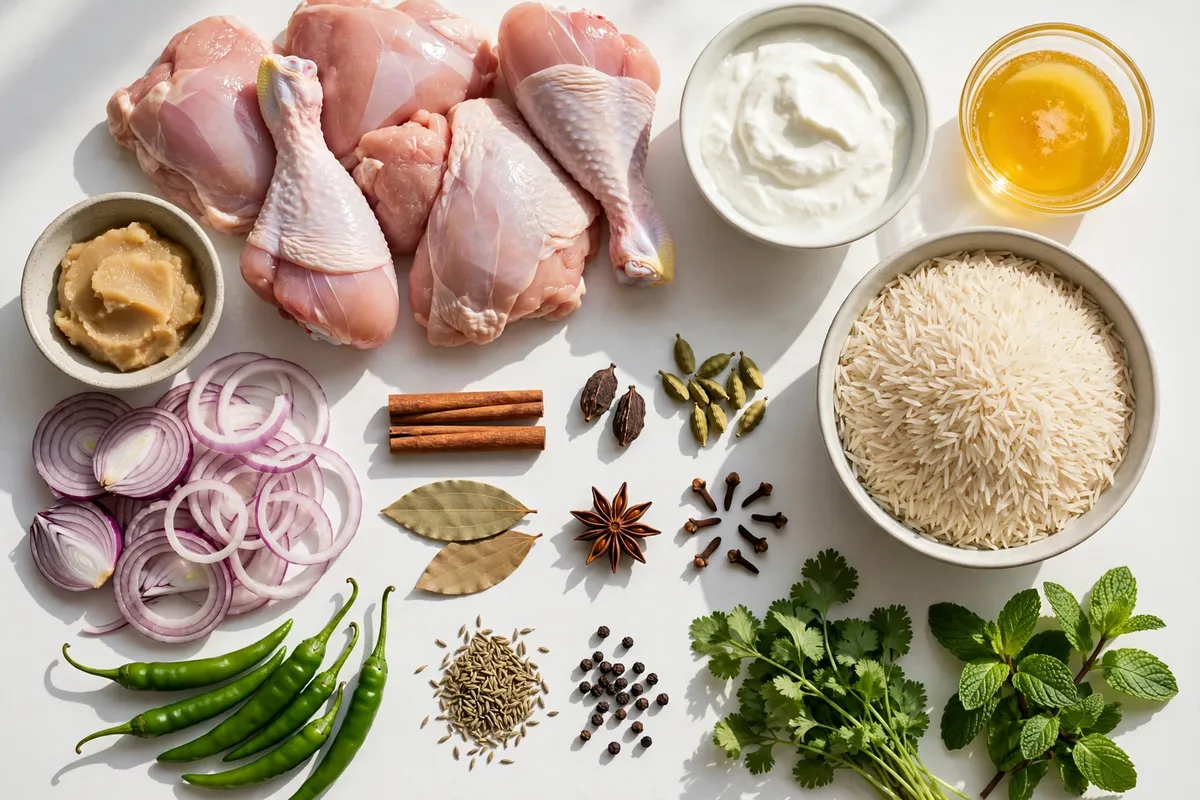
- 2.2 lb (1 kg) chicken, bone-in, curry cut
- 3 cups (600g) basmati rice, washed and soaked 30 minutes
- 4 tbsp (60g) ghee or oil
- 2 onions, thinly sliced
- 1 tbsp ginger-garlic paste
- ½ cup (120g) plain yogurt
- 2 tsp cumin seeds
- 6 cloves
- 2 black cardamoms
- 5 green cardamoms
- 1 cinnamon stick (about 3 inches)
- 1 star anise
- 2 bay leaves
- 1 tbsp coriander seeds
- 1 tsp black peppercorns
- 1 tsp fennel seeds
- 4–5 green chillies, whole
- 2 tbsp fresh coriander, chopped
- 1 tbsp fresh mint, chopped
- Salt to taste
How to make chicken pulao
Make the yakhni (spiced stock)
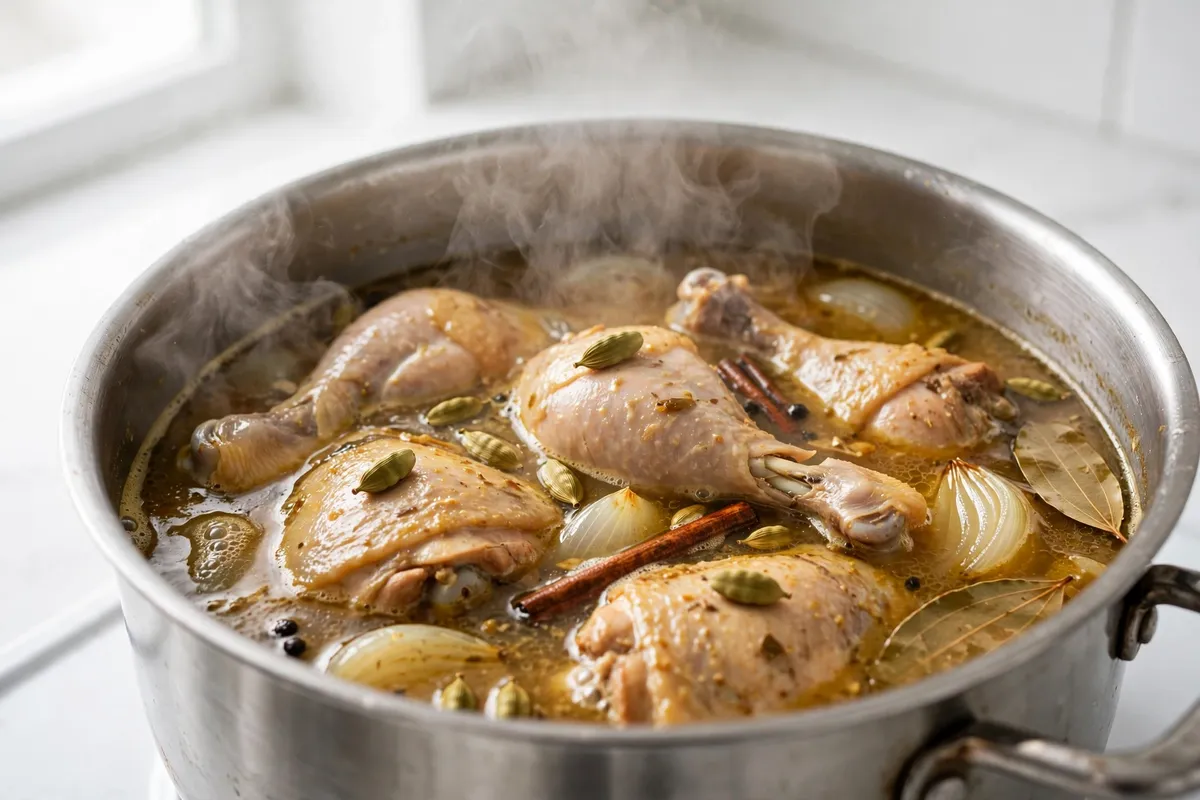
Tie the coriander seeds, peppercorns, fennel seeds, cloves, black and green cardamoms, cinnamon, star anise and bay leaves in a muslin cloth to make a spice potli. Put the chicken, the potli, 1 onion (halved), the ginger-garlic paste and salt in a large pot, cover with water, and simmer gently for 25–30 minutes until the chicken is tender. Strain the stock — you need 4½ cups — and keep the chicken aside. Discard the potli and onion.
Fry the onions golden
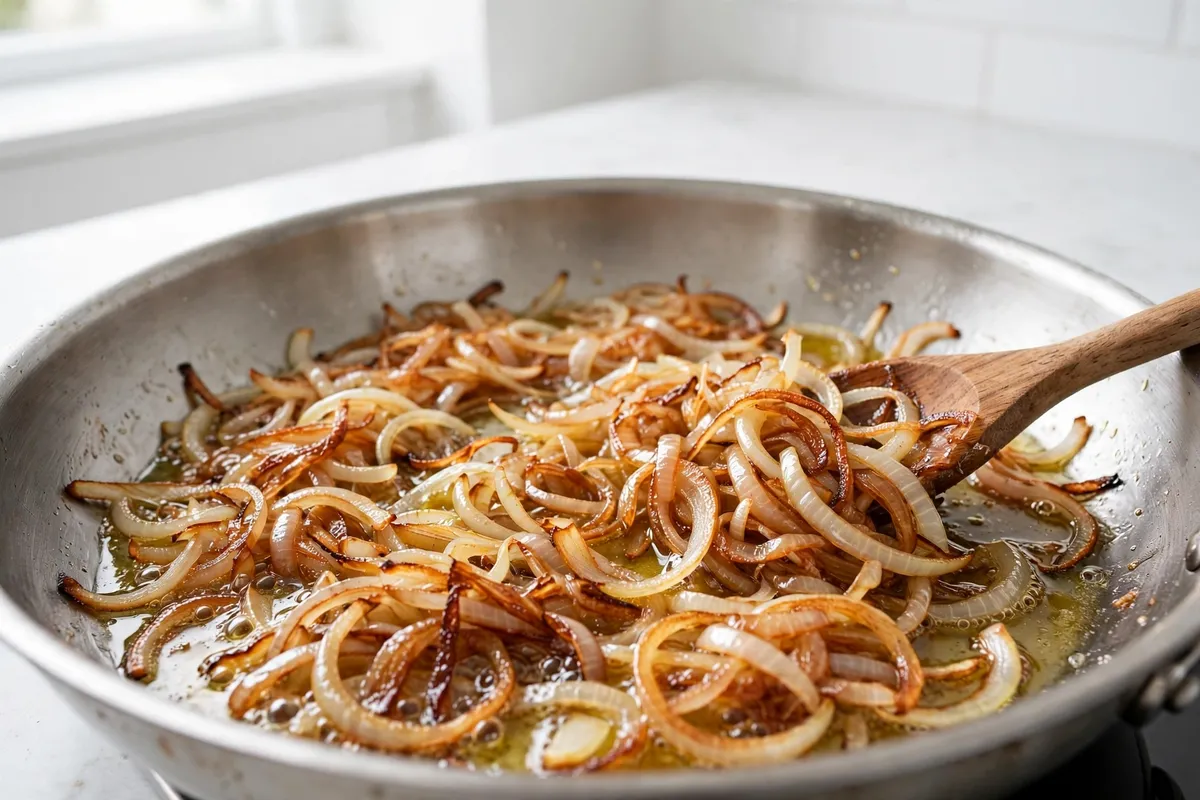
Heat the ghee in a wide, heavy pot over medium heat. Add the remaining thinly sliced onion and fry, stirring often, for 8–12 minutes until deep golden — not just soft. Golden onions are the backbone of pulao's flavour; pale onions make a pale-tasting pulao.
Brown the chicken with spices
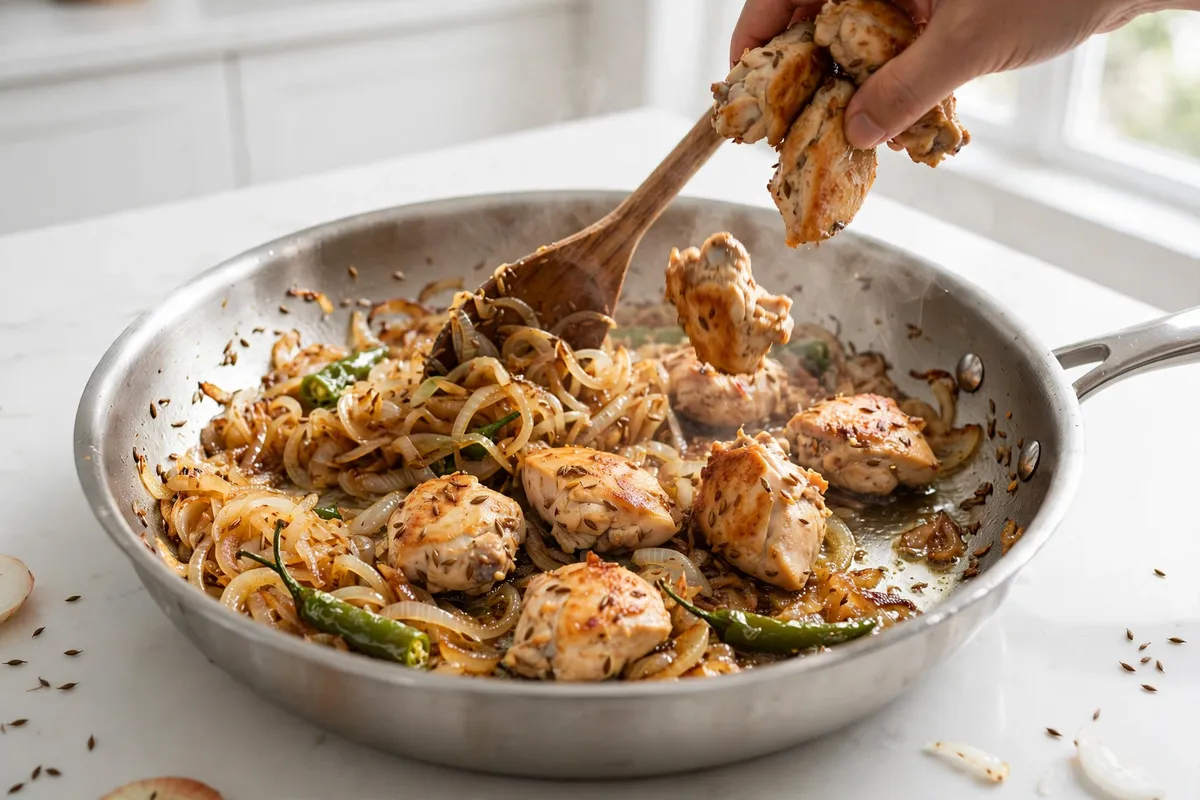
Add the cumin seeds and green chillies to the onions and cook for 30 seconds until fragrant. Add the reserved chicken pieces and the yogurt and fry for 3–4 minutes, stirring, until the chicken is lightly browned and the yogurt's raw smell is gone.
Add rice and stock
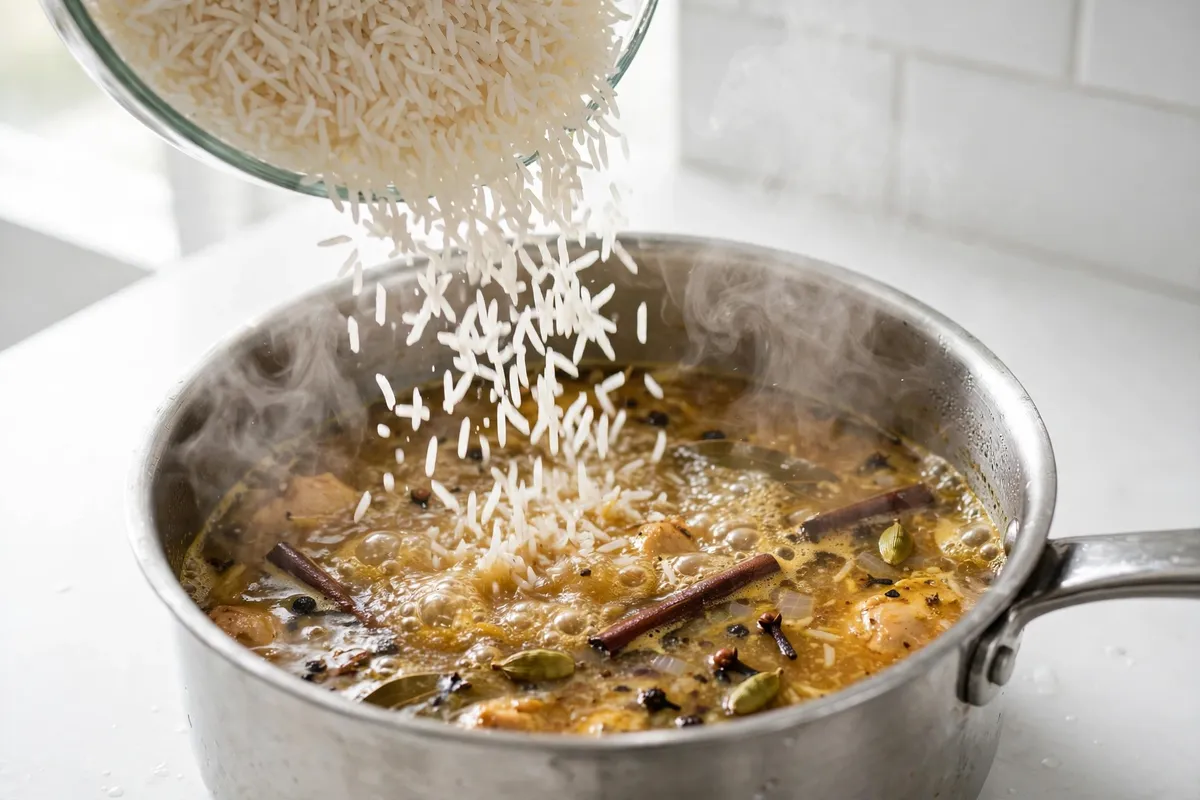
Pour in the measured 4½ cups of strained yakhni (top up with water if short) and bring to a rolling boil. Taste and adjust the salt — the stock should taste slightly salty, as the rice will absorb it. Add the drained, soaked rice, the chopped coriander and mint, and stir gently once. Boil uncovered on medium-high heat until the liquid reduces and small steam holes appear across the surface, about 7 minutes.
Dum, rest and fluff
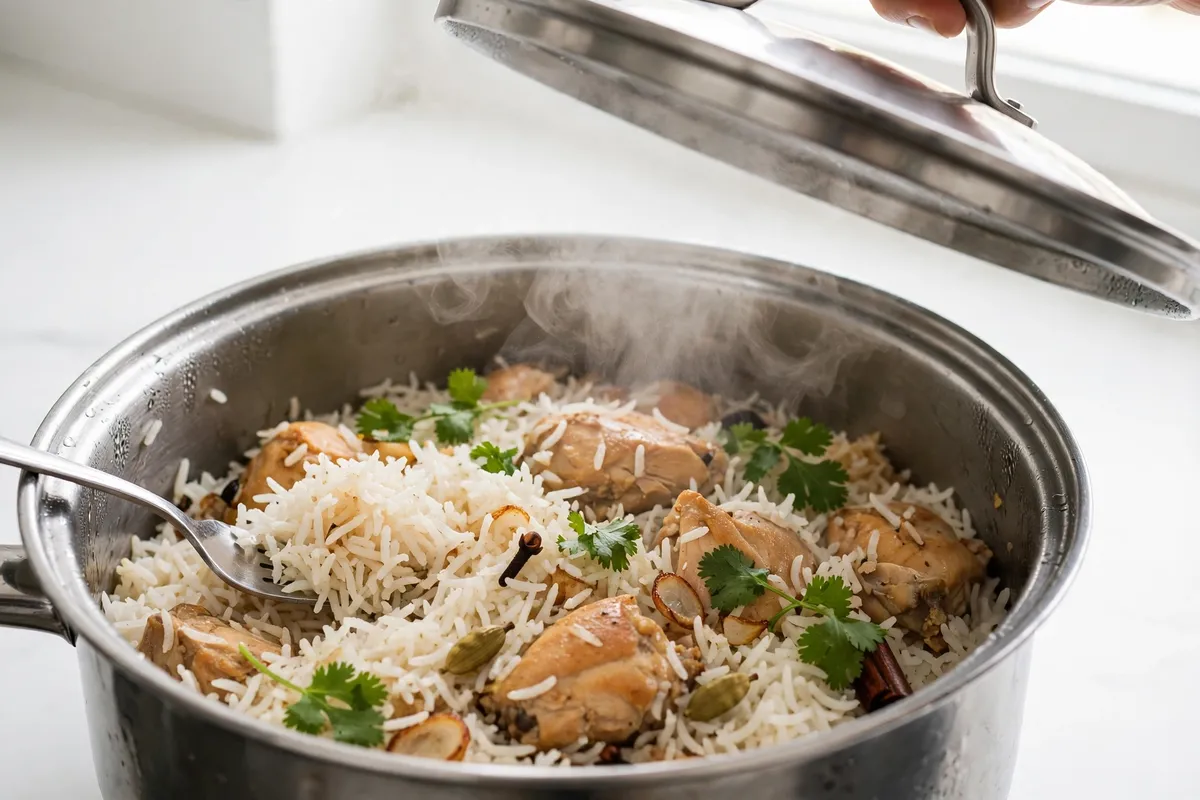
Cover the pot with a tight-fitting lid (a clean cloth under the lid helps trap steam), reduce the heat to the lowest setting, and steam for 15 minutes — do not lift the lid. Turn off the heat and rest for 10 more minutes with the lid on. Fluff gently with a fork, lifting from the edges, and serve hot with raita and salad.
Tips for the best chicken pulao
- Measure the stock, never guess. The ratio is 1.5 cups of strained yakhni per cup of soaked basmati — 4½ cups for this recipe. If you are short after straining, top up with water; if you have extra, save it for soup. Guessing is the number-one cause of mushy or crunchy pulao.
- Soak the rice for 30 minutes. Soaking lets the grains cook evenly and grow long instead of breaking. Wash until the water runs clear first, to remove excess starch that would make the pulao sticky.
- Stir once, then leave it alone. After the rice goes in, one gentle stir is all it gets. Further stirring breaks the grains and releases starch, turning fluffy pulao into porridge. The steam holes on the surface are your signal to cover and dum.
- Do not lift the lid during dum. Fifteen minutes on the lowest heat with the lid sealed is when the rice finishes cooking in its own steam. Peeking lets the steam out and leaves the top layer undercooked. Trust the timer.
How to store chicken pulao
Cool leftover pulao within an hour and refrigerate in an airtight container for up to 3 days. Reheat with a splash of water, covered, in a low oven or microwave until steaming hot throughout — rice should only be reheated once. Pulao also freezes well for up to 3 months; thaw overnight in the fridge before reheating. The yakhni can be made a day ahead and refrigerated, which makes the whole dish a 30-minute job on the day.
Chicken Pulao FAQs
What is the difference between pulao and biryani?
Pulao cooks the rice in a seasoned stock (yakhni) with the meat in one pot, so the flavours are gentle, aromatic and evenly distributed. Biryani layers separately cooked rice and a rich, spicy meat masala, then steams them together on dum — it is bolder, more complex and more work. Pulao is the everyday comfort dish; biryani is the celebration dish.
What is the stock-to-rice ratio for pulao?
For soaked basmati, use 1.5 cups of strained yakhni per cup of rice — so 4.5 cups of stock for 3 cups of rice. If the rice was not soaked, add a little more liquid. Always measure the stock after straining: guessing is the most common cause of mushy or undercooked pulao.
Why is my pulao mushy?
Mushy pulao usually means too much liquid, rice that was not soaked (so it absorbed unevenly), or stirring after the rice went in — stirring breaks the grains and releases starch. Measure the stock at 1.5 cups per cup of soaked rice, stir only once, and do not lift the lid during the 15-minute dum.
Can you make chicken pulao without yakhni?
Yes, though the yakhni is what makes pulao taste like pulao. The shortcut is to brown the chicken with the onions and whole spices, then add water or ready-made chicken stock instead of homemade yakhni and cook the rice in it. You lose some depth, but a good stock cube and an extra pinch of whole spices get you most of the way there.
Your week of dinners, planned.
Build a free 7-day meal plan and download it as a beautiful image.